Post by : Anees Nasser
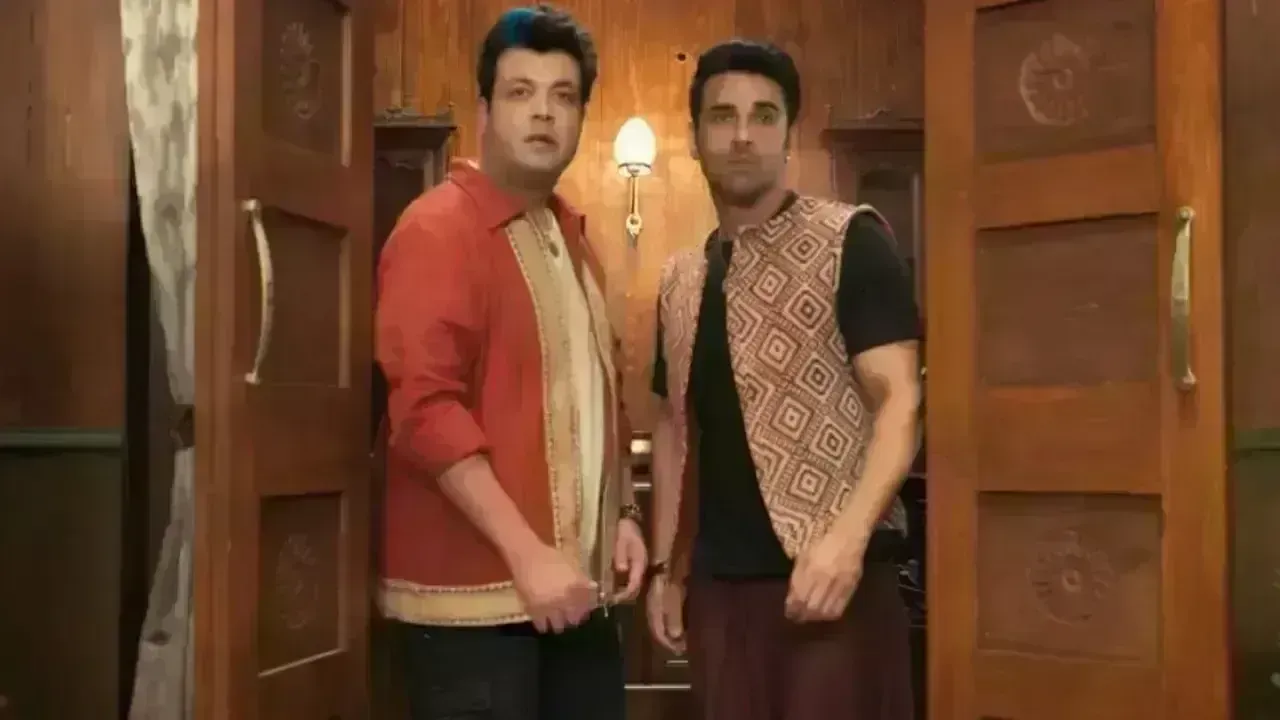
Debuting on January 16, 2026, Rahu Ketu stirred considerable anticipation, marking a reunion of beloved comics Varun Sharma and Pulkit Samrat in a mythological comedy teeming with chaotic humor and fantasy.
Under the direction of Vipul Vig, the film draws from Hindu mythology—specifically Rahu and Ketu—intertwining these figures into a modern tale laden with slapstick humor and social critique.
Despite its promising concept and the charisma of the leads, the film has elicited polarized reactions from audiences, ultimately failing to deliver coherent humor or a compelling narrative. This review delves into the reasons behind the divisive responses to Rahu Ketu.
At its heart, Rahu Ketu narrates the escapades of two inept characters—Rahu (played by Varun Sharma) and Ketu (Pulkit Samrat)—brought to existence from a magical notebook by a quirky storyteller named Churu Lal.
Primarily linked with karmic forces in mythical contexts, Rahu and Ketu are presented here as celestial entities striving to rectify worldly wrongs, yet their journey descends into a whirlwind of chaotic adventures rife with various societal issues.
The chaos intensifies further with the introduction of Meenu Taxi (portrayed by Shalini Pandey), catalyzing events that propel the narrative forward.
Although the comic potential of celestial beings navigating human folly is evident, critics assert that Rahu Ketu struggles to maintain a balance between its source material and effective storytelling. The screenplay attempts to navigate multiple subplots—ranging from a clumsy drug cartel narrative to outlandish corrupt officials—but ends up feeling very fragmented.
A review from The Hollywood Reporter India describes the film as a “stretched prank” that lacks comedic fulfillment, describing it as “a sensory assault devoid of wit” and indicating that its lengthy duration feels somewhat aimless post-interval.
Moreover, the use of meta-narratives—where characters interact with the audience—brings sporadic humor but often distracts from the story’s continuity.
One persistent highlight in the reviews is the palpable chemistry between Varun Sharma and Pulkit Samrat, reminiscent of their previous comedic ventures.
Despite the writing's shortcomings, their on-screen camaraderie brings forth laughter and light moments, making their performances engaging amid the surrounding chaos.
However, many suggest that their performances are hindered by a misguided script that does not provide comprehensive character development or adequately exploit their comedic abilities.
The auxiliary cast—including Shalini Pandey, Piyush Mishra, Chunky Panday, Amit Sial, Manu Rishi Chaddha, and Sumit Gulati)—contribute to the exaggerated humor of the film; however, critics contend these roles are also undermined by insufficient character depth and direction.
Certain characters, especially Chunky Panday’s quirky antagonist, emerge as exaggerated caricatures rather than multifaceted entities, diluting the narrative's impact.
In his dual role as director and writer, Vipul Vig attempts to create a vibrant comedy that fuses mythical fantasy with whimsical humor.
Yet, many reviews claim that the film lacks narrative precision, with comedic sequences often feeling forced or redundant. The humor—spanning physical jokes to social critique—rarely sustains momentum throughout its lengthy runtime.
Visual aspects, including exaggerated effects and stylistic nods to bygone television eras, tend to appear disjointed rather than imaginative, contributing to an overall tone that many critics find perplexing.
The critical reception of Rahu Ketu has been polarized, with many expressing dissatisfaction with its execution despite recognizing its bold attempt at humor:
The Hollywood Reporter India criticized the film for being “inane,” highlighting its lack of coherence.
Hindustan Times pointed out its erratic execution, awarding it a 2-star rating and commenting that it had “more noise than laughs.”
Conversely, Times of India provided a mildly positive review, granting it 3.0/5 stars for delivering genuine humor to those desiring a unique comical experience.
Other critiques term it a mythological blunder unable to support its premise, weaving in too many narrative threads without the necessary clarity.
Audience feedback mirrors critical sentiments, with some praising Rahu Ketu's lively vibes and sporadic humorous timing, particularly involving its lead actors.
In contrast, others align with critics, asserting the film dabbles in too many themes, amalgamating mythology, societal critique, and slapstick into an unfocused narrative.
Conversations online suggest Rahu Ketu may charm viewers who favor broad, chaotic comedy more than those craving coherent storytelling or sharper satire.
Rahu Ketu endeavors to integrate cultural themes and mythical tales into its modern storyline. The central premise of celestial figures confronting human absurdities holds significant potential for societal commentary.
However, many reviewers suggest that the thematic aspirations are diminished by weak script and excessive sequences, transforming potential satire into aimless spectacle.
Issues like social corruption and divine roles feature in the plot, yet their incorporation often feels haphazard, obscuring thematic clarity.
From a technical standpoint, Rahu Ketu showcases a blend of traditional Bollywood visuals and stylistic infusions meant to parody or evoke fantasy. Critics have not delved deeply into cinematography but noted that outdated effects and inconsistent pacing detract from viewers’ engagement.
Editing decisions—particularly the flow between chaotic sequences—are critiqued for fostering narrative confusion rather than streamlining the story.
Rahu Ketu signifies an effort to innovate Bollywood comedy with mythological fantasy and surreal humor, a combination that is not commonly explored in mainstream Indian cinema.
However, its flawed execution underscores that creativity needs to be supported by coherent narratives and adept direction for comedic moments to resonate with audiences and critics alike.
Whether Rahu Ketu becomes a source of inspiration for future filmmakers to refine such genre hybrids or stands as a cautionary tale against overambition remains to be seen.
In conclusion, Rahu Ketu presents as a film with good intentions but flawed execution. While its inventive premise and engaging cast yield entertaining instances, these are often overshadowed by structural and scripting problems, preventing it from achieving comedic success. The film’s varied reception illustrates this friction—applauded by some for its humor and flair, while critiqued by others for lack of coherence.
For fans of Varun Sharma and Pulkit Samrat, Rahu Ketu may provide fleeting enjoyment, yet for those after structured storytelling or consistently effective humor, it might not meet expectations.
Disclaimer:
This review is based on the critical assessments and audience opinions available at the time of writing, intended solely for informational purposes. The views expressed in this article reflect the spectrum of responses towards the film and could vary among viewers.









Anticipated Dates for UAE Eid Al Adha 2026 Unveiled by Astronomical Experts
Experts predict Eid Al Adha 2026 in the UAE to start on May 27, prompting early holiday planning amo

DAE Achieves Remarkable Growth in Q1 2026 With Record Revenue
Dubai Aerospace Enterprise announces impressive financial results for Q1 2026, reflecting a surge in

Price Increase for Sony PS5 in Southeast Asia Effective May 1
Sony announces a price increase for the PS5 across Southeast Asia starting May 1, 2026, impacting ga

Potential ‘Super El Niño’ in 2026: Understanding the Climate Risks
Could a Super El Niño emerge in 2026? Discover its implications and potential global climate impacts

Global Energy Crisis Intensifies: Markets React to Oil Supply Challenges
Markets are on edge as oil disruptions escalate, influencing prices and economic stability. Explore

Must-See Tourist Spots in London You Can't Overlook
Explore London's essential attractions, from royal landmarks to vibrant markets, ensuring an unforge




