Post by : Anees Nasser
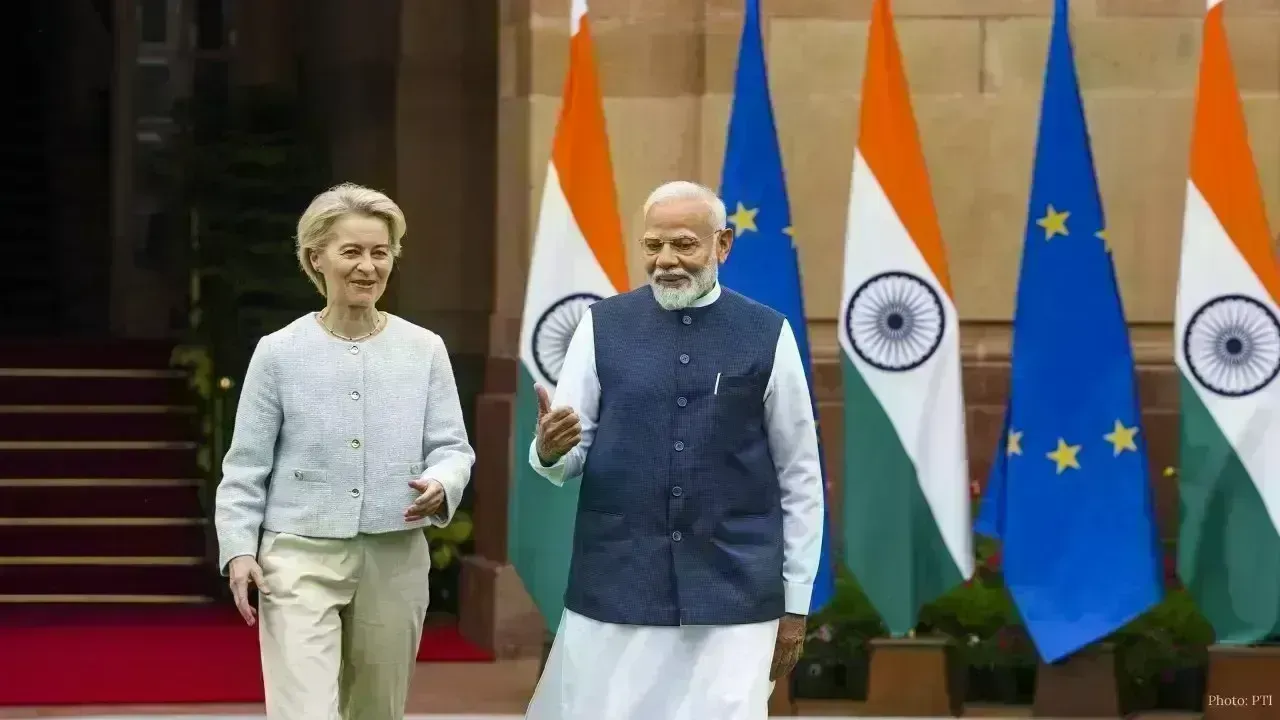
India is poised to welcome prominent leaders from the European Union, including European Council President António Luis Santos da Costa and European Commission President Ursula von der Leyen, who will grace the nation as chief guests during Republic Day festivities on January 26, 2026.
This visit comes alongside a diplomatic agenda centered around the 16th India-EU Summit, scheduled for January 27, 2026. The much-discussed India-EU Free Trade Agreement (FTA) could finally reach a conclusive stage.
The importance of this visit extends beyond ceremonial duties; it may mark a pivotal shift in the economic relations between India and the EU, steering them towards finalizing a deal long in the making for almost two decades.
The discussions for a comprehensive FTA between India and the EU originated in 2007 but encountered significant interruptions, largely due to conflicts over tariffs, market entry, and sensitive sectors such as agriculture.
After a lengthy pause, negotiations were relaunched in 2022 against a backdrop of shifting global economic conditions, rising protectionism, and geopolitical uncertainty. The renewed interest signifies an effort to integrate markets and diversify supply chains amidst ongoing global trade fragmentation.
Recent developments indicate that talks have progressed significantly. Officials report that most components of the agreement are nearing completion, with only a handful of contentious issues left to address. Indian Commerce Secretary Rajesh Agrawal affirmed that both sides are “very close” to reaching an agreement.
German Chancellor Friedrich Merz, following his recent visit to India, hinted at a potential conclusion of the deal by the end of January, suggesting a formal announcement during the EU leaders’ visit.
This acceleration reflects a strong political will and shared strategy, positioning the India-EU FTA as one of India's largest trade agreements to date.
This event marks the first instance where high-ranking leaders from the European Union bloc will attend India’s Republic Day, highlighting the deepening ties between the two entities.
Choosing EU leaders as chief guests underscores India’s diplomatic focus and the bloc's growing importance as a strategic partner.
During their three-day visit from January 25-27, the EU delegation will engage in ceremonial activities, conduct bilateral discussions, and partake in an India-EU Business Forum aimed at enhancing commercial and investment interactions.
The proposed India-EU FTA aims to lower tariffs and non-tariff barriers, increase market access for goods and services, and promote regulatory cooperation between India and the 27-member bloc that includes economic heavyweights like France, Germany, and Italy.
Union Minister Piyush Goyal has characterized this upcoming agreement as the “mother of all deals,” emphasizing its potential to greatly expand bilateral trade and economic activity.
This trade liberalization effort would require mutual commitments across various sectors, including industrial goods, textiles, pharmaceuticals, and services.
Despite the momentum, specific sectors remain sensitive and require careful negotiation. The EU aims for lower tariffs on automobiles where Indian import duties can be quite high, while India is cautious about liberalizing agriculture and dairy sectors critical to its economy.
Other contentious topics include regulatory standards, rules of origin, and environmental policies which could impact key areas like steel.
Efforts are underway to achieve a balanced agreement that enhances trade relations without compromising essential economic interests, with officials optimistic about resolving outstanding issues ahead of the summit.
The relationship between India and the EU transcends mere economic exchanges and extends into strategic areas like technology, clean energy, and defense cooperation. The FTA is part of an overarching agenda intertwining economic goals with shared geopolitical commitments.
Experts suggest that India's rising economic stature is crucial for the EU’s objectives in the Indo-Pacific region, providing a significant ally amidst ongoing global uncertainty.
The expected conclusion of the India-EU FTA carries far-reaching implications for global trade. For Europe, improving market access to India, a rapidly expanding economy, bolsters economic diversification.
For India, this agreement would facilitate deeper integration within global supply chains, potentially increasing exports and investor confidence.
These developments could significantly influence trade flows between large economic regions and shape future global trade partnerships.
If finalized, the FTA would offer better market access for Indian products in the EU, which currently serves as India's primary trading partner.
Indian industries like textiles, pharmaceuticals, and machinery are set to benefit, as reduced tariffs could lead to increased competitiveness in European markets.
Enhanced trade engagement may unlock investment opportunities, generating jobs in sectors aligned with international demand. European firms might be encouraged to invest further in India, attracted by enhanced market prospects.
However, India will need to cautiously balance increased competition in certain sectors with domestic economic interests, which remains a key negotiation focus.
For India, trade policies must navigate intricate domestic priorities while striving for broader international integration, especially regarding politically sensitive sectors.
Simultaneously, the EU must consider the interests of its member countries while fostering a productive partnership with India.
The India-EU Summit on January 27, 2026 is expected to unveil the proposed FTA, signaling an important moment for both parties.
With European leaders attending the Republic Day parade, it emphasizes the significant political and strategic dimensions of their partnership. This agreement could lead to further cooperation in critical areas like digital trade and advancements in clean technology.
The upcoming visit by EU leaders and the imminent India-EU Summit marks a historic turning point for both diplomatic and economic relations. With the FTA nearing completion, the India-EU partnership is set for transformative changes.
If concluded successfully, the deal would represent one of India’s most substantial trade agreements, enriching bilateral trade and aligning strategic goals. As preparations for the summit unfold, it is evident that the India-EU trade agreement embodies a commitment to mutual aspirations and a robust global partnership.
Disclaimer:
This article relies on current public reports and analysis regarding India-EU negotiations and diplomatic progress. Trade talks are inherently complex and subject to ongoing dialogues and political movements. Readers should remain vigilant for future updates on this matter.







Anticipated Dates for UAE Eid Al Adha 2026 Unveiled by Astronomical Experts
Experts predict Eid Al Adha 2026 in the UAE to start on May 27, prompting early holiday planning amo

DAE Achieves Remarkable Growth in Q1 2026 With Record Revenue
Dubai Aerospace Enterprise announces impressive financial results for Q1 2026, reflecting a surge in

Price Increase for Sony PS5 in Southeast Asia Effective May 1
Sony announces a price increase for the PS5 across Southeast Asia starting May 1, 2026, impacting ga

Potential ‘Super El Niño’ in 2026: Understanding the Climate Risks
Could a Super El Niño emerge in 2026? Discover its implications and potential global climate impacts

Global Energy Crisis Intensifies: Markets React to Oil Supply Challenges
Markets are on edge as oil disruptions escalate, influencing prices and economic stability. Explore

Must-See Tourist Spots in London You Can't Overlook
Explore London's essential attractions, from royal landmarks to vibrant markets, ensuring an unforge




