Post by : Saif Nasser
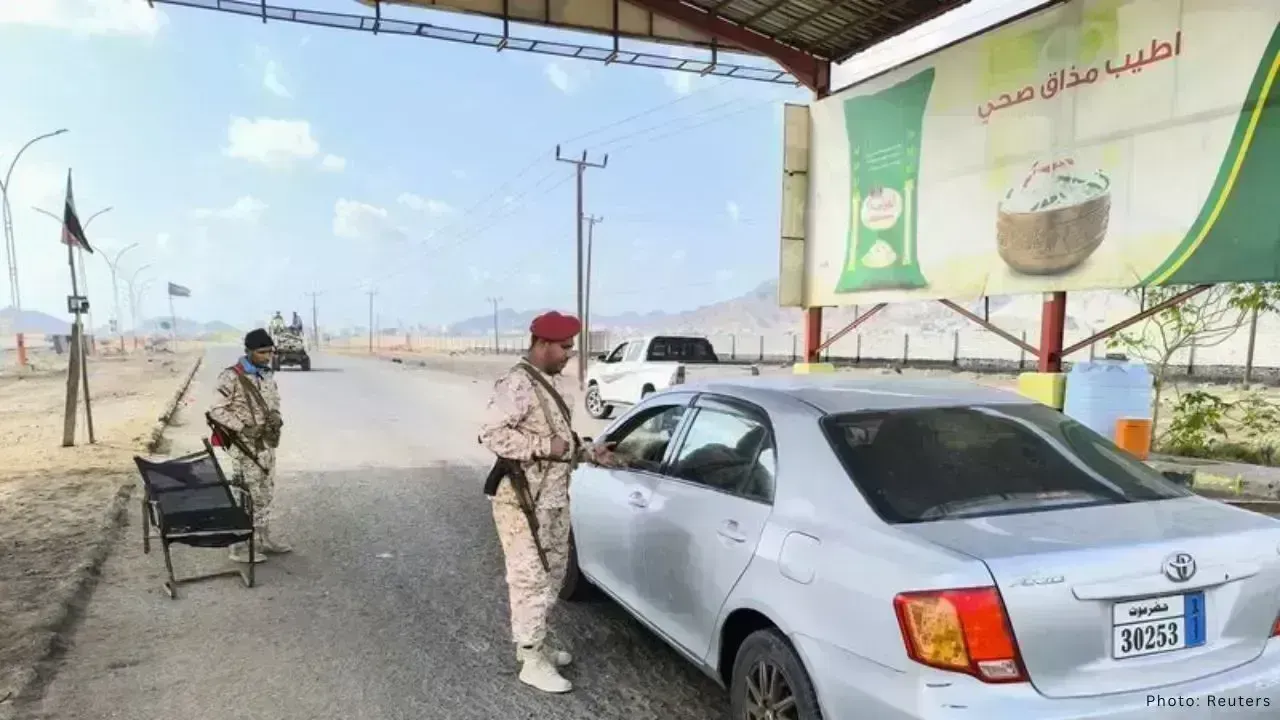
Tensions in Yemen escalated sharply on Thursday after the Saudi-led coalition revealed that the United Arab Emirates had helped a key separatist leader, Aidarous al-Zubaidi, flee the country. Zubaidi heads the Southern Transitional Council (STC), a UAE-backed group that has been involved in southern Yemen’s recent conflicts. Witnesses reported that Saudi-backed forces were advancing in Aden, one of Yemen’s most important southern cities.
According to coalition officials, Zubaidi first traveled by boat to Somaliland, then boarded an aircraft to Mogadishu. The plane later reached a military airport in Abu Dhabi. His sudden departure came after he failed to attend crisis talks in Riyadh between Saudi Arabia and the STC over rising unrest in southern Yemen. The STC said Zubaidi had been threatened and was asked to go to Saudi Arabia, but his movement to the UAE has added a new layer of tension between the Gulf allies.
The escape underscores the growing friction between Saudi Arabia and the UAE. Both countries are key oil powers and U.S. allies, but they have disagreed on several regional issues, including the conflict in Yemen. The coalition said that UAE officers supervised Zubaidi and others during the flight, highlighting the UAE’s assertive foreign policy approach in the region.
Meanwhile, Aden is reportedly seeing a return of Saudi-backed government forces. The city had been under STC control after separatists captured it last month, forcing leaders of the internationally recognized government to leave for Saudi Arabia. While there is no official confirmation of full control, witnesses and local officials reported that the Saudi-backed forces were advancing and reclaiming key areas.
The developments reveal a possible split among separatist leaders. An STC delegation in Riyadh reportedly held talks with the Saudi ambassador to Yemen, suggesting internal divisions within the group. Such fractures could complicate efforts to stabilize southern Yemen, which continues to suffer from one of the world’s worst humanitarian crises.
The UAE’s involvement in Zubaidi’s escape reflects its strategic influence across the Middle East and Africa. It has withdrawn most of its forces from Yemen but continues to maintain an active role in regional politics. Saudi Arabia, meanwhile, remains focused on countering Houthi forces in the north and securing the south, including strategic areas near its border.
As the situation unfolds, the clash of interests between Saudi Arabia and the UAE could have far-reaching consequences for Yemen and the Gulf region. International observers warn that unless dialogue continues, the risk of further instability and conflict may grow, further threatening a country already devastated by years of war.










The Impact of Consistent Small Investments on Wealth Building
Discover how investing small amounts regularly can positively transform your financial future over t

7.5 Magnitude Earthquake Strikes Japan, Tsunami Alerts Issued
Japan experiences a hefty 7.5 quake, prompting tsunami alerts and safety measures. Stay updated on a

Reopening of the Strait of Hormuz: New Regulations to Impact Global Trade
Iran reopens the strategic Strait of Hormuz with new regulations affecting oil transport and global

Top 10 Must-See Attractions in NYC for First-Time Explorers
Discover essential experiences for first-time visitors to NYC, including attractions, culture, and i

Starbucks Engages Boyu Capital for Major Chinese Expansion
Starbucks teams up with Boyu Capital, selling a majority stake to boost growth and adapt to the Chin

Three Individuals Charged in Massive Meth Trafficking Case in Malaysia
In Malaysia, a married couple and another suspect are charged with trafficking 510kg of meth, facing