Post by : Sami Jeet
An announcement with major implications
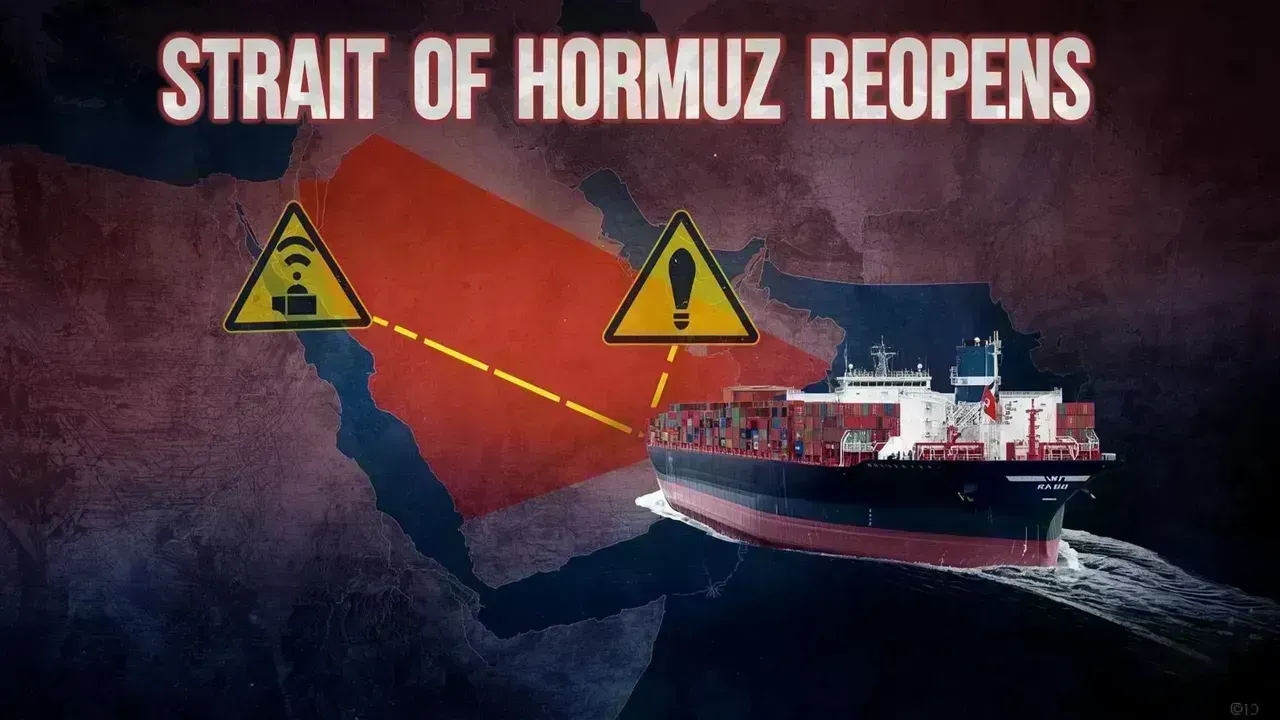
The reopening of the Strait of Hormuz by Iran has garnered widespread attention, initially appearing beneficial for global trade and energy markets. However, a deeper examination reveals stringent new regulations that significantly alter how this crucial waterway will function.
For nations highly dependent on oil imports, such as India, any developments in this region can have immediate consequences for their economies. The Strait of Hormuz serves as a critical chokepoint in the global energy supply chain, with nearly 20% of the world’s oil flowing through this narrow passage, linking major oil-exporting nations in the Persian Gulf with global markets.
Thus, although the strait is now "open," the implementation of these new regulations complicates the situation significantly.
To appreciate the implications of this development, it’s vital to understand why the Strait of Hormuz is of utmost importance worldwide.
This narrow channel connects the Persian Gulf to the Gulf of Oman, eventually leading to open ocean waters. Countries including Saudi Arabia, the UAE, Kuwait, and Iraq rely on this corridor for oil exports. Any disruption here can impact global supply, fuel prices, and economic stability.
Even a temporary shutdown can result in:
Stability in this route is therefore crucial for both developed and developing economies.
Recent regional tensions raised alarms regarding the safety of shipping in this vital route, with reports of interruptions and increased military presence creating uncertainty for global shipping firms.
Iran’s decision to reopen the strait is part of a broader strategy to de-escalate tensions and encourage commercial activities. Nonetheless, it does not signify a full restoration of regular operations. Rather, it indicates a controlled strategy wherein Iran exercises considerable authority over maritime passage.
A pivotal change is the new requirement that vessels obtain prior permission from Iranian authorities before entering the strait.
This authorization process is reportedly overseen by forces associated with the Islamic Revolutionary Guard Corps, who play a significant monitoring role in the area.
This regulation effectively shifts control over the strait's access to Iran. Instead of a freely accessible waterway, entry is conditioned. Ships will need to wait for clearance, introducing potential delays and unpredictability for shipping schedules.
For international trade, this adds a layer of reliance on prevailing political and security scenarios.
Another significant stipulation is that vessels must adhere to prescribed routes sanctioned by Iranian authorities, limiting the navigational freedom of ships through the strait.
Instead of opting for the most direct or efficient paths, vessels are now required to:
This modification is not solely about safety—it also represents heightened oversight and control. Reports suggest that some shipping companies are already hesitating, opting to delay or reroute their voyages.
Under the newly established rules, vessels must maintain constant communication with Iranian maritime agencies throughout their transit.
This entails:
While this could enhance monitoring, it also diminishes the autonomy of international shipping processes. Companies will need to incorporate these additional steps, potentially affecting both efficiency and costs.
The reopening mainly targets commercial ships, yet they too face strict oversight. Military vessels and certain flagged ships might encounter further limitations or restricted access.
Iran has indicated that conditions may evolve based on geopolitical events, suggesting that the strait could revert to tighter restrictions should tensions escalate.
This unpredictability adds another layer of complexity for global energy and trade dynamics.
The industry’s response has leaned more toward caution than celebration.
Although some vessels have commenced movement, overall navigational activity remains lower than usual. Shipping companies are meticulously evaluating risks before deciding on routes through this waterway.
Oil markets are also showcasing sensitivity to this information; even prospective disruptions can sway prices as traders consider possible supply issues.
For countries reliant on oil imports, this points to ongoing volatility and the necessity for strategic adjustments.
For countries such as India, heavily reliant on oil imports, the developments in the Strait of Hormuz remain closely monitored.
Any interruptions or constraints may:
Other energy-importing countries may face similar difficulties, as changes in this region reverberate across the globe.
This crucial question is on the minds of many experts.
While Iran has proclaimed the strait open, the attached conditions suggest a markedly different scenario. Rather than a freely navigable international waterway, it now functions like a controlled corridor.
Vessels can pass—albeit under specific regulations and during supervision.
This distinction shapes how businesses, governments, and markets will respond.
The fate of the Strait of Hormuz is closely tied to geopolitical stability.
If tensions diminish, regulations may gradually ease, paving the way for more normal operations. Conversely, escalating conflicts or disputes could quickly alter the landscape.
This unpredictability ensures that global markets remain vigilant about ongoing developments.
While Iran’s decision to reopen the Strait of Hormuz is significant, it comes with pronounced limitations.
The establishment of new rules indicates that although access has been reinstated, tight control persists. For global trade and energy sectors, this creates a situation that is stable yet not entirely secure.
Grasping these changes is crucial for anyone tracking international affairs, as the effects of this region extend far beyond its geographical confines.
This article serves informational purposes only and is based on the latest news reports and updates. Conditions may change rapidly due to geopolitical dynamics.








Achieve Radiant Skin with This Simple Rice Flour Treatment
Transform your skincare routine! Discover how a rice flour mix can restore your skin's glow without

Meta Unveils Subscription Plans for Instagram, Facebook, and WhatsApp
Meta introduces new subscription plans for users of Instagram, Facebook, and WhatsApp, featuring enh

Suvarna Joy on Education Leadership, Resilience, and Building Purpose Through Adversity in the UAE
Suvarna Joy shares her journey of education leadership, motherhood, faith, and resilience within the

Anticipated Dates for UAE Eid Al Adha 2026 Unveiled by Astronomical Experts
Experts predict Eid Al Adha 2026 in the UAE to start on May 27, prompting early holiday planning amo

DAE Achieves Remarkable Growth in Q1 2026 With Record Revenue
Dubai Aerospace Enterprise announces impressive financial results for Q1 2026, reflecting a surge in

Price Increase for Sony PS5 in Southeast Asia Effective May 1
Sony announces a price increase for the PS5 across Southeast Asia starting May 1, 2026, impacting ga




