Post by : Saif Nasser
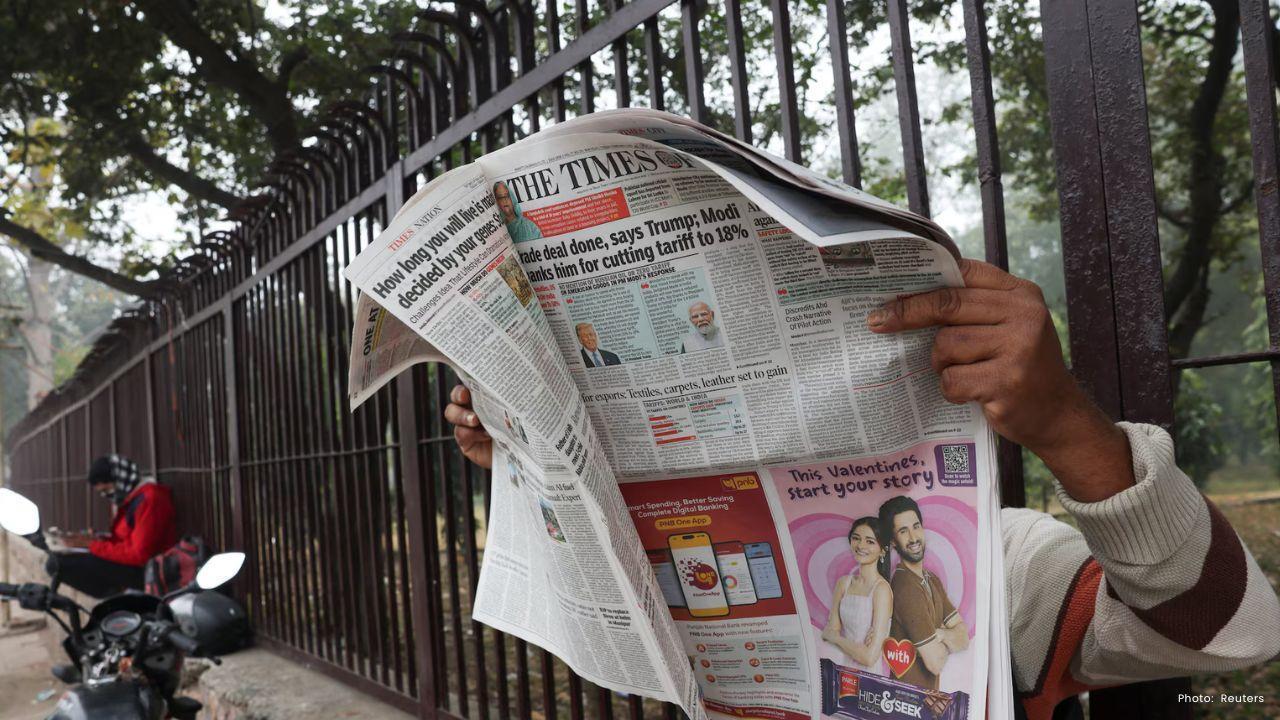
U.S. President Donald Trump’s decision to sharply cut tariffs on Indian goods has brought a sense of relief across India, especially among exporters, investors, and policymakers. The move has improved market confidence, even though many key details of the trade agreement are still not public.
Trump announced that tariffs on Indian imports to the United States would be reduced to 18%, down from a steep 50%. This announcement was made through social media and was followed by strong reactions in Indian financial markets. Stocks rose sharply, and the Indian rupee gained value against the U.S. dollar, showing investor optimism.
According to government sources, the tariff cut is part of a broader understanding between the two countries. India has agreed to increase purchases of U.S. goods such as oil, defence equipment, aircraft, and technology. The deal also includes limited steps to open India’s agriculture market, which has traditionally been well protected.
India has also reduced import duties on foreign cars, responding to long-standing U.S. demands. In return, Trump said that India would buy more American products, with total purchases expected to rise beyond $500 billion. However, he did not explain when or how these purchases would happen.
Economists say the tariff cut helps India compete better with other Asian exporters. Countries like Indonesia, Vietnam, and Bangladesh face U.S. tariffs close to 19–20%, so India is no longer at a disadvantage. Experts believe sectors such as gems and jewellery, leather, plastics, ceramics, auto parts, and manufacturing will benefit the most.
India’s exports to the United States have grown steadily. Government data shows that exports reached $85.5 billion in the first eleven months of last year, while imports from the U.S. stood at $46.08 billion. Analysts say lower tariffs could help exports grow even faster by making Indian goods cheaper and more attractive to American buyers.
Despite the positive response, uncertainty remains. Neither the White House nor the Indian government has released a detailed document explaining the full terms of the agreement. This lack of clarity has raised questions, especially around India’s future oil imports from Russia.
Trump has said India will stop buying Russian oil as part of the deal. However, Indian officials have not confirmed this. Refiners in India say they would need time to end existing contracts. Russia has also said it has not received any official message from India about stopping oil purchases.
Credit rating agencies warn that suddenly cutting Russian oil imports could hurt India’s economy. India is one of the world’s largest oil importers, and a sudden shift could raise fuel prices and increase inflation.
For now, the tariff cut has eased global trade worries and lifted confidence in India’s economy. Markets and businesses are hopeful, but many are waiting for clear and official details before judging the long-term impact of the deal.









Starbucks Engages Boyu Capital for Major Chinese Expansion
Starbucks teams up with Boyu Capital, selling a majority stake to boost growth and adapt to the Chin

Three Individuals Charged in Massive Meth Trafficking Case in Malaysia
In Malaysia, a married couple and another suspect are charged with trafficking 510kg of meth, facing

Singapore Police Revisit Geylang Murder Scene with Suspect
In Geylang, police return a murder suspect to the scene of a crime involving the fatal stabbing of a

Mattel Revives Masters of the Universe Action Figures Ahead of Film Launch
Mattel is reintroducing Masters of the Universe figures in line with its upcoming film, tapping into

China Executes 11 Members of Criminal Clan Linked to Myanmar Scam
China has executed 11 criminals associated with the Ming family, known for major scams and human tra