Post by : Mina Rahman
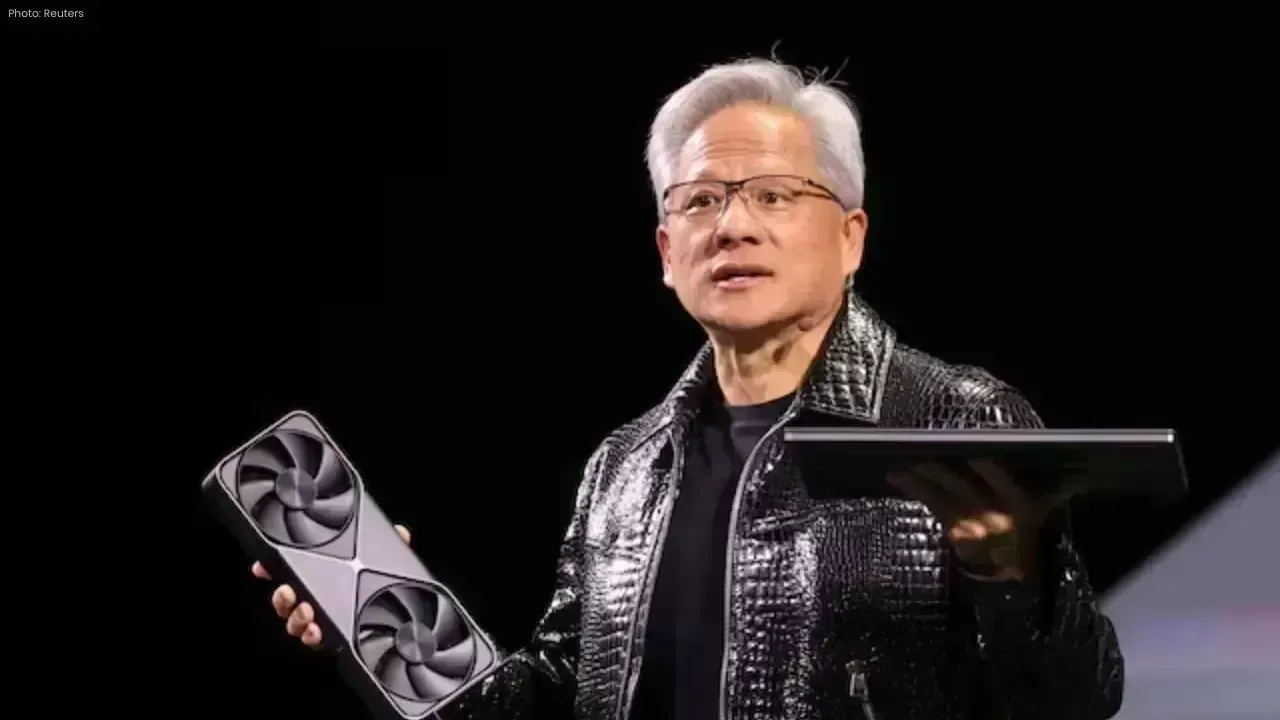
At the Consumer Electronics Show (CES) in Las Vegas, Nvidia CEO Jensen Huang revealed that the firm's next-generation AI chips have officially entered full production, marking a critical milestone in the realm of AI computing. The new Vera Rubin chips are engineered to provide up to five times the AI performance compared to previous models, especially for chatbots and extensive AI frameworks.
This latest platform embodies Nvidia's cutting-edge computing architecture, integrating multiple advanced chips into robust server configurations intended for intricate AI workloads. The company highlights that these servers can assemble into expansive clusters with thousands of interconnected chips, significantly enhancing processing speed, efficiency, and the capability to produce AI-generated outputs like texts, images, and various data responses.
Huang elaborated that such remarkable performance enhancements stem from a novel proprietary data framework and an improved chip design. This innovative strategy yields substantial efficiency improvements while only marginally increasing transistors, paving the way for potentially setting a new industry benchmark.
In tandem with the performance upgrades, Nvidia is rolling out novel memory and networking technologies designed to elevate AI responsiveness. A key innovation aims to minimize delays during extended conversations with chatbots, thereby enhancing the speed and reliability of interactions. The launch also includes new networking switches to optimize data center operations by facilitating faster connections among numerous machines.
Major cloud service providers such as Microsoft, Amazon, Google, and Oracle are anticipated to implement the Vera Rubin systems. CoreWeave, a company concentrating on AI infrastructure, is set to be among the initial users of this new technology.
Beyond hardware innovations, Nvidia also spotlighted advancements in software, particularly for autonomous vehicles. The firm announced an expanded release of open-source software that aids self-driving cars in decision-making and allows meticulous tracking of those decisions. This initiative is designed to enhance transparency and trust, enabling automotive manufacturers to assess and improve AI behavior.
In spite of mounting competition from traditional chip manufacturers and custom AI chips crafted by leading tech firms, Nvidia retains confidence that these groundbreaking innovations will fortify its dominant position in the swiftly evolving global AI landscape.










Intensified Conflict in Aleppo: Syrian Forces Clash with Kurdish Units
Intense clashes in Aleppo have left four dead and thousands displaced, highlighting escalating tensi

Bangladesh Cricket Board Collaborates with ICC on T20 World Cup Security Measures
The Bangladesh Cricket Board is partnering with the ICC to address security issues as they gear up f

Devastating Flash Floods Claim 16 Lives in North Sulawesi, Indonesia
Severe floods in North Sulawesi, Indonesia, resulted in 16 fatalities and displaced over 680 residen

Prasarana Achieves Remarkable Rail Service Improvements in 2025
Prasarana sees over 50% decline in rail disruptions, boosting ridership and restoring faith in Malay

Denmark Signals NATO's Fragility Over US Greenland Encroachment
Denmark warns that US military ambitions towards Greenland could dismantle NATO, highlighting Arctic

Decline in Box Office for Ikkis as Competition Heats Up
Agastya Nanda's Ikkis earned Rs 1.13 crore on its first Monday, facing stiff competition from Dhuran