Post by : Saif Nasser
Japan has chosen not to explain why the Bank of Japan did not join a rare joint statement by major central banks supporting U.S. Federal Reserve Chair Jerome Powell. The decision has drawn attention as global financial leaders closely watch the balance between political power and central bank independence.
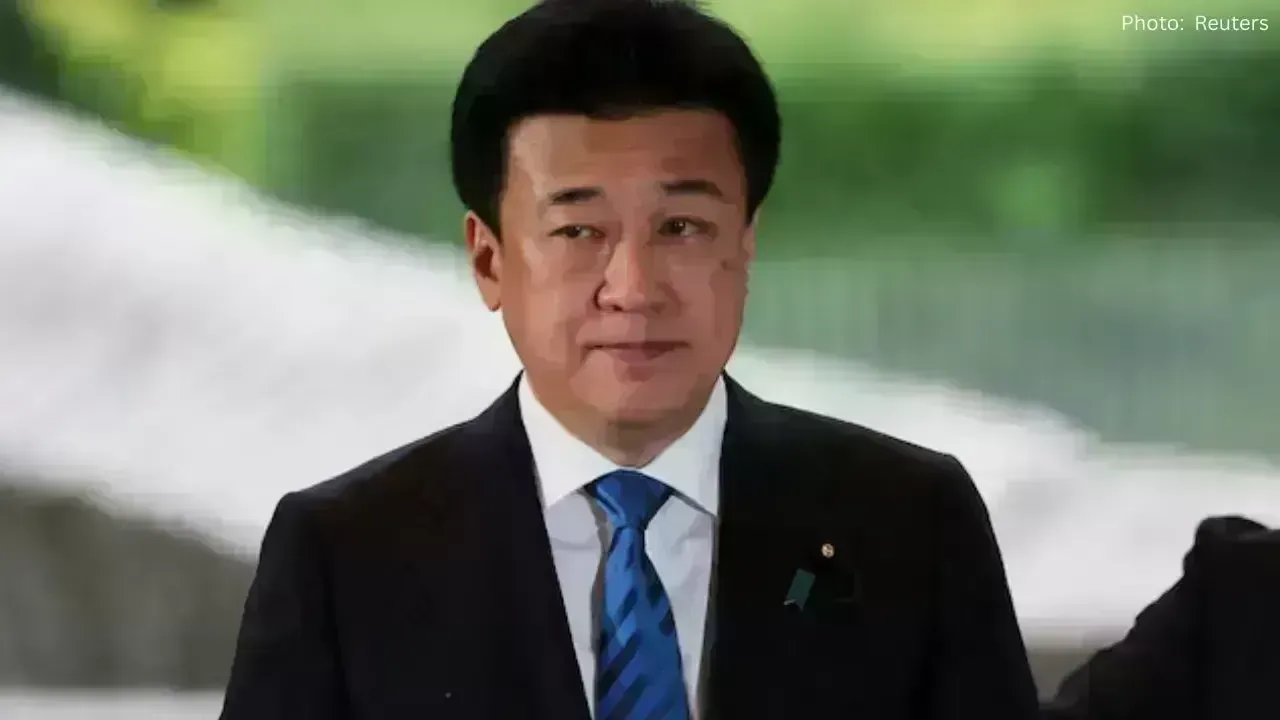
Speaking at a regular press conference in Tokyo, Chief Cabinet Secretary Minoru Kihara said the matter was for the Bank of Japan to decide. He stated that the government would avoid commenting because the central bank acts on its own judgment. His remarks came after several major central banks publicly backed Powell following threats from the Trump administration to pursue criminal charges against him.
The joint statement was unusual in both timing and scale. It was signed by the heads of the European Central Bank, the Bank of England, and the Bank of Canada. Central bank leaders from Sweden, Denmark, Switzerland, Australia, South Korea, Brazil, and France also added their names. Together, they expressed support for Powell and highlighted the importance of protecting central banks from political pressure.
The Bank of Japan, however, was not included among the signatories. This absence quickly raised questions about Japan’s position at a time when global concern over political influence on monetary policy is growing.
When asked about the importance of central bank independence, Kihara gave a careful response. He said the Japanese government believes ultimate responsibility for macroeconomic policy rests with the government. At the same time, he acknowledged that the law requires the Bank of Japan to work closely with the government through regular communication and coordination.
Kihara also made it clear that while monetary policy is part of the broader economic plan, the specific tools and decisions used to manage it should be left to the Bank of Japan. This statement reflects Japan’s long-standing approach, where cooperation exists between the government and the central bank, but daily policy decisions are handled by the bank itself.
Japan’s position stands out because central bank independence is often seen as a key pillar of financial stability. Independent central banks are expected to make decisions based on economic data, not political demands. The joint statement supporting Powell was widely viewed as a signal from global financial leaders that such independence must be protected.
Japan’s refusal to comment does not necessarily mean disagreement with the statement. Instead, it may reflect a cautious approach, especially given Japan’s legal framework and its unique relationship between government and central bank. Still, the silence has fueled debate among economists and political observers.
This moment highlights the growing tension between politics and monetary policy around the world. As governments face economic pressure, inflation concerns, and political challenges, the role of central banks becomes even more sensitive. How nations respond to these pressures can shape global markets and public trust.
For Japan, staying silent may be a way to avoid political conflict while preserving its established system. Yet the decision also reminds the world that each country manages central bank independence in its own way, shaped by history, law, and national priorities.









The Impact of Consistent Small Investments on Wealth Building
Discover how investing small amounts regularly can positively transform your financial future over t

7.5 Magnitude Earthquake Strikes Japan, Tsunami Alerts Issued
Japan experiences a hefty 7.5 quake, prompting tsunami alerts and safety measures. Stay updated on a

Reopening of the Strait of Hormuz: New Regulations to Impact Global Trade
Iran reopens the strategic Strait of Hormuz with new regulations affecting oil transport and global

Top 10 Must-See Attractions in NYC for First-Time Explorers
Discover essential experiences for first-time visitors to NYC, including attractions, culture, and i

Starbucks Engages Boyu Capital for Major Chinese Expansion
Starbucks teams up with Boyu Capital, selling a majority stake to boost growth and adapt to the Chin

Three Individuals Charged in Massive Meth Trafficking Case in Malaysia
In Malaysia, a married couple and another suspect are charged with trafficking 510kg of meth, facing