Post by : Saif Nasser
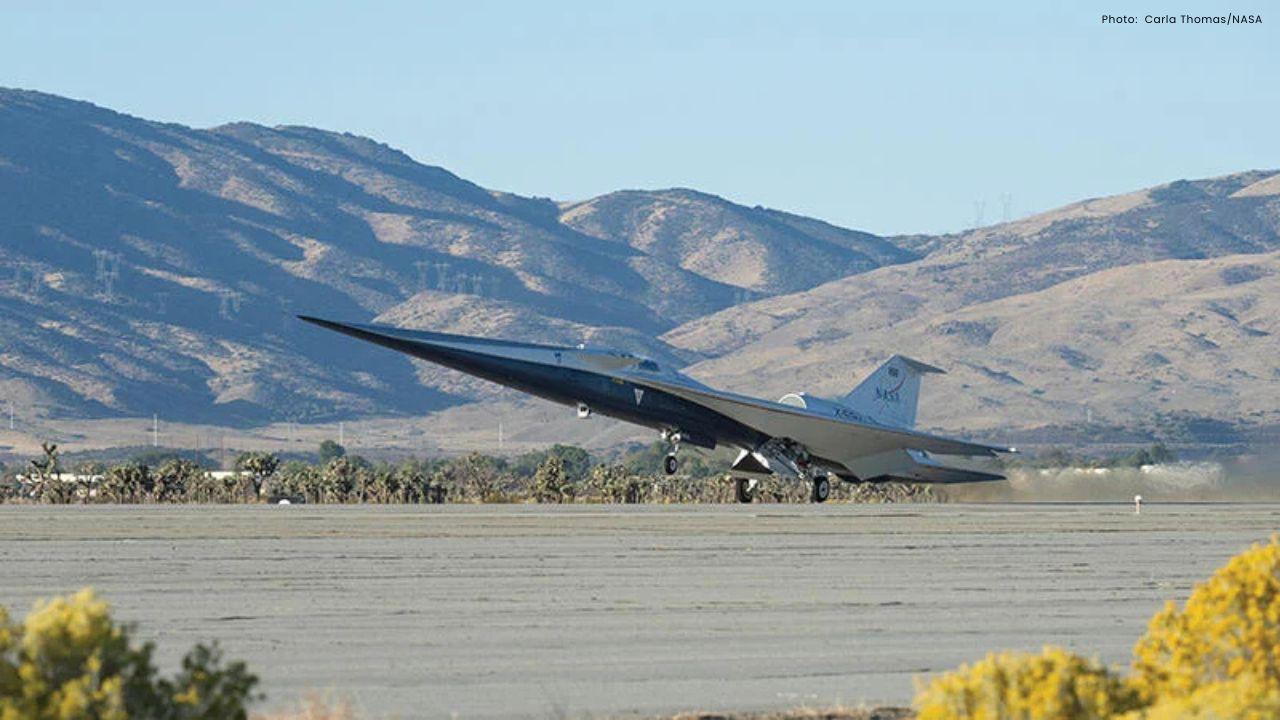
For many years, flying faster than the speed of sound has been possible, but it has also created a serious problem. When an aircraft travels faster than sound, it produces a powerful noise known as a sonic boom. This sound can be extremely loud and can disturb people and buildings on the ground. Because of this issue, most countries banned commercial supersonic flights over land many decades ago. Now, scientists and engineers are working on a new aircraft that may solve this problem. The aircraft, called the X-59, is being developed by NASA to show that supersonic flight can be much quieter.
The X-59 is part of a special NASA research program known as the Quiet SuperSonic Technology mission, often called Quesst. The purpose of this program is to design and test a supersonic aircraft that produces a much softer sound instead of a powerful boom. If the project succeeds, it could lead to changes in aviation rules and allow faster flights over land in the future.
The aircraft is being built by NASA in partnership with Lockheed Martin, a major aerospace company. The development work is taking place at Lockheed Martin’s advanced research division known as Skunk Works. This facility has a long history of creating innovative aircraft and testing new aerospace technologies.
One of the most striking features of the X-59 is its unusual shape. The aircraft has a very long and narrow nose that stretches far in front of the cockpit. This design plays a key role in reducing noise. Normally, when a supersonic aircraft moves through the air, strong shockwaves form around the plane. These shockwaves combine and reach the ground as a loud sonic boom. The X-59’s special shape spreads these shockwaves apart so that the sound reaching the ground becomes a softer “thump” instead of a thunder-like boom.
Another interesting detail about the aircraft is that the pilot cannot see directly through a traditional front window. Because the nose of the plane is so long, it blocks the pilot’s forward view. To solve this problem, engineers installed an advanced camera system outside the aircraft. Cameras capture live images and send them to screens inside the cockpit, allowing the pilot to see ahead during flight. This technology could also become useful for future aircraft designs.
The X-59 is expected to travel at about 1.4 times the speed of sound, which is roughly 925 miles per hour. The aircraft will operate at high altitudes of around 55,000 feet above the ground. Flying at these speeds and heights will allow NASA researchers to test how well the aircraft reduces sonic boom noise during real flight conditions.
One of the most important parts of the project will involve testing how people react to the sound created by the aircraft. After completing early flight tests, NASA plans to fly the X-59 over selected communities in the United States. Residents will be asked to share their opinions about the noise they hear. Scientists will collect this information and study whether people find the quieter sound acceptable.
The results from these tests will be shared with aviation regulators such as the Federal Aviation Administration in the United States and other international authorities. These organizations create the rules that control how aircraft operate. If the data shows that the quieter sound is acceptable, regulators may consider updating the long-standing ban on supersonic flights over land.
Such a change could have a major impact on the future of aviation. Faster aircraft could reduce travel times between cities by several hours. Long flights that currently take many hours could become much shorter, making travel easier for business, tourism, and global connections.
However, experts also say that noise is only one of several challenges facing supersonic travel. Engineers must also consider fuel efficiency, environmental impact, and the cost of developing and operating high-speed aircraft. New technologies will be needed to make supersonic passenger travel both practical and sustainable.
Even with these challenges, the X-59 represents a major step forward in aerospace research. The aircraft combines modern engineering, advanced computer design, and new technologies to solve a problem that has limited aviation for decades.
The success of the X-59 project could open the door for a new generation of quiet supersonic passenger aircraft. If the technology proves effective, travelers in the future may once again experience flights that move faster than sound—this time without disturbing the communities below.
For now, the X-59 remains a research aircraft designed to gather data and test new ideas. But the lessons learned from this project may shape the next chapter of aviation history and bring the dream of quiet, high-speed travel closer to reality.










Price Increase for Sony PS5 in Southeast Asia Effective May 1
Sony announces a price increase for the PS5 across Southeast Asia starting May 1, 2026, impacting ga

Potential ‘Super El Niño’ in 2026: Understanding the Climate Risks
Could a Super El Niño emerge in 2026? Discover its implications and potential global climate impacts

Global Energy Crisis Intensifies: Markets React to Oil Supply Challenges
Markets are on edge as oil disruptions escalate, influencing prices and economic stability. Explore

Must-See Tourist Spots in London You Can't Overlook
Explore London's essential attractions, from royal landmarks to vibrant markets, ensuring an unforge

Ultimate Guide to Snagging Cheap Flights in 2026
Unlock the secrets to booking affordable flights in 2026 with insightful tips and strategies tailore

The Impact of Consistent Small Investments on Wealth Building
Discover how investing small amounts regularly can positively transform your financial future over t