Post by : Saif Nasser
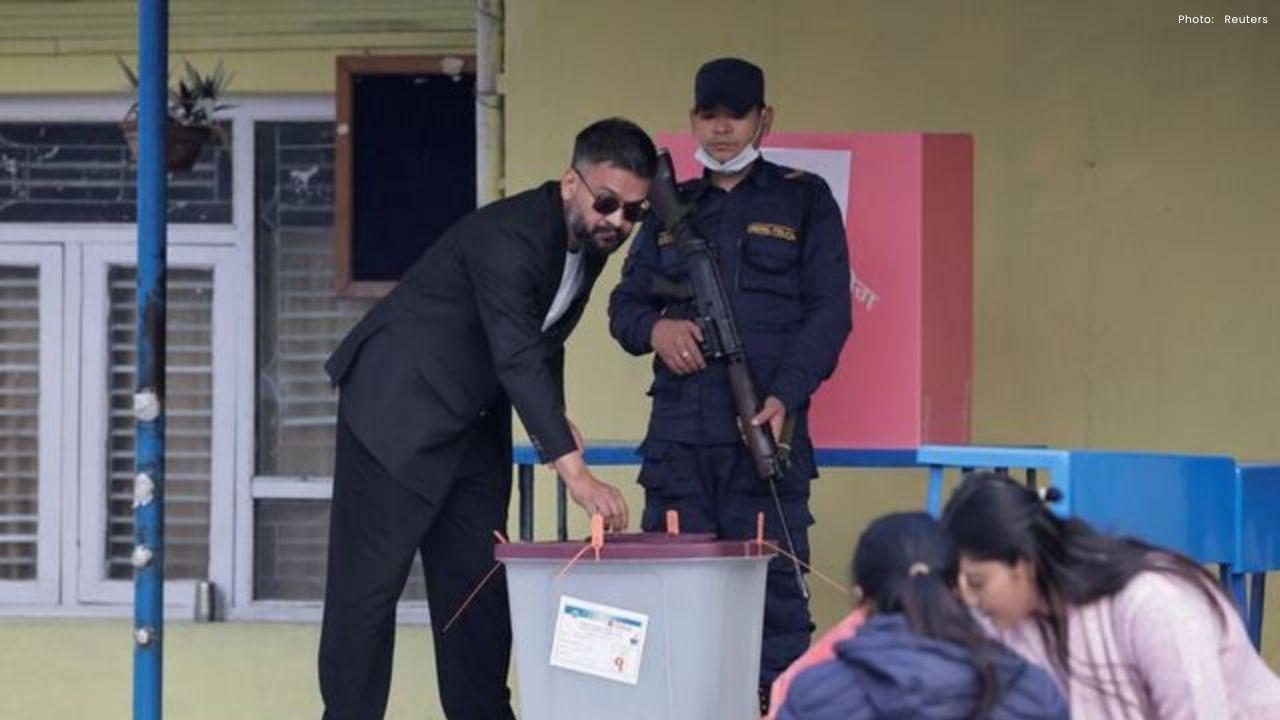
Nepal has begun voting in one of the most important elections in its recent history. Millions of citizens across the Himalayan nation are casting their ballots after months of political turmoil and large youth-led protests that shook the country and forced the resignation of the previous government.
The election has become more than a routine political exercise. For many Nepalis, it represents a chance to reshape the country's future and address deep frustrations over corruption, unemployment, and poor governance. People across cities, towns, and remote villages lined up at polling stations with hopes that this vote will bring real change.
Nearly 19 million voters are eligible to participate in the nationwide election. Polling stations were set up in schools, public buildings, and community centers across the country. Authorities deployed heavy security to maintain order and ensure that voting remains peaceful. Early reports suggested that the voting process began calmly, with long lines of voters forming soon after the polls opened.
This election comes after a dramatic period in Nepal’s politics. In September 2025, massive protests led mainly by young people spread across the country. Demonstrators accused political leaders of corruption, nepotism, and failing to provide jobs or economic opportunities. The protests were also triggered by a controversial decision to ban several social media platforms, which many young citizens saw as an attempt to silence criticism.
The demonstrations quickly turned intense. Thousands of people marched in the streets of Kathmandu and other cities. Clashes between protesters and security forces left dozens dead and many injured. According to reports, at least 77 people lost their lives during the unrest. The political pressure eventually forced then–Prime Minister K. P. Sharma Oli to step down from power.
After the government collapsed, Nepal entered a period of political transition. An interim administration was formed to stabilize the country and prepare for fresh elections. The parliament was dissolved, and authorities promised voters that the new election would allow citizens to decide the future direction of the nation.
The current election will choose members for the 275-seat House of Representatives, the lower chamber of Nepal’s federal parliament. Out of these seats, 165 are filled through direct voting in constituencies, while 110 seats are distributed through a proportional representation system that reflects the overall share of votes received by political parties.
More than 3,000 candidates from dozens of political parties are competing in the election. Traditional political forces such as the Nepali Congress and the Communist Party are once again seeking to lead the government. However, this election also features several newer political movements that have gained support from young voters who want a break from the old political system.
One of the most talked-about figures in the election is Balendra Shah, often known simply as “Balen.” He first became famous as a rapper before entering politics and winning the mayoral election in Kathmandu. Since then, he has built a strong following among young people who believe he represents a fresh and bold style of leadership. His rise reflects the wider mood in Nepal, where many voters are questioning traditional political parties.
Young voters are expected to play a major role in deciding the outcome of the election. More than 800,000 first-time voters have registered, many of whom were directly involved in the protests that changed Nepal’s political landscape last year. For them, the election is not only about choosing leaders but also about making sure their voices are heard.
Across the country, many voters say they want a government that focuses on real issues affecting daily life. Job creation is one of the biggest concerns. Large numbers of young Nepalis leave the country each year to find work abroad, especially in the Gulf states and Malaysia. Families often depend on money sent home by these workers, but many citizens want stronger economic opportunities within Nepal itself.
Corruption is another major issue. Protesters last year accused political leaders of misusing public money and protecting powerful families within the political system. Many voters say they are tired of the same leaders returning to power without meaningful reforms. The election has therefore become a test of whether new political forces can challenge long-standing political traditions.
At the same time, the next government will face serious challenges beyond domestic politics. Nepal sits between two major regional powers, India and China, and maintaining balanced relations with both countries is an important part of the nation’s foreign policy. Economic cooperation, trade routes, and infrastructure projects often depend on these relationships.
Election officials say counting the votes may take several days. The system that includes both direct votes and proportional representation can slow down the final tally. However, early trends are expected to emerge soon after the polls close.
For many Nepalis, the meaning of this election goes far beyond political competition. It represents a moment of reflection after a year of turmoil and sacrifice. Families who lost loved ones during the protests are watching closely to see whether the changes they fought for will finally become reality.
The country now stands at a crossroads. The energy of the youth movement has already reshaped Nepal’s politics. The question that remains is whether the election results will bring the reforms that millions of citizens are hoping for.






DAE Achieves Remarkable Growth in Q1 2026 With Record Revenue
Dubai Aerospace Enterprise announces impressive financial results for Q1 2026, reflecting a surge in

Price Increase for Sony PS5 in Southeast Asia Effective May 1
Sony announces a price increase for the PS5 across Southeast Asia starting May 1, 2026, impacting ga

Potential ‘Super El Niño’ in 2026: Understanding the Climate Risks
Could a Super El Niño emerge in 2026? Discover its implications and potential global climate impacts

Global Energy Crisis Intensifies: Markets React to Oil Supply Challenges
Markets are on edge as oil disruptions escalate, influencing prices and economic stability. Explore

Must-See Tourist Spots in London You Can't Overlook
Explore London's essential attractions, from royal landmarks to vibrant markets, ensuring an unforge

Ultimate Guide to Snagging Cheap Flights in 2026
Unlock the secrets to booking affordable flights in 2026 with insightful tips and strategies tailore




