Post by : Saif Nasser
Iran briefly closed its airspace to commercial aircraft for several hours early Thursday, causing disruption to global air travel and raising fresh concerns about security in the region. The move came without any clear explanation from Tehran and happened at a time when tensions between Iran and the United States remain very high due to Iran’s violent crackdown on nationwide protests.
The airspace closure lasted for more than four hours, according to guidance issued to pilots. Iran sits along one of the world’s most important east-west flight routes, connecting Europe and Asia. Because of this, the closure quickly affected international airlines, many of which were forced to divert their flights either north or south to avoid Iranian skies. After one extension, the closure appeared to end, and several domestic flights were seen in the air shortly after 7 a.m.
Iran has shut its airspace before during times of conflict. It did so during a 12-day war with Israel in June and again when it exchanged fire with Israel during the Israel-Hamas war. However, this time there were no immediate signs of active fighting. Even so, the sudden decision sent shockwaves through the aviation industry because of Iran’s central location on global flight paths.
Aviation safety experts warned that the closure could signal deeper security concerns. SafeAirspace, a website that tracks risks to civil aviation, said many airlines have already reduced or suspended flights in the region. It also warned that the situation could point to possible military activity, such as missile launches or increased air defense alerts, which raise the risk of civilian aircraft being misidentified.
These fears are not unfounded. In 2020, Iran’s air defense mistakenly shot down Ukraine International Airlines Flight PS752 shortly after it took off from Tehran, killing all 176 people on board. Iranian officials initially denied responsibility before later admitting the aircraft was hit by two missiles. That tragedy still shapes how airlines view safety risks in Iranian airspace.
The airspace closure also came as security alerts spread across the Gulf region. Some personnel at a key U.S. military base in Qatar were advised to evacuate. At the same time, the U.S. Embassy in Kuwait ordered its staff to temporarily stop visiting military bases in the country. These moves added to concerns that the situation between Washington and Tehran could worsen quickly.
U.S. President Donald Trump made several unclear public comments that added to the uncertainty. He said he had heard from “very important sources” that Iran had stopped planned executions of detainees, though he offered no proof or details. Asked whether military strikes were off the table, Trump said the United States would continue to watch developments closely.
Just a day earlier, Trump had told protesters in Iran that “help is on the way” and said his administration would respond to Iran’s deadly crackdown. Those comments raised fears that the U.S. could take stronger action against Tehran.
Iran, however, appeared to strike a softer tone soon after. Foreign Minister Abbas Araghchi urged the United States to choose talks over conflict. In an interview, he said diplomacy was better than war, even though Iran does not trust the U.S. based on past experience. His remarks suggested that Tehran may be trying to avoid a wider military confrontation.
This diplomatic message came as Iran’s judiciary signaled a much harsher approach at home. The head of the judiciary said the government must act quickly to punish thousands of people detained during protests. Human rights groups warned that executions could begin soon.
According to the U.S.-based Human Rights Activists News Agency, at least 2,615 people have been killed during the security forces’ crackdown. This makes the current unrest the deadliest wave of protests Iran has seen in decades, reminding many of the turmoil surrounding the 1979 Islamic Revolution.
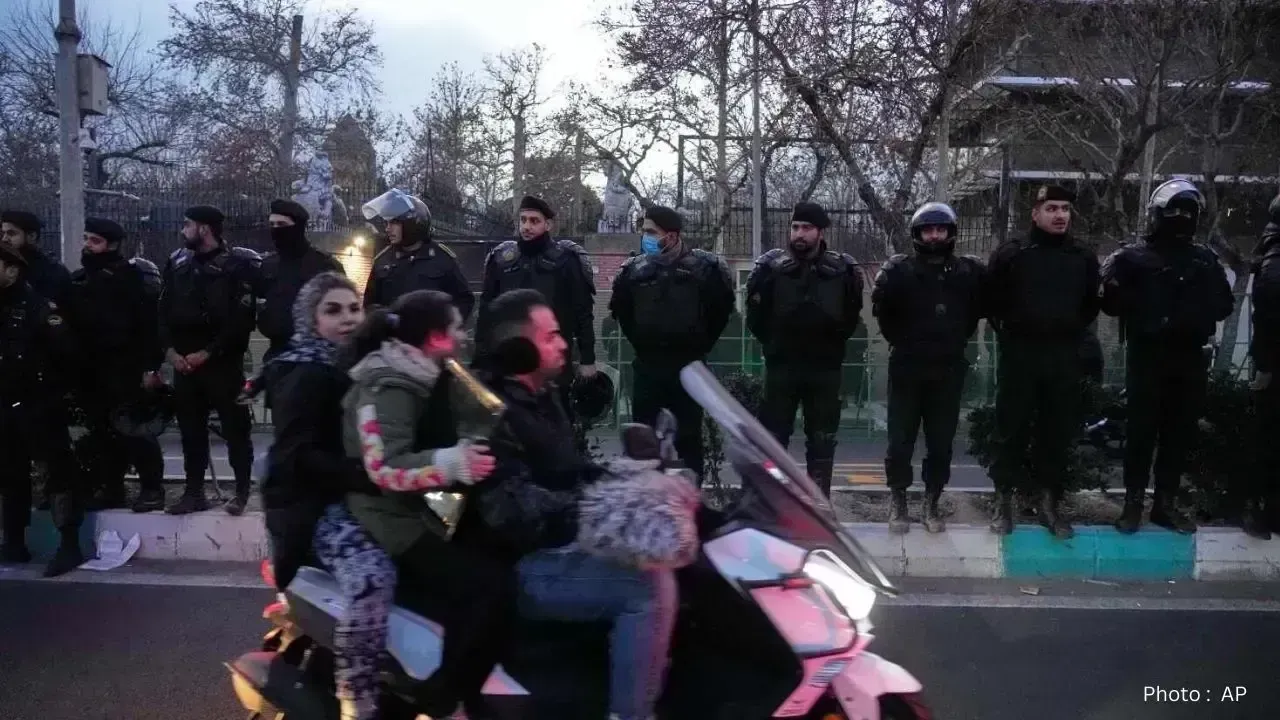
Inside Iran, scenes of mourning and anger continue to unfold. Funerals for slain security personnel have taken place, while protests supporting anti-government movements have spread beyond Iran’s borders, with demonstrations reported in cities such as Berlin and Holon in Israel.
The brief airspace closure may have ended, but the wider crisis has not. With protests ongoing, harsh government responses, and tense signals exchanged between Tehran and Washington, the situation remains fragile. For airlines, governments, and ordinary people, the fear is that even a small incident could trigger a much larger crisis in an already unstable region.






The Impact of Consistent Small Investments on Wealth Building
Discover how investing small amounts regularly can positively transform your financial future over t

7.5 Magnitude Earthquake Strikes Japan, Tsunami Alerts Issued
Japan experiences a hefty 7.5 quake, prompting tsunami alerts and safety measures. Stay updated on a

Reopening of the Strait of Hormuz: New Regulations to Impact Global Trade
Iran reopens the strategic Strait of Hormuz with new regulations affecting oil transport and global

Top 10 Must-See Attractions in NYC for First-Time Explorers
Discover essential experiences for first-time visitors to NYC, including attractions, culture, and i

Starbucks Engages Boyu Capital for Major Chinese Expansion
Starbucks teams up with Boyu Capital, selling a majority stake to boost growth and adapt to the Chin

Three Individuals Charged in Massive Meth Trafficking Case in Malaysia
In Malaysia, a married couple and another suspect are charged with trafficking 510kg of meth, facing