
Post by : Saif Nasser
The Association of Southeast Asian Nations, commonly known as ASEAN, has clearly stated that it does not recognise Myanmar’s recent election. This announcement highlights growing regional concern over the political situation in Myanmar, where the military has remained in control since taking power in a coup in 2021.
Myanmar conducted a national election in several phases, which authorities said was aimed at restoring civilian rule. The military-backed Union Solidarity and Development Party claimed a large victory, securing most of the seats in parliament. However, the election has faced strong criticism both inside and outside the country. Many opposition parties were barred from participating, and voting did not take place in large parts of the country due to ongoing fighting.
Speaking on behalf of ASEAN, the Philippine foreign minister said the regional bloc has not endorsed any phase of the election process so far. ASEAN believes the conditions in Myanmar do not support a fair and inclusive vote. Because of this, the group does not consider the election result legitimate at this time.
Myanmar has been in deep political turmoil since the military removed the elected government led by Aung San Suu Kyi. What began as peaceful protests quickly turned into armed conflict across the country. Today, Myanmar is facing a civil war that has displaced millions of people and caused severe humanitarian suffering.
ASEAN leaders have repeatedly said that peace in Myanmar requires an end to violence, open dialogue among all political groups, and the inclusion of all stakeholders in any political process. According to ASEAN, these basic conditions have not been met. Without them, elections cannot truly reflect the will of the people.
The bloc has also faced criticism for its cautious approach. ASEAN traditionally avoids interfering in the internal affairs of its member states. However, Myanmar’s crisis has tested this principle, pushing ASEAN to take a stronger public stance than in the past.
By refusing to recognise the election, ASEAN sends a message that political legitimacy cannot be achieved through tightly controlled voting held during conflict. The decision also keeps Myanmar diplomatically isolated at a time when its military leaders are seeking wider acceptance and engagement.
As the situation continues, ASEAN faces a difficult balance. It must work to encourage peace and stability while also standing by democratic values. Until fighting stops and meaningful dialogue begins, regional leaders appear unwilling to accept elections as a solution to Myanmar’s crisis.
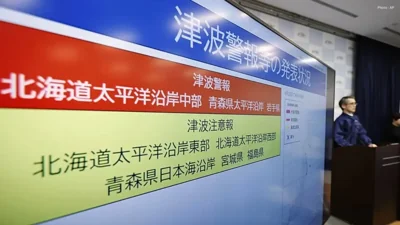







7.5 Magnitude Earthquake Strikes Japan, Tsunami Alerts Issued
Japan experiences a hefty 7.5 quake, prompting tsunami alerts and safety measures. Stay updated on a

Reopening of the Strait of Hormuz: New Regulations to Impact Global Trade
Iran reopens the strategic Strait of Hormuz with new regulations affecting oil transport and global

Top 10 Must-See Attractions in NYC for First-Time Explorers
Discover essential experiences for first-time visitors to NYC, including attractions, culture, and i

Starbucks Engages Boyu Capital for Major Chinese Expansion
Starbucks teams up with Boyu Capital, selling a majority stake to boost growth and adapt to the Chin

Three Individuals Charged in Massive Meth Trafficking Case in Malaysia
In Malaysia, a married couple and another suspect are charged with trafficking 510kg of meth, facing