Post by : Saif Nasser
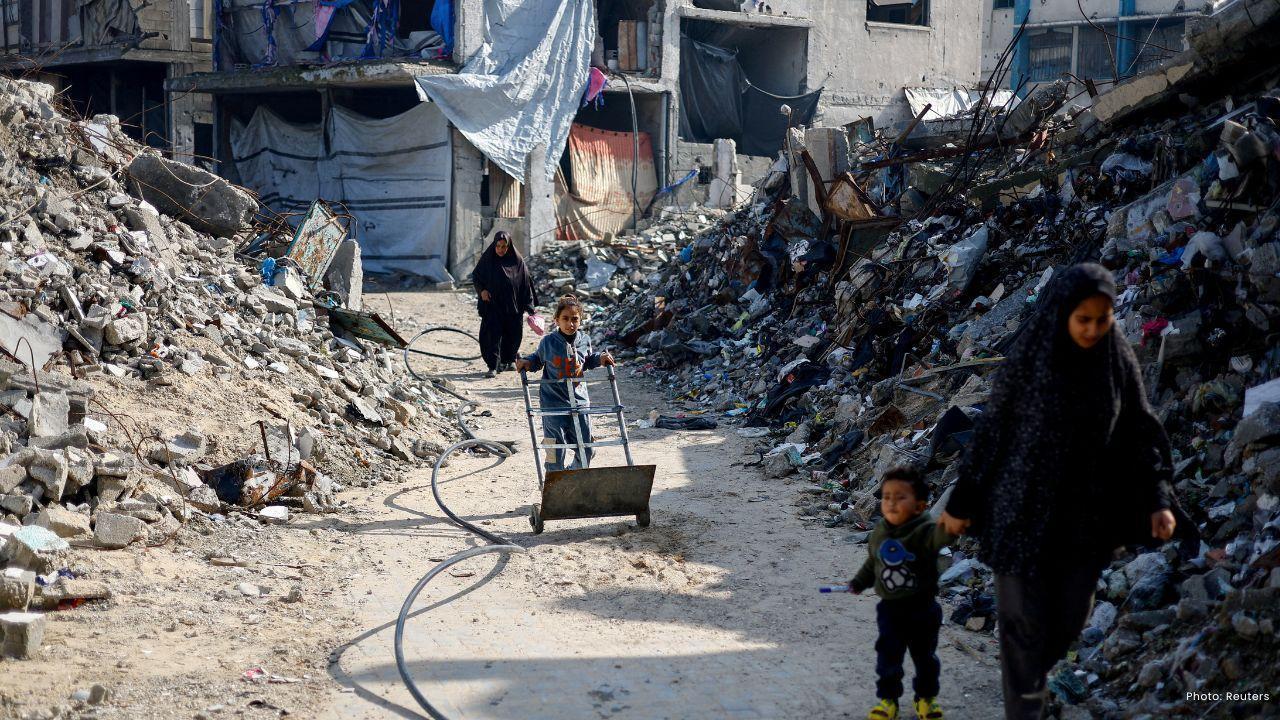
An early and serious warning about the humanitarian disaster in Gaza was blocked from reaching senior leaders in the United States government, according to former officials and documents. The warning, prepared by staff at the U.S. Agency for International Development, described northern Gaza as an “Apocalyptic Wasteland” only months after the war began.
The internal message was written in early 2024, about three months after the October 7, 2023 attacks by Hamas and Israel’s military response in Gaza. It was based on reports from United Nations teams who visited northern Gaza during humanitarian missions. The message described scenes of extreme destruction, shortages of food and clean water, and a collapse of basic services.
According to people familiar with the matter, the cable included disturbing details such as human bones lying on roads, bodies left inside vehicles, and widespread hunger. It warned of “catastrophic human needs,” especially for food, medical care, and safe drinking water.
However, the message was not shared widely within the U.S. government. The U.S. ambassador to Israel, Jack Lew, and his deputy, Stephanie Hallett, blocked the cable. They believed the report lacked balance and relied too heavily on humanitarian sources. Because of this decision, many senior officials in Washington never saw the warning.
Former officials say this cable was one of several written by USAID in early 2024 that described the rapidly worsening conditions in Gaza. All of them were either delayed or blocked. These reports were unusually direct and graphic and could have pushed leaders to take a harder look at U.S. policy toward the war.
At the time, the Biden administration was publicly supporting Israel while also expressing concern about civilian suffering. President Joe Biden himself said Israel’s actions were “over the top” and warned about innocent people starving. Still, humanitarian experts inside the U.S. system say their voices were often ignored.
USAID officials relied heavily on information from United Nations agencies and aid groups because the U.S. had no staff inside Gaza. Some senior officials questioned this reporting and compared it with Israel’s version of events, which often differed sharply. This led to doubts and delays in sharing the information.
One earlier USAID cable about the risk of famine was approved and did reach the president’s daily briefing. That report surprised senior White House officials and showed how fast the food situation was collapsing. But regular, first-hand warnings like the “Apocalyptic Wasteland” cable never reached the same level.
Humanitarian workers say this reflects a larger problem. They believe expert warnings were pushed aside during sensitive political talks over ceasefires and hostages. As a result, urgent alerts about civilian suffering were treated as too risky to circulate.
The war in Gaza has killed tens of thousands of people, according to local health authorities, and displaced millions. Inside the United States, support for Israel during the conflict has divided the Democratic Party. Polls show many Americans believe the military response has gone too far and want more help for civilians in Gaza.
This episode raises difficult questions about how governments handle uncomfortable truths during war. When early warnings are blocked or delayed, the cost is often paid by civilians who suffer in silence while decisions are made far away.







Mattel Revives Masters of the Universe Action Figures Ahead of Film Launch
Mattel is reintroducing Masters of the Universe figures in line with its upcoming film, tapping into

China Executes 11 Members of Criminal Clan Linked to Myanmar Scam
China has executed 11 criminals associated with the Ming family, known for major scams and human tra

US Issues Alarm to Iran as Military Forces Deploy in Gulf Region
With a significant military presence in the Gulf, Trump urges Iran to negotiate a nuclear deal or fa

Copper Prices Reach Unprecedented Highs Amid Geopolitical Turmoil
Copper prices soar to all-time highs as geopolitical tensions and a weakening dollar boost investor

New Zealand Secures First Win Against India, Triumph by 50 Runs
New Zealand won the 4th T20I against India by 50 runs in Vizag. Despite Dube's impressive 65, India