Post by : Saif Nasser
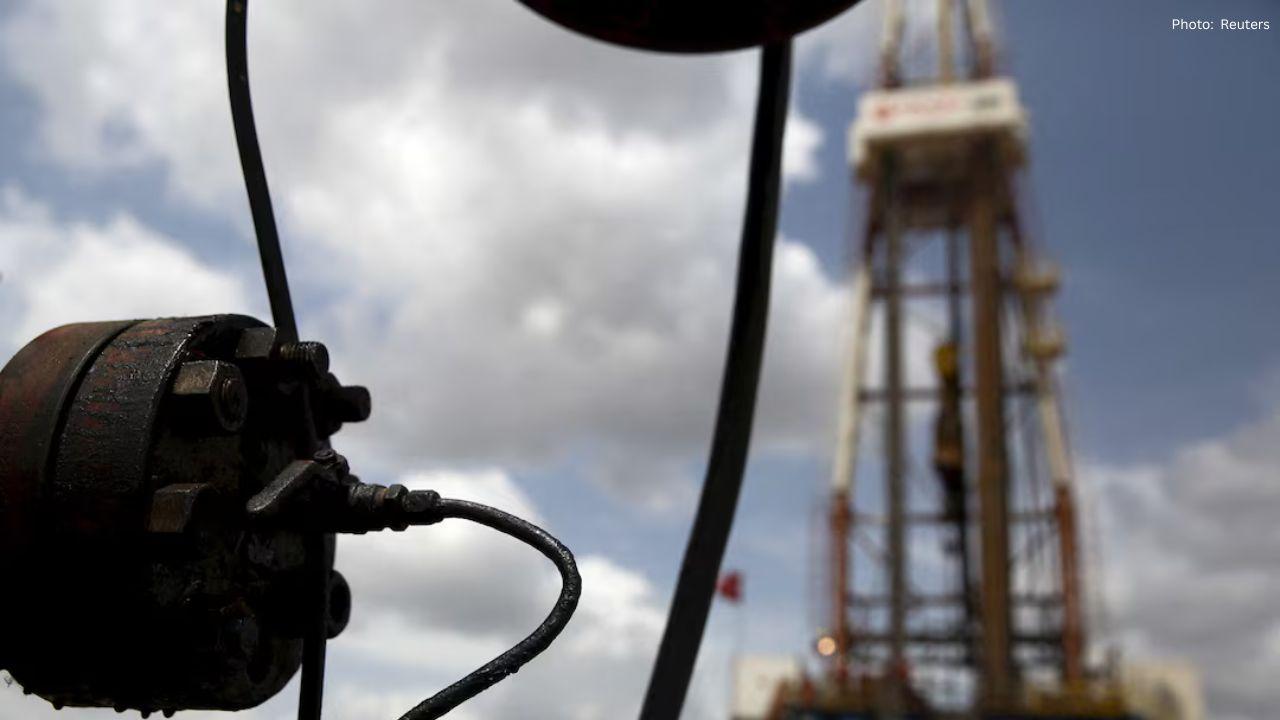
Venezuela is set to export up to $2 billion worth of crude oil to the United States under a new agreement with Washington, marking a major shift in global energy flows and U.S.-Venezuela relations. The deal, announced by U.S. President Donald Trump, will redirect Venezuelan oil exports away from China and send between 30 million and 50 million barrels of crude to American ports.
The agreement comes at a critical moment for Venezuela’s oil industry, which has been struggling under strict U.S. sanctions, falling production, and limited storage capacity. According to Trump, the oil will be sold at market prices, and the proceeds will be controlled by the U.S. government to ensure they are used for the benefit of both Venezuelan and American people.
For Venezuela, the deal offers a way out of an immediate crisis. The country has millions of barrels of oil sitting in tankers and storage facilities that could not be exported due to a blockade imposed by the U.S. since mid-December. Without new buyers, Venezuela faced the risk of deeper production cuts because it was running out of space to store unsold oil.
The blockade was part of growing pressure by the Trump administration on the government of President Nicolás Maduro. That pressure reached a peak over the weekend when U.S. forces captured Maduro and brought him to the United States to face drug-related charges. Venezuelan officials have strongly criticized the move, calling it a kidnapping and accusing Washington of trying to take control of Venezuela’s vast oil resources.
After Maduro’s removal, Delcy Rodriguez was sworn in as interim president. Trump has openly demanded that her government give U.S. companies broad access to Venezuela’s oil industry or face further consequences. The oil export deal is seen as a clear sign that Caracas is responding to these demands.
Under the agreement, oil shipments originally meant for China are expected to be redirected to the United States. China has been Venezuela’s biggest oil buyer over the past decade, especially after U.S. sanctions in 2020 pushed many Western companies out of the country. Redirecting these supplies marks a major change in Venezuela’s trade patterns.
At present, Chevron is the only U.S. company authorized to export Venezuelan oil. The company has been shipping between 100,000 and 150,000 barrels per day to the U.S. through joint ventures with Venezuela’s state oil firm PDVSA. Chevron has continued operations despite sanctions and has full control over Venezuelan oil flows to the U.S. for now.
It remains unclear how much access Venezuela will have to the money earned from the oil sales. Sanctions have cut PDVSA off from the global financial system, frozen its bank accounts, and blocked transactions in U.S. dollars. Venezuela has been selling its main crude grade, Merey, at a deep discount, which puts the total value of the deal at around $1.9 billion.
Discussions between U.S. and Venezuelan officials have also included possible auctions, where U.S. buyers could bid for oil cargoes, and the issuing of special licenses to PDVSA’s partners. In the past, such licenses allowed companies from the U.S., India, China, and Europe to refine or resell Venezuelan oil. Some of these companies are already preparing to receive cargoes again.
There have also been talks about whether Venezuelan oil could one day be used to refill the U.S. Strategic Petroleum Reserve, though Trump did not mention this option directly.
U.S. Interior Secretary Doug Burgum welcomed the prospect of increased Venezuelan oil flowing to the U.S. Gulf Coast, calling it good news for American jobs, fuel prices, and Venezuela’s recovery. He said that with American investment and technology, Venezuela has a chance to rebuild its economy.
U.S. Gulf Coast refineries are well-equipped to handle Venezuela’s heavy crude and once imported around 500,000 barrels per day before sanctions were imposed. News of the deal quickly affected markets, with U.S. crude prices falling more than 1.5% and traders adjusting prices for heavy oil grades.
From an editorial standpoint, the deal highlights how energy, politics, and power are closely linked. While the agreement may help stabilize oil markets and prevent further economic damage in Venezuela, it also raises serious questions about sovereignty, sanctions, and who truly controls the benefits of the oil trade.
The coming weeks will show whether this deal becomes a step toward recovery for Venezuela or simply another chapter in a long struggle shaped by foreign pressure and political conflict.










The Impact of Consistent Small Investments on Wealth Building
Discover how investing small amounts regularly can positively transform your financial future over t

7.5 Magnitude Earthquake Strikes Japan, Tsunami Alerts Issued
Japan experiences a hefty 7.5 quake, prompting tsunami alerts and safety measures. Stay updated on a

Reopening of the Strait of Hormuz: New Regulations to Impact Global Trade
Iran reopens the strategic Strait of Hormuz with new regulations affecting oil transport and global

Top 10 Must-See Attractions in NYC for First-Time Explorers
Discover essential experiences for first-time visitors to NYC, including attractions, culture, and i

Starbucks Engages Boyu Capital for Major Chinese Expansion
Starbucks teams up with Boyu Capital, selling a majority stake to boost growth and adapt to the Chin

Three Individuals Charged in Massive Meth Trafficking Case in Malaysia
In Malaysia, a married couple and another suspect are charged with trafficking 510kg of meth, facing