Post by : Saif Nasser
The United States has sharply escalated its pressure on Venezuela by seizing two oil tankers in the Atlantic Ocean, one of which was sailing under the Russian flag. This move is part of President Donald Trump’s aggressive effort to control oil flows in the Americas and reshape Venezuela’s energy future under American terms. The decision has sent shockwaves across global energy markets and raised serious concerns among major world powers.
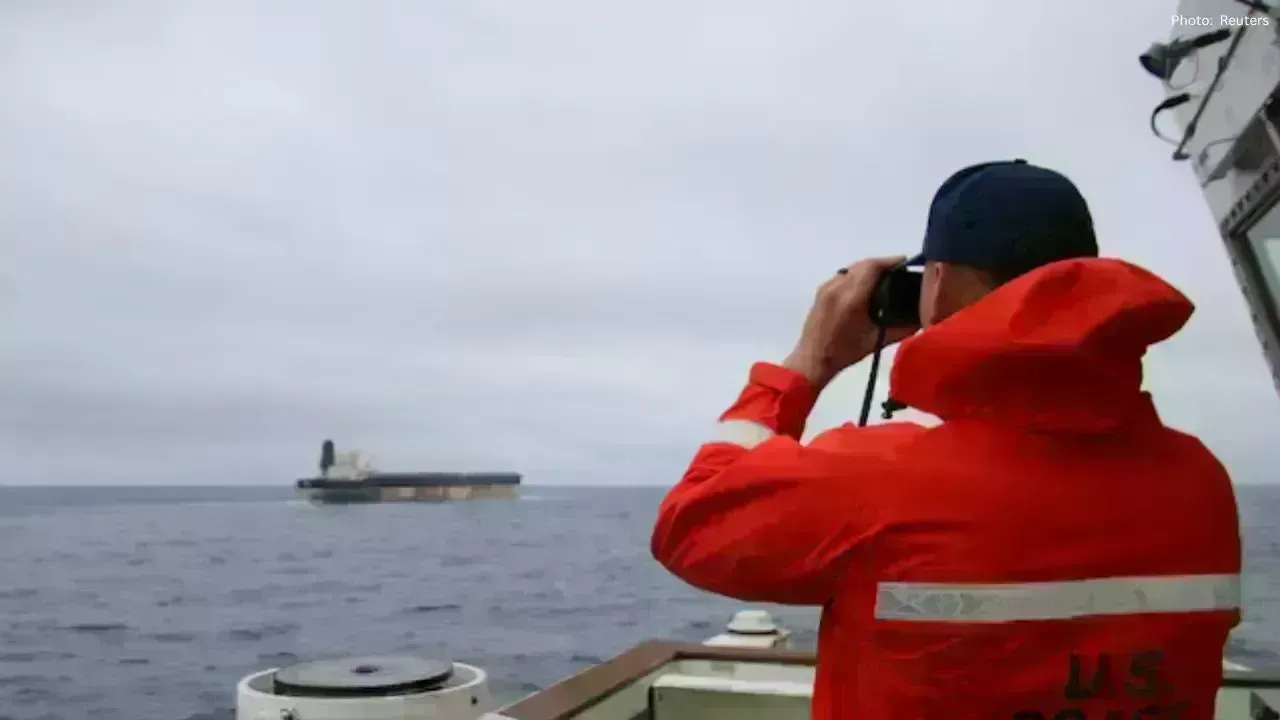
US officials said the Coast Guard and military special forces intercepted the tanker Marinera, previously known as Bella-1, after a weeks-long chase across the Atlantic. The ship had earlier refused to allow boarding and later switched its registration to Russia in what US authorities described as an attempt to evade sanctions. Although the tanker was not carrying oil at the time, Washington claims it was part of a secret network used to transport sanctioned crude.
On the same day, US forces also seized another tanker, the M Sophia, which was fully loaded with Venezuelan oil and sailing under the Panamanian flag. This marked the fourth such seizure in recent weeks and showed how serious the US has become about enforcing its sanctions and controlling maritime oil transport linked to Venezuela.
These actions come just days after a dramatic US military operation in Caracas that resulted in the arrest of Venezuelan President Nicolas Maduro. The US accuses Maduro of drug trafficking and working closely with America’s rivals. Maduro has denied the charges and pleaded not guilty in a US court, but his arrest has already changed the political balance in Venezuela and intensified international debate.
The Trump administration says it will now allow Venezuelan oil exports only if they meet US legal and security conditions. At the same time, the White House has announced plans to selectively roll back some sanctions imposed during Trump’s first term. The goal, officials say, is to revive Venezuela’s oil sector in a way that benefits the United States and opens opportunities for American companies.
President Trump has openly stated that the US plans to refine and sell up to 50 million barrels of Venezuelan oil that has been trapped under sanctions. He has claimed that the money earned would be used by Venezuela to buy American goods such as food, medicine, and farm products. Critics argue this approach amounts to controlling another country’s natural resources by force.
The seizure of a tanker sailing under the Russian flag has raised fears of wider confrontation. US officials confirmed that Russian naval vessels were operating nearby during the operation. Russia has already condemned US actions in Venezuela, while China, Venezuela’s largest oil customer, reacted strongly by accusing Washington of bullying and abusing its power.
Chinese officials said the US has no right to decide how Venezuela sells its oil and warned that using force to control energy supplies sets a dangerous example. China, Russia, and several left-wing governments have also criticized the US for capturing a sitting head of state, saying it undermines international norms and could destabilize global politics.
Inside the United States, the policy has sparked intense political debate. Senior administration officials briefed Congress behind closed doors, but some lawmakers said they were deeply uneasy. Democratic leaders accused the White House of trying to rule Venezuela by controlling its oil, warning that such actions could lead to long-term instability and conflict.
Global oil prices fell following the announcement, as markets reacted to the possibility of increased oil supplies entering circulation. However, experts caution that Venezuela’s oil industry has been badly damaged by years of mismanagement and underinvestment, and any recovery will take time. US oil companies are reportedly cautious and are seeking strong guarantees before committing to projects in the country.
Meanwhile, Venezuela remains deeply divided. Officials say dozens of people were killed during the US operation that captured Maduro. His political allies still control much of the government, while Acting President Delcy Rodriguez is attempting to balance public anger with negotiations over a possible oil deal with Washington.
Venezuela’s state oil company PDVSA has confirmed that talks with the US are ongoing and insists any agreement must be legal, transparent, and commercially fair. Rodriguez has said Venezuela is open to energy cooperation if it benefits all sides, suggesting that despite the tension, both countries may be moving toward a new and uneasy relationship.
The seizure of these oil tankers marks a turning point in global energy politics. The United States is no longer relying only on sanctions and diplomacy but is now using direct action to decide who can sell oil and where it can go. Supporters say this protects American interests, while critics warn it risks global instability.
What is certain is that oil remains one of the most powerful tools in world politics. The events unfolding around Venezuela show how energy, military force, and diplomacy are now tightly linked. The outcome of this strategy will not only shape Venezuela’s future but could also redefine how power is exercised in the global energy market.









The Impact of Consistent Small Investments on Wealth Building
Discover how investing small amounts regularly can positively transform your financial future over t

7.5 Magnitude Earthquake Strikes Japan, Tsunami Alerts Issued
Japan experiences a hefty 7.5 quake, prompting tsunami alerts and safety measures. Stay updated on a
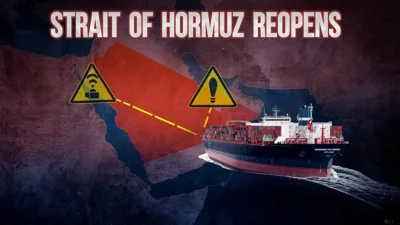
Reopening of the Strait of Hormuz: New Regulations to Impact Global Trade
Iran reopens the strategic Strait of Hormuz with new regulations affecting oil transport and global

Top 10 Must-See Attractions in NYC for First-Time Explorers
Discover essential experiences for first-time visitors to NYC, including attractions, culture, and i

Starbucks Engages Boyu Capital for Major Chinese Expansion
Starbucks teams up with Boyu Capital, selling a majority stake to boost growth and adapt to the Chin

Three Individuals Charged in Massive Meth Trafficking Case in Malaysia
In Malaysia, a married couple and another suspect are charged with trafficking 510kg of meth, facing