Post by : Saif Nasser
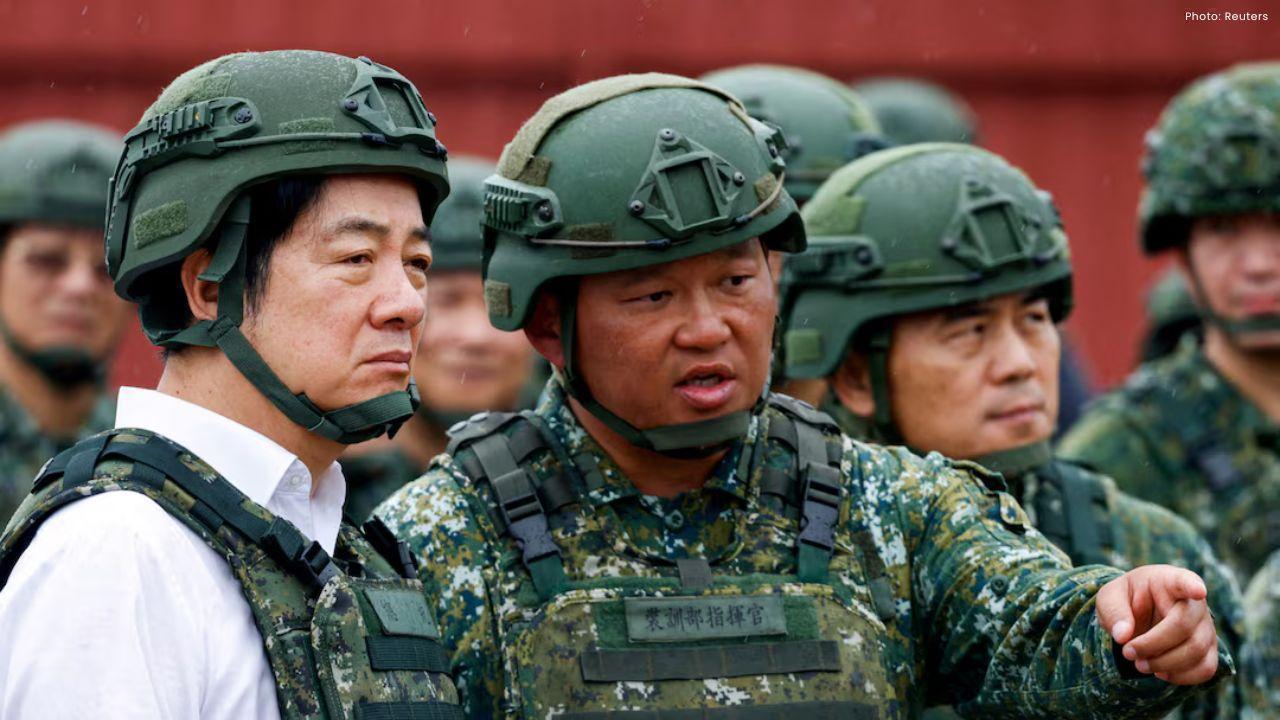
Tensions around Taiwan’s security have entered a new stage after a large group of American lawmakers urged Taiwan’s parliament to quickly approve a major defence spending plan. The message from Washington was direct and serious: the security threat from China is rising, and delays in funding Taiwan’s military could weaken its readiness at a critical time.
A bipartisan group of 37 members of the United States Congress sent a formal letter to senior political leaders in Taiwan. Their concern is focused on a stalled defence budget proposed by Taiwan’s president, Lai Ching-te, which includes about $40 billion in extra defence spending. The plan is designed to strengthen the island’s ability to defend itself and to speed up the purchase of weapons systems, many of them from the United States.
However, Taiwan’s opposition-controlled parliament has not moved the proposal forward. Instead, opposition parties have offered smaller and more limited defence plans. This political deadlock has created worry in Washington, where support for Taiwan’s security is strong across both major parties.
The American lawmakers addressed their letter to Taiwan’s parliamentary speaker Han Kuo-yu, leaders of the opposition Kuomintang and Taiwan People's Party, and members of the ruling Democratic Progressive Party. Their message stressed that the partnership between the United States and Taiwan remains strong, but that partnership must be supported by real military preparedness.
The letter warned that the threat from China has “never been greater.” It pointed to Chinese President Xi Jinping and said Beijing is using every part of its national power — military, economic, and political — to increase pressure on Taiwan. China considers Taiwan part of its territory and has never ruled out the use of force to take control of the island.
From an editorial point of view, this moment highlights three important realities.
First, Taiwan’s security is no longer just a regional issue — it is global. Any conflict over Taiwan would affect world trade, technology supply chains, and regional stability in Asia. This is one reason why American lawmakers are speaking out so openly. They see defence readiness in Taiwan as linked to wider international security.
Second, domestic politics inside Taiwan is now directly affecting defence planning. In a democracy, debate over budgets is normal and healthy. Opposition parties have the right to question large spending proposals and demand oversight. Taxpayer money should always be checked carefully. But when security threats are rising, long delays can create risks. A defence budget is not like other spending bills — timing matters.
Third, the weapons supply chain itself is under strain. The United States has already acknowledged a backlog in weapons deliveries promised to Taiwan. Even when budgets are approved, equipment takes time to build and ship. That means delays today can translate into weaker readiness tomorrow.
Supporters of the larger defence package say Taiwan must invest more in what experts call “asymmetric defence.” This means cheaper, mobile, and smart systems that can make it harder for a stronger military to attack. These include missiles, drones, sea mines, and reserve force training. President Lai’s plan focuses heavily on these areas.
Opposition leaders argue that defence spending must still follow rules of fiscal discipline. They say not every request should be approved automatically and that parliament must review details carefully. The Taiwan People’s Party has said it supports steady defence growth, but not without proper review. This shows the debate is not about whether to defend Taiwan — but how much to spend and how fast.
The United States remains Taiwan’s most important arms supplier, even though the two sides do not have formal diplomatic relations. American policy has long supported Taiwan’s ability to defend itself. Recent US administrations, including that of Donald Trump, have pushed allies and partners to raise their defence budgets and rely less on American protection alone.
The danger now is not just military — it is political delay mixed with rising external pressure. If Taiwan’s political parties cannot find common ground on defence, it may send the wrong signal abroad. Unity on basic security needs is often just as important as the weapons themselves.
In times of growing regional tension, divided politics can become a strategic weakness. Careful review is good. Endless delay is not. Taiwan’s lawmakers face a serious test: balancing democratic debate with urgent security needs.





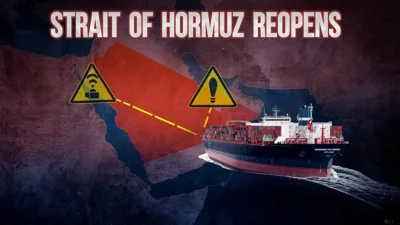
Reopening of the Strait of Hormuz: New Regulations to Impact Global Trade
Iran reopens the strategic Strait of Hormuz with new regulations affecting oil transport and global

Top 10 Must-See Attractions in NYC for First-Time Explorers
Discover essential experiences for first-time visitors to NYC, including attractions, culture, and i

Starbucks Engages Boyu Capital for Major Chinese Expansion
Starbucks teams up with Boyu Capital, selling a majority stake to boost growth and adapt to the Chin

Three Individuals Charged in Massive Meth Trafficking Case in Malaysia
In Malaysia, a married couple and another suspect are charged with trafficking 510kg of meth, facing
Singapore Police Revisit Geylang Murder Scene with Suspect
In Geylang, police return a murder suspect to the scene of a crime involving the fatal stabbing of a