Post by : Saif Nasser
Recent remarks from officials in the United States have started a strong global debate after they said that limiting the supply of US dollars to Iran was part of a pressure strategy that helped create economic stress and public protests. The statement has drawn attention because it openly connects financial policy with unrest inside another country. It also raises moral and political questions about how far economic tools should be used in international disputes.
According to the statement, restricting Iran’s access to dollars was meant to increase pressure on its leadership during ongoing disputes over nuclear policy and regional security. The idea behind this move was simple in theory but powerful in effect. Many countries depend on the US dollar to pay for imports like fuel, machinery, food supplies, and medical goods. When dollar access becomes limited, trade becomes harder and more expensive. This puts stress on banks, businesses, and finally on common people.
When fewer dollars enter a country’s system, the local currency often loses value. In Iran’s case, the national currency dropped sharply. When a currency falls, prices rise because imported goods cost more. Even local goods become expensive because transport and raw materials are tied to global prices. Families then find that their salaries buy less food, less fuel, and fewer daily needs. Savings shrink in real value. This kind of situation creates fear and anger among the public.
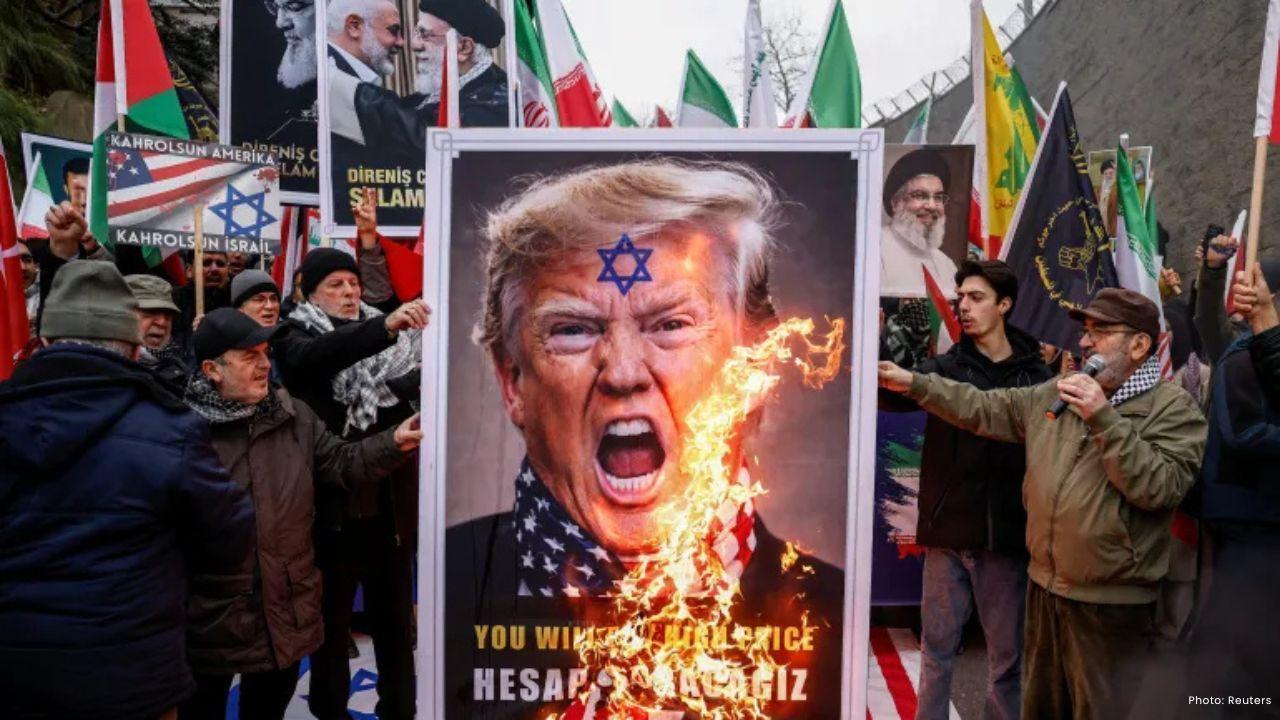
Reports described how rising prices and falling currency value led to protests in several Iranian cities. Many people came out to show frustration over the cost of living and lack of economic stability. Shop owners struggled to restock goods. Workers worried about job security. Young people felt uncertain about their future. Economic pain often spreads faster than political messages, and that appears to have happened here as well.
The important point in this case is not only the protests but the open admission that financial pressure was designed to produce internal strain. Supporters of such strategies argue that economic pressure is safer than military conflict. They say sanctions and currency limits can push governments to negotiate without war. In their view, this is a tough but necessary tool of foreign policy.
Critics strongly disagree. They argue that broad economic pressure rarely hurts top leaders first. Instead, it hits ordinary citizens — workers, small traders, students, and retired people. When medicine prices rise or food costs double, it is the public that suffers immediately. Leaders often find ways to protect themselves while the population carries the burden. Because of this, critics say such strategies are unfair and can create long-term resentment.
There is also a second risk. Economic pressure from outside can sometimes strengthen hardline views inside a country instead of weakening them. When people feel attacked from abroad, they may rally around national leadership even if they are unhappy with economic conditions. History shows that outside pressure does not always produce political change. In some cases, it produces the opposite effect.
Another concern is global trust. The world financial system depends heavily on the dollar. Many nations hold dollar reserves and trade in dollars. If the currency system is used openly as a political weapon, some countries may try harder to build alternative systems. Over time, this could slowly change how global trade is done. Even small shifts can matter when they involve major economies.
It is also important to note that Iran’s economic problems did not begin with this one policy. Years of sanctions, internal policy choices, oil revenue dependence, and global market shifts have all played roles. Still, dollar access is like oxygen for international trade. When it is reduced, the impact is fast and wide.
This episode shows how closely economics and politics are connected in today’s world. Decisions made in one capital can change daily life in another country far away. It also shows why transparency matters. When governments admit their strategies, it allows citizens and experts to debate whether those strategies are right or wrong.
In the end, the key question is not only whether economic pressure works, but who pays the price while it is being used. Policies designed to influence governments often travel through the wallets and kitchens of ordinary people first. Any serious global strategy must weigh that human cost carefully.






Reopening of the Strait of Hormuz: New Regulations to Impact Global Trade
Iran reopens the strategic Strait of Hormuz with new regulations affecting oil transport and global

Top 10 Must-See Attractions in NYC for First-Time Explorers
Discover essential experiences for first-time visitors to NYC, including attractions, culture, and i

Starbucks Engages Boyu Capital for Major Chinese Expansion
Starbucks teams up with Boyu Capital, selling a majority stake to boost growth and adapt to the Chin

Three Individuals Charged in Massive Meth Trafficking Case in Malaysia
In Malaysia, a married couple and another suspect are charged with trafficking 510kg of meth, facing
Singapore Police Revisit Geylang Murder Scene with Suspect
In Geylang, police return a murder suspect to the scene of a crime involving the fatal stabbing of a