Post by : Saif Nasser
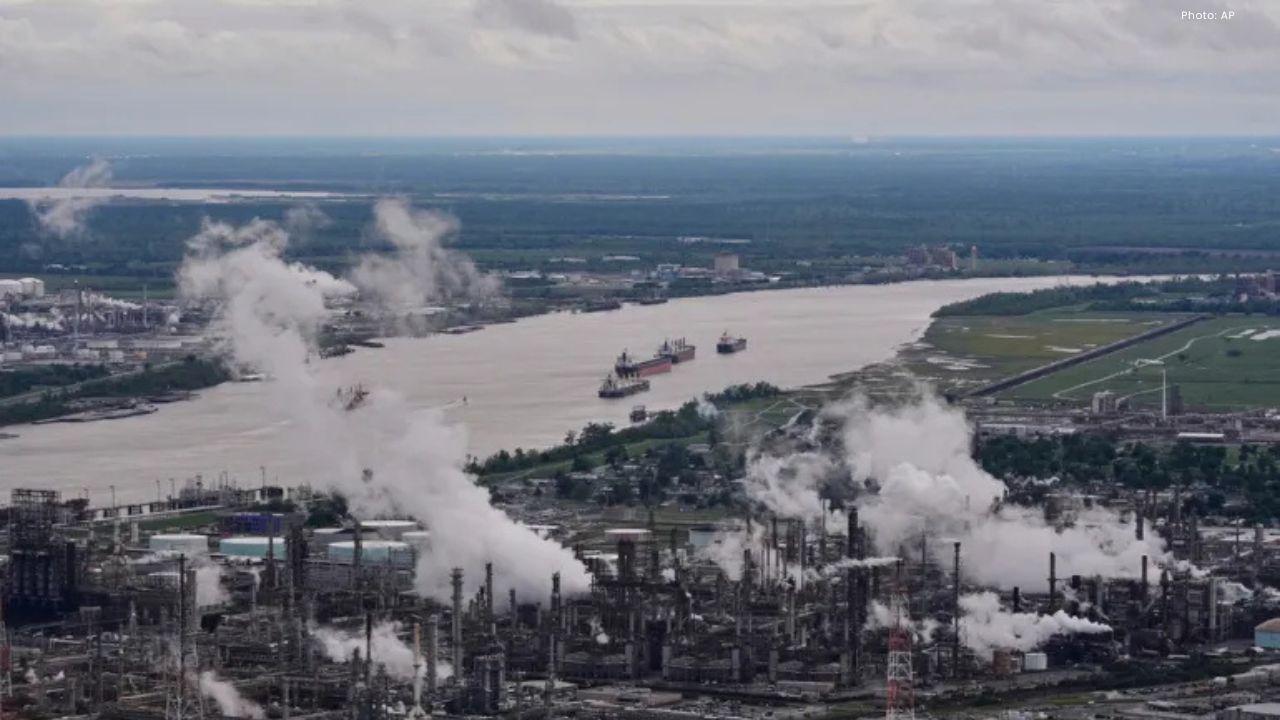
The United States government has taken a major step that could change how federal climate rules are made. The administration has withdrawn an important scientific finding that said greenhouse gases like carbon dioxide pose a danger to human health and the environment. This finding was the legal foundation for many climate protections over the past decade.
For more than a decade, U.S. law has recognized that carbon dioxide and similar gases contribute to global warming. This scientific conclusion allowed government agencies to create rules to limit emissions from cars, power plants, factories, and other sources. Now, that foundational science judgment has been reversed.
The move was announced by Republican leaders in Washington, who said the decision removes what they view as an obstacle to economic growth and regulatory burden. They argue that strict climate rules have made energy more expensive and slowed industrial activity. Supporters of the decision say that the government should not be able to use climate science to justify broad federal regulations without stronger economic scrutiny.
Environmental groups and many scientists reacted strongly to the announcement. They called the change dangerous and short-sighted. In their view, the science on climate change has not changed. Most climate experts agree that greenhouse gases trap heat in the atmosphere, leading to rising temperatures, sea level rise, extreme weather, and other impacts. Undoing the scientific finding, critics say, could weaken the government’s ability to respond to these threats.
The original science finding was part of an interpretation of the Clean Air Act, a major U.S. environmental law passed in 1970. The law allows regulators to control air pollution when it is shown to endanger public health or welfare. In 2009, the government concluded that greenhouse gases do pose such a danger. That conclusion was used to justify emissions limits on vehicles and other fuels.
By revoking the finding, the administration is signaling a shift in environmental policy. It is not yet clear how quickly other rules based on the old science will be changed or removed. But lawmakers and regulators now have a new legal basis for weakening or rolling back climate regulations without following the older scientific judgment.
The reversal has drawn concern from many countries and leaders around the world. Climate change is a global problem, and international agreements often ask participating nations to reduce emissions based on shared science. If the world’s largest economy weakens its climate policy, it could make global efforts harder.
Some U.S. states and cities are reacting by saying they will continue their own climate efforts. Many states have passed laws or set goals to cut emissions, build clean energy, and reduce pollution. Local governments may now play a larger role in pushing climate action even if the federal government steps back.
At the same time, business groups showed mixed reactions. Some industries that produce fossil fuels and heavy manufacturing welcomed the change, seeing fewer regulations as a chance to cut costs. Other companies that invest in clean energy and long-term sustainability are uneasy, saying the decision creates uncertainty about future markets and investments.
Climate change affects not only long-term weather patterns but also everyday life in many regions. Warmer temperatures can lead to droughts, heat waves, stronger storms, and damage to infrastructure. Communities near coasts face rising sea levels and flooding. Many scientists warn that delaying strong climate action will make solutions more expensive and less effective.
Some politicians say that future technology and market forces will reduce emissions even without strict regulations. They argue that innovation in clean energy and improvements in efficiency will happen naturally as businesses and consumers choose cheaper, cleaner options. Critics counter that the pace of change needed to avoid severe climate impacts requires strong policy direction, not just market trends.
The legal and environmental consequences of the decision are likely to unfold over years. Lawsuits may challenge the government’s authority to remove the scientific finding, and courts may be asked to decide which laws still apply. Public debate is likely to remain heated as people weigh economic goals against environmental protection.
In the end, the action underscores a deep divide in how people view climate change and government responsibility. Some see climate regulation as necessary to protect future generations. Others see it as an overreach that harms jobs and economic growth. How this balance is struck will shape U.S. environmental policy for years to come.







Reopening of the Strait of Hormuz: New Regulations to Impact Global Trade
Iran reopens the strategic Strait of Hormuz with new regulations affecting oil transport and global

Top 10 Must-See Attractions in NYC for First-Time Explorers
Discover essential experiences for first-time visitors to NYC, including attractions, culture, and i

Starbucks Engages Boyu Capital for Major Chinese Expansion
Starbucks teams up with Boyu Capital, selling a majority stake to boost growth and adapt to the Chin

Three Individuals Charged in Massive Meth Trafficking Case in Malaysia
In Malaysia, a married couple and another suspect are charged with trafficking 510kg of meth, facing

Singapore Police Revisit Geylang Murder Scene with Suspect
In Geylang, police return a murder suspect to the scene of a crime involving the fatal stabbing of a