Post by : Monika
A powerful storm called Typhoon Bualoi has caused serious damage in Vietnam. As of October 3, 2025, the death toll has reached 51 people. Many more are missing, and hundreds are injured. The government is asking banks to support businesses hit by the disaster.
What Happened
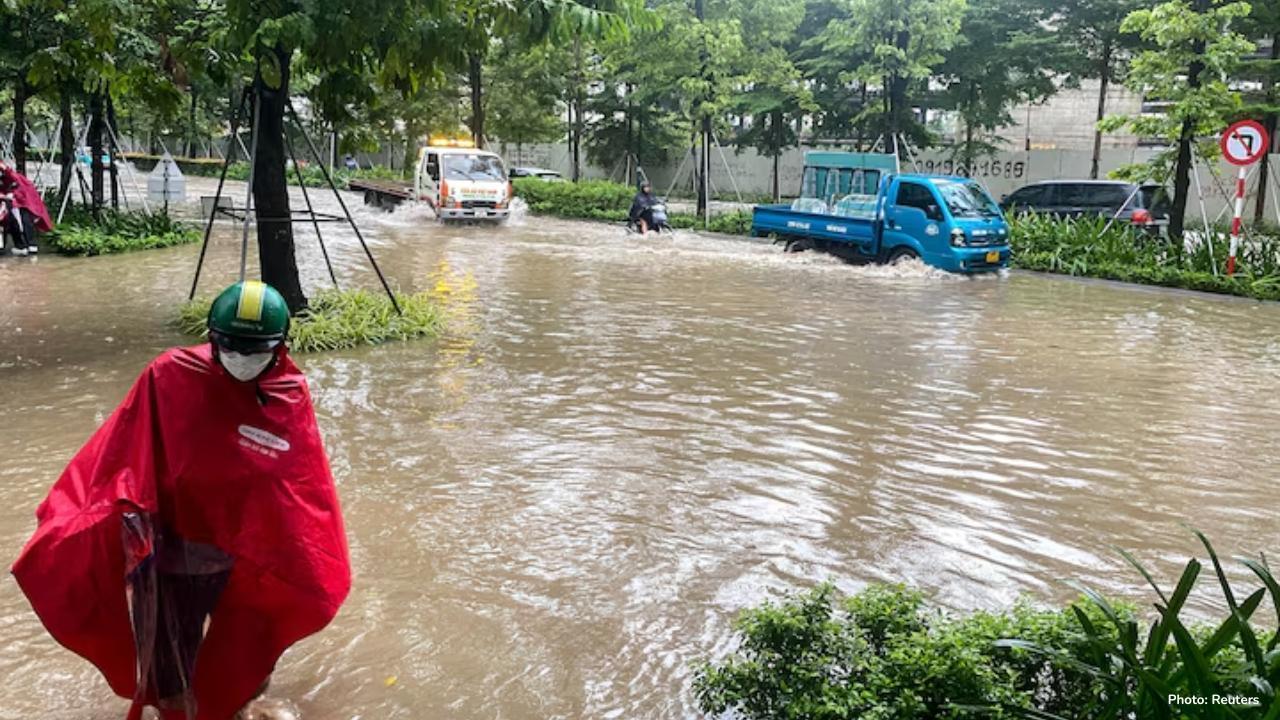
The typhoon struck northern central Vietnam on Monday. It brought strong winds, heavy rain, and large waves that struck coastal areas. As the storm moved inland, flooding and damage followed.
Officials report 14 people are still missing, and 164 others are injured. The storm damaged roads, schools, public offices, and cut electricity to many homes.
Over 230,000 houses were either destroyed or flooded. Nearly 89,000 hectares of rice fields and other crops were ruined, causing huge losses for farmers.
Damage Costs and Infrastructure Impact
At first, the government estimated damages at about 435.8 million USD. But after assessment, that figure soared to 15.9 trillion dong, which is about 603 million USD.
Infrastructure damage was severe: roads washed out, bridges weakened, power lines down. Tens of thousands of people lost electricity, which affected daily life and hampered rescue efforts.
Despite the broad damage, major industrial properties and big factories in the storm’s path—such as those owned by Foxconn, Luxshare, Formosa Plastics, Vinfast—were not significantly harmed, according to reports.
Government Response & Banking Measures
To help victims and businesses recover, Vietnam’s central bank has told commercial lenders to restructure or freeze loans for affected firms. This means banks may delay loan payments or ease terms for companies impacted by the typhoon.
Human Toll and Community Impact
Behind the numbers are families left grieving, farmers who can’t plant crops this season, and people without homes or power. Many communities in affected areas are now struggling to get basic services and rebuild infrastructure.
Schools have been damaged or closed. Government offices in some towns are unusable. Many people are displaced, staying with relatives or in temporary shelters.
In rural areas, where people depend on farming, the crop losses are especially tragic. Without rice or other produce, many farmers may face food shortages or income loss for months.
Challenges in Recovery
Recovery will not be easy:
Why This Matters
Typhoon Bualoi is a reminder of how vulnerable coastal and low-lying regions are to climate disasters. As storms grow stronger, the damage becomes more severe.
Undersea cables, power grids, transport networks, homes—when any of these break, the ripple effect is wide. People lose access to health care, communication, commerce, and safety.
Vietnam is a nation that relies significantly on agriculture and coastal economies. A storm of this scale threatens not only lives but food security, incomes, and economic stability.
The decision by the central bank to ask banks to help is a crucial step. Without financial relief, many businesses may close, affecting employment and the national economy.








DAE Achieves Remarkable Growth in Q1 2026 With Record Revenue
Dubai Aerospace Enterprise announces impressive financial results for Q1 2026, reflecting a surge in

Price Increase for Sony PS5 in Southeast Asia Effective May 1
Sony announces a price increase for the PS5 across Southeast Asia starting May 1, 2026, impacting ga

Potential ‘Super El Niño’ in 2026: Understanding the Climate Risks
Could a Super El Niño emerge in 2026? Discover its implications and potential global climate impacts

Global Energy Crisis Intensifies: Markets React to Oil Supply Challenges
Markets are on edge as oil disruptions escalate, influencing prices and economic stability. Explore

Must-See Tourist Spots in London You Can't Overlook
Explore London's essential attractions, from royal landmarks to vibrant markets, ensuring an unforge

Ultimate Guide to Snagging Cheap Flights in 2026
Unlock the secrets to booking affordable flights in 2026 with insightful tips and strategies tailore




