Post by : Saif Nasser
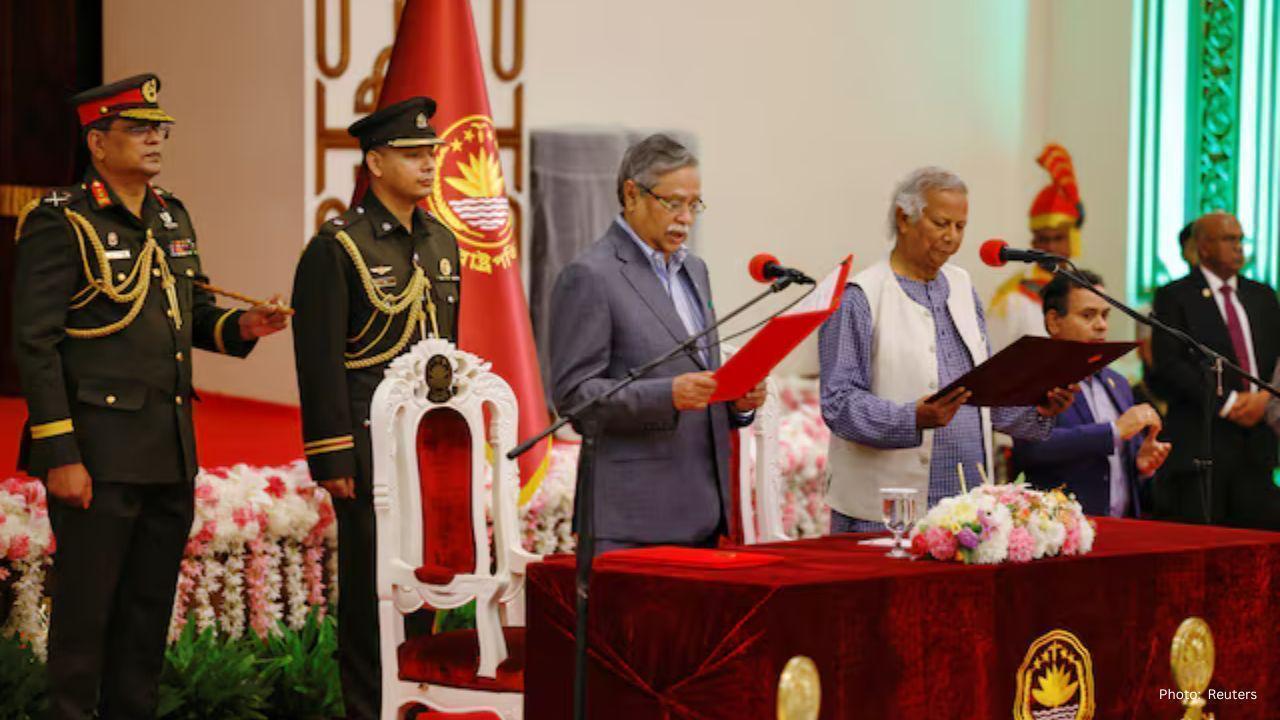
Bangladesh is once again facing a moment of political uncertainty as President Mohammed Shahabuddin has said that he wants to leave office before completing his term. His statement has surprised many people because presidents in Bangladesh usually finish their ceremonial duties without major disagreements. Speaking to Reuters from his official residence in Dhaka, the 75-year-old president said that he no longer wishes to continue in the position because he feels insulted and ignored by the interim government led by Muhammad Yunus. He explained that recent actions taken by the temporary administration made him feel as if he had no value or respect, even though he is the constitutional head of the state.
Shahabuddin came to office in 2023 as an unopposed candidate supported by the Awami League, the political party of former Prime Minister Sheikh Hasina. At that time, his role seemed simple and ceremonial, as most presidents in Bangladesh act mainly as figureheads. However, his position suddenly became important during the major student uprising in 2024. When thousands of students and citizens protested against alleged corruption, rising authoritarianism, and political abuses, the situation became so unstable that Sheikh Hasina left the country and went to New Delhi. Parliament was dissolved, ministers were removed, and the normal government system collapsed. During that chaotic moment, Shahabuddin became the only constitutional authority left in the country, a role he had never expected to play.
In the interview, Shahabuddin said that he wants to resign shortly after the parliamentary election scheduled for February. He said that he is ready to step away from the position and return to private life. However, he also admitted that he cannot leave immediately because the constitution requires the president to remain in office until a new government is formed. He said that even though he wants to go, he must stay for the sake of constitutional order. While speaking calmly, he made it clear that he feels deeply hurt by how the interim government has treated him over the last several months.
One of the biggest reasons he feels humiliated is the sudden removal of his official portraits from Bangladesh’s embassies, high commissions, and consulates around the world. In Bangladesh, it is a long-standing tradition that the portrait of the sitting president is displayed in all diplomatic missions and government offices. Shahabuddin said that all his portraits were taken down in a single night without giving him any warning or explanation. He said this act sent a message to the public and the international community that he was no longer important or respected, even though he had done nothing wrong. He said that this decision made him feel as if he was being erased from his own country’s official identity.
Shahabuddin also said that his press department was taken away and that Muhammad Yunus had not met him for nearly seven months. He said that these actions together created a painful situation for him. According to him, it became clear that the interim administration did not want him to have any influence or official visibility. When he wrote a letter to Yunus asking for an explanation, he received no reply. He said that this silence was even more hurtful than the removal of the portraits. For a president who is expected to be treated with dignity, the lack of communication from the head of the interim government felt like an attempt to push him aside.
The interim government was formed after the dramatic events of 2024 when widespread anger against the Awami League government reached a breaking point. Muhammad Yunus, who won the Nobel Peace Prize for his work in microfinance and is admired around the world, was selected to lead the temporary administration. Many people expected that Yunus would work closely with all institutions, including the presidency, to rebuild trust and stability. But Shahabuddin’s comments now show that the relationship between the president and the interim administration has been far from smooth. His words reveal that there is a deep lack of communication and mutual respect within the current political structure.
Yunus’ press team did not respond to Reuters’ questions about the issue. This lack of response has raised even more questions about whether the interim government purposely sidelined the president or whether this is simply a matter of poor coordination. Some political observers believe that the interim administration wants to create a completely new political environment, one that does not include figures linked to the Awami League. Others think the tension may be the result of miscommunication or a misunderstanding that was never resolved.
Shahabuddin’s desire to step down after the February election adds another layer of uncertainty to Bangladesh’s already fragile political landscape. Over the past several years, the country has experienced frequent protests, accusations of authoritarian behavior, and divisions between political groups. Even though the interim government was formed to restore order, the president’s comments show that the internal political situation remains sensitive and unsettled. His statement suggests that even the highest constitutional office can become vulnerable in times of national change.
If Shahabuddin resigns, Bangladesh will again go through an important transition. A new parliament will be elected, a new prime minister will be chosen, and a new president may also take office. For ordinary citizens, these changes may bring hope or worry, depending on their political beliefs. Some may feel relieved that the political system is moving forward, while others may fear that instability will continue. For many years, Bangladesh has struggled to balance political competition with democratic stability. The events of the past year show that this balance is still delicate.
Shahabuddin said that he does not want to remain in a position where he feels ignored and powerless. He said that he entered public life to serve the nation with dignity, not to endure humiliation. His emotional words reflect the difficulties faced by leaders during periods of sudden political change. They also show how power struggles and mistrust can affect even those who are supposed to stay above partisan politics.
As Bangladesh prepares for the February election, the political future of the country remains unclear. The interim government must maintain order, political parties must campaign peacefully, and citizens must decide who will guide the nation. Shahabuddin’s desire to leave office early shows that the challenges Bangladesh faces are far from over. It also shows that respect, communication, and constitutional stability are essential for any country going through political transformation.




Mattel Revives Masters of the Universe Action Figures Ahead of Film Launch
Mattel is reintroducing Masters of the Universe figures in line with its upcoming film, tapping into

China Executes 11 Members of Criminal Clan Linked to Myanmar Scam
China has executed 11 criminals associated with the Ming family, known for major scams and human tra

US Issues Alarm to Iran as Military Forces Deploy in Gulf Region
With a significant military presence in the Gulf, Trump urges Iran to negotiate a nuclear deal or fa

Copper Prices Reach Unprecedented Highs Amid Geopolitical Turmoil
Copper prices soar to all-time highs as geopolitical tensions and a weakening dollar boost investor
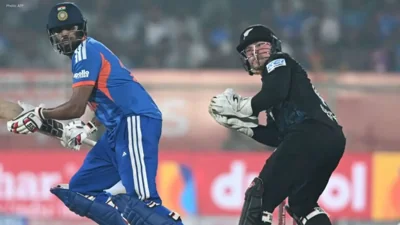
New Zealand Secures First Win Against India, Triumph by 50 Runs
New Zealand won the 4th T20I against India by 50 runs in Vizag. Despite Dube's impressive 65, India