Post by : Saif Nasser
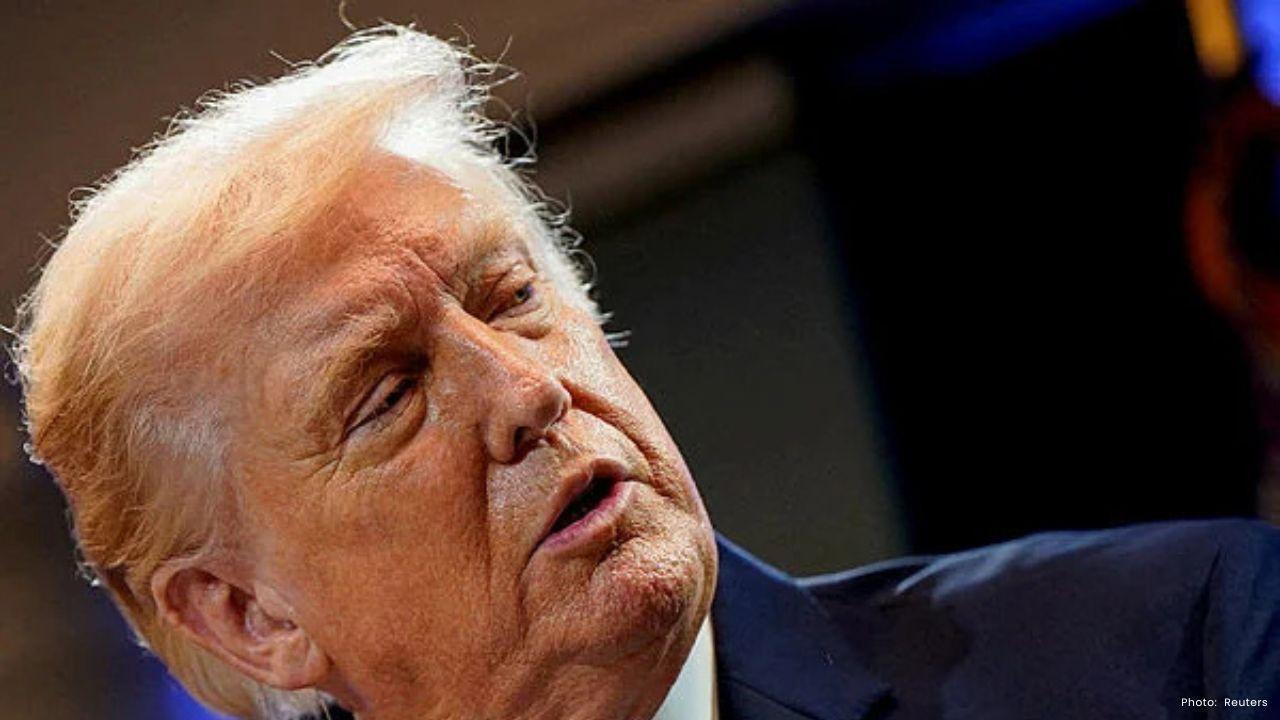
The latest clash between U.S. President Donald Trump and the U.S. Supreme Court has once again shaken Washington and global markets. The court ruled that the president did not have the power to set unlimited tariffs on imports by himself. Within hours, Trump responded by announcing a new 10% tariff on goods coming into the United States from all countries.
This dramatic turn of events has raised serious questions about leadership, the balance of power, and the future of global trade.
In a 6-3 ruling, the Supreme Court said that the U.S. Constitution gives Congress—not the president—the power to impose taxes and tariffs. Chief Justice John Roberts wrote that the government failed to prove that the country was facing a war-like emergency that would justify the president’s actions.
The Trump administration had argued that the International Emergency Economic Powers Act allowed the president to act on his own during a national emergency. But the court disagreed. The justices made it clear that the United States is not at war with every nation, and therefore such sweeping powers cannot be used in peacetime.
This ruling struck down the broad tariffs Trump had placed on imports over the past year. Those tariffs had become a key part of his trade policy and were used as pressure in talks with other countries.
President Trump reacted strongly. Speaking at the White House, he said he was ashamed of certain members of the court. He suggested, without giving proof, that the decision was influenced by outside forces. Despite his anger, he signed an order removing the tariffs that the court had blocked.
However, he did not stop there. Soon after, Trump announced a new 10% tariff on imports from all countries. This time, he used Section 122 of the Trade Act of 1974, which allows the president to impose tariffs of up to 15% for 150 days to deal with serious trade problems. The White House said the new tariff would last 150 days and would exclude certain important goods such as critical minerals and energy products.
This move shows that while the court limited his power, the president still has tools he can use.
At first, financial markets reacted positively to the court’s ruling. U.S. stock indexes rose because investors believed it would reduce uncertainty. But that optimism did not last long. After Trump announced the new 10% tariff, markets became cautious again.
Economists warn that sudden changes in trade policy create confusion. Businesses need stability to plan ahead. When rules keep changing, companies hesitate to invest or hire new workers.
Varg Folkman from the European Policy Centre said the ruling could bring a new period of uncertainty in global trade. Investors and governments around the world are now waiting to see what the United States will do next.
U.S. Treasury Secretary Scott Bessent said in an interview on Fox News that although the court limited the president’s authority, other options remain available. His comments suggest that the administration may continue to search for ways to maintain pressure in trade negotiations.
This case is not only about tariffs. It is about the balance of power in American government. The Constitution clearly says that Congress has the authority to lay and collect taxes and duties. The Supreme Court’s ruling reinforces that principle.
At the same time, the president has certain emergency powers. The debate now centers on how far those powers can go. When does an emergency truly exist? And who decides?
The court’s decision shows that even the president must follow the limits set by law. Yet Trump’s quick response also shows how determined he is to continue his trade strategy.
The new 10% tariff may also face legal challenges. Section 122 allows temporary tariffs, but they cannot last beyond 150 days without approval from Congress. Lawmakers will likely debate whether to support or reject the measure.
Foreign governments will also be watching closely. Some may see the ruling as a sign that the U.S. system of checks and balances is working. Others may worry about continued instability in American trade policy.
For American businesses and families, the main concern is simple: Will prices rise? Tariffs often increase the cost of imported goods. Companies may pass those costs on to consumers. This could affect everyday items, from electronics to clothing.
The Supreme Court’s decision is a reminder that in the United States, power is divided. No leader can act without limits. At the same time, President Trump’s swift action shows how determined he is to continue his trade strategy. The coming weeks will be important as lawmakers, courts, and global partners shape what happens next. For now, uncertainty remains, and the global trade debate is far from settled.






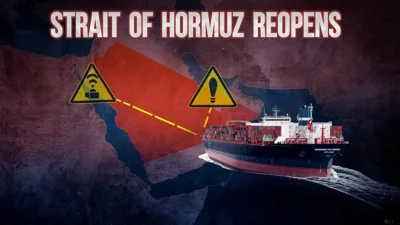
Reopening of the Strait of Hormuz: New Regulations to Impact Global Trade
Iran reopens the strategic Strait of Hormuz with new regulations affecting oil transport and global

Top 10 Must-See Attractions in NYC for First-Time Explorers
Discover essential experiences for first-time visitors to NYC, including attractions, culture, and i

Starbucks Engages Boyu Capital for Major Chinese Expansion
Starbucks teams up with Boyu Capital, selling a majority stake to boost growth and adapt to the Chin

Three Individuals Charged in Massive Meth Trafficking Case in Malaysia
In Malaysia, a married couple and another suspect are charged with trafficking 510kg of meth, facing

Singapore Police Revisit Geylang Murder Scene with Suspect
In Geylang, police return a murder suspect to the scene of a crime involving the fatal stabbing of a