Post by : Saif Nasser
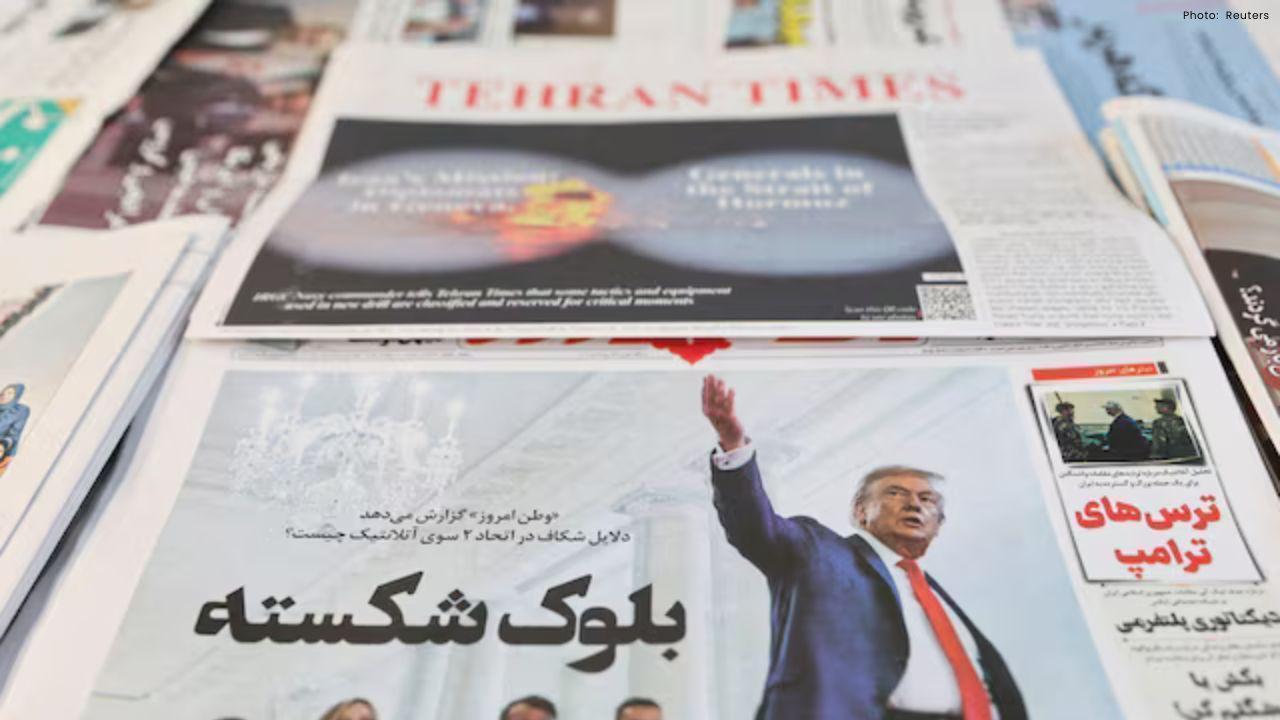
Tensions between the United States and Iran are rising again, and many fear the situation could move closer to war. President Donald Trump has ordered a major military buildup in the Middle East and has warned Tehran that strikes are possible if it does not agree to U.S. demands.
At the same time, some of Trump’s own advisers are urging him to turn his attention back to the economy. With midterm elections coming later this year, many in his party believe that voters are more worried about rising prices and daily expenses than foreign conflicts.
Reports say the United States has increased the number of warships, aircraft carriers, and warplanes in the region. Officials have also prepared plans for a possible air campaign that could last several weeks. However, Trump has not clearly explained to the American public what exact action by Iran would trigger a full military strike.
The president has repeated that Iran must agree to strict limits on its nuclear program. He has said that Iran cannot be allowed to develop a nuclear weapon or enrich uranium at high levels. In recent speeches, he warned that Tehran “better negotiate a fair deal.”
Earlier this year, U.S. forces reportedly targeted Iranian nuclear sites. Iran has since threatened strong retaliation if attacked again. This back-and-forth has added to fears of a wider conflict in the region.
Inside the White House, there does not appear to be full agreement about launching a war. A senior official told reporters that there is no unified support within the administration for immediate military action. This suggests that some leaders are cautious about the risks.
Political advisers are especially concerned about the timing. In November, Americans will vote in midterm elections that will decide whether Trump’s Republican Party keeps control of Congress. If the party loses one or both chambers, it could weaken the president’s power during the rest of his term.
Many voters who supported Trump under his “America First” message believed he would avoid long and costly foreign wars. During his earlier campaigns, he often criticized what he called “forever wars” and promised to focus on problems at home.
Republican strategist Rob Godfrey warned that a long war with Iran could create serious political danger. Some core supporters are skeptical of foreign military involvement and prefer policies that focus on the U.S. economy.
At the same time, others believe that if any action against Iran is quick and limited, Trump’s supporters might accept it. They argue that strong action could be seen as protecting American security. Still, public opinion polls show that most Americans are more concerned about inflation, housing costs, and healthcare prices than overseas conflicts.
Trump won reelection in 2024 partly because he promised to lower inflation and strengthen the economy. However, recent surveys suggest that many Americans are not yet convinced that prices are falling fast enough. This makes the political stakes even higher.
Foreign policy has not usually been the main issue in midterm elections. But a large military operation could quickly change that. If fighting expands or leads to higher oil prices, voters may feel the impact directly in their daily lives.
Some observers note that Trump’s reasons for possible military action have shifted over time. At first, he criticized Iran’s crackdown on street protests. Later, he focused more on the nuclear issue. He has also mentioned the idea of “regime change,” though it is unclear how air strikes alone could achieve that goal.
The situation reminds some analysts of past conflicts. Before the 2003 invasion of Iraq, President George W. Bush gave detailed public explanations about the reasons for war, even though those claims later proved controversial. In the current case, critics say the public has not been given a clear and consistent explanation.
For now, the United States stands at a tense moment. Military forces are positioned, warnings have been issued, and diplomatic talks appear uncertain. Whether the crisis leads to negotiation or conflict may depend on decisions made in the coming weeks.
The challenge for Trump is balancing strength abroad with stability at home. War carries heavy risks, not only for soldiers and civilians but also for political leaders. As election season approaches, every move will be closely watched by voters, allies, and rivals alike.







Reopening of the Strait of Hormuz: New Regulations to Impact Global Trade
Iran reopens the strategic Strait of Hormuz with new regulations affecting oil transport and global

Top 10 Must-See Attractions in NYC for First-Time Explorers
Discover essential experiences for first-time visitors to NYC, including attractions, culture, and i

Starbucks Engages Boyu Capital for Major Chinese Expansion
Starbucks teams up with Boyu Capital, selling a majority stake to boost growth and adapt to the Chin

Three Individuals Charged in Massive Meth Trafficking Case in Malaysia
In Malaysia, a married couple and another suspect are charged with trafficking 510kg of meth, facing

Singapore Police Revisit Geylang Murder Scene with Suspect
In Geylang, police return a murder suspect to the scene of a crime involving the fatal stabbing of a