Post by : Saif Nasser
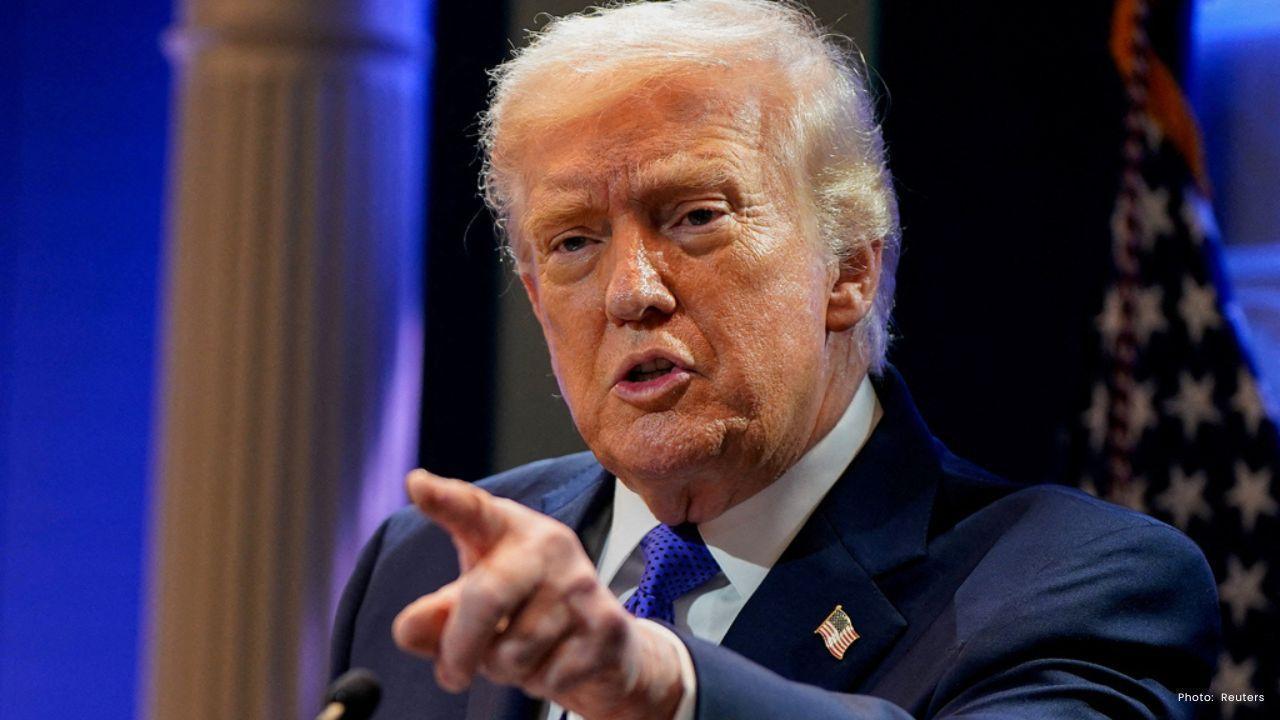
U.S. President Donald Trump has announced a temporary 10% tariff on imports from almost all trading partners after the Supreme Court blocked his earlier trade duties. The new measure will last for 150 days and is set to begin on Tuesday. The decision came quickly after the court ruled that the previous tariffs, imposed under emergency powers, were not legal.
The Supreme Court decision struck down tariffs that had ranged from 10% to 50% on certain imports. Those duties were placed under the International Emergency Economic Powers Act, a 1977 law that allows presidents to act during national emergencies. The court ruled that the law did not give the president the authority to impose such broad tariffs for trade purposes.
In response, Trump signed executive orders using a different law known as Section 122 of the Trade Act of 1974. This law allows a president to impose tariffs of up to 15% for 150 days if there is a serious balance of payments problem. The administration said the United States has a large trade deficit, meaning it buys more goods from other countries than it sells to them.
Under Section 122, the president does not need to carry out a long investigation before imposing tariffs. However, if the tariffs are to continue beyond 150 days, Congress must approve an extension. This means the new 10% tariff will automatically end after five months unless lawmakers agree to keep it in place.
The administration has said that some goods will remain exempt from the new tariff. Aerospace products, passenger cars, some light trucks, pharmaceuticals, and certain critical minerals will not face the 10% duty. Goods from Mexico and Canada that meet the rules of the U.S.-Mexico-Canada trade agreement will also remain exempt. These exemptions are designed to protect industries that are important for national security, public health, and regional trade stability.
At the same time, Trump has ordered new investigations under Section 301 of the Trade Act of 1974. This law allows the government to respond to what it considers unfair trade practices by other countries. The Office of the United States Trade Representative will lead these investigations. Officials say they will examine policies and practices that may harm American businesses or restrict U.S. commerce.
In the past, Section 301 was used to impose tariffs on Chinese imports during Trump’s first term. Now, similar investigations could target other major trading partners. The administration is also considering the use of Section 232 of U.S. trade law, which allows tariffs if imports are found to threaten national security.
Treasury Secretary Scott Bessent said the new 10% tariff and any future measures are expected to generate nearly the same level of revenue as the earlier plan that was struck down. He noted that the administration believes it can return to similar tariff levels, though the method will be different and may involve more legal steps.
One major issue that remains unresolved is whether companies will receive refunds for tariffs already collected under the blocked emergency powers. Estimates suggest that about $175 billion in tariff revenue could be affected. Trump said the matter would likely be fought in court and could take years to settle. Bessent added that because the Supreme Court did not give clear instructions about refunds, the issue is still in dispute. This means businesses that paid those duties may have to wait a long time before knowing if they will get their money back.
Legal experts say the new approach may still face challenges in court. However, because the Section 122 tariffs last only 150 days, they could expire before a final court decision is reached. Some trade lawyers believe that using traditional trade laws like Section 301 may bring more structure and transparency to the process. These laws require investigations, public comment periods, and detailed findings before tariffs can be finalized.
For businesses, the situation creates both concern and uncertainty. Companies that rely on imported goods may once again face higher costs. In many cases, higher import costs can lead to higher prices for consumers. Retailers, manufacturers, and farmers will be closely watching how the new tariffs affect supply chains and global trade flows.
Foreign governments are also paying attention. Some countries had been negotiating trade deals with the United States to reduce or avoid earlier tariffs. It is still unclear how those negotiations will continue under the new system. Trump has said that some countries could face even higher tariffs depending on how talks progress, while others may receive more favorable treatment.
The Supreme Court’s ruling has also raised broader questions about presidential power. The decision shows that the court can limit the use of emergency laws in trade matters. Supporters of strong tariffs argue that the president needs flexible tools to protect American industries and workers. Critics say trade policy should follow clear legal processes and avoid sudden changes that can disrupt businesses and global markets.
Robert Lighthizer, who served as Trump’s trade chief during his first term, has said he hopes Congress will update trade laws to give the president new tools. Some lawmakers agree that the current system is outdated. Others warn that expanding tariff authority could lead to more trade conflicts and economic instability.
For now, the 10% global tariff will remain in place for five months. During that time, the administration plans to complete investigations that could lead to more targeted or higher tariffs. If Congress does not approve an extension, the temporary measure will end automatically.
The coming months will be important for U.S. trade policy. Court cases about refunds may continue for years. New investigations could reshape trade relations with major partners. Businesses, investors, and foreign governments will all be watching closely.
Despite the legal setback, Trump has made it clear that tariffs remain central to his economic strategy. The shift to different laws shows how determined the administration is to maintain pressure on trading partners. Whether this approach strengthens the U.S. economy or adds to global trade tensions will become clearer in the months ahead.






Reopening of the Strait of Hormuz: New Regulations to Impact Global Trade
Iran reopens the strategic Strait of Hormuz with new regulations affecting oil transport and global

Top 10 Must-See Attractions in NYC for First-Time Explorers
Discover essential experiences for first-time visitors to NYC, including attractions, culture, and i

Starbucks Engages Boyu Capital for Major Chinese Expansion
Starbucks teams up with Boyu Capital, selling a majority stake to boost growth and adapt to the Chin

Three Individuals Charged in Massive Meth Trafficking Case in Malaysia
In Malaysia, a married couple and another suspect are charged with trafficking 510kg of meth, facing
Singapore Police Revisit Geylang Murder Scene with Suspect
In Geylang, police return a murder suspect to the scene of a crime involving the fatal stabbing of a