Post by : Saif Nasser
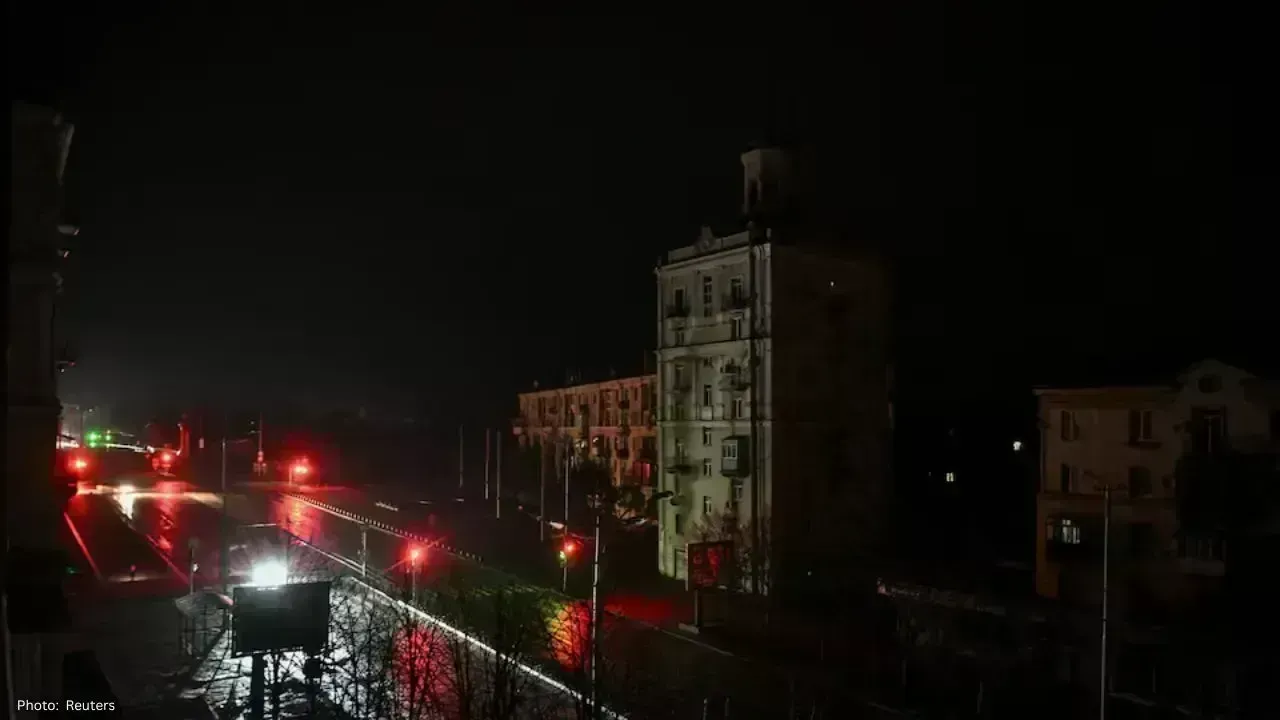
Russian air and drone strikes have caused major power outages across southeastern Ukraine, deepening the hardship faced by millions of people during the harsh winter season. According to Ukraine’s energy ministry, the attacks late Wednesday night left the Dnipropetrovsk and Zaporizhzhia regions almost completely without electricity.
Local officials said hospitals, water systems, and other critical services were forced to run on backup power. Emergency repair teams worked through the night to restore electricity, heating, and water, even as temperatures dropped sharply. In some areas, overnight temperatures were expected to fall to minus 20 degrees Celsius, making the situation even more dangerous for residents.
The energy ministry said critical infrastructure was operating only on reserve systems. Deputy Prime Minister Oleksiy Kuleba stated that repair work in Dnipropetrovsk was being carried out at full speed, but safety of repair crews remained a top concern due to ongoing threats. In Zaporizhzhia, authorities relied on alternative power sources to keep water supplies running.
Russian attacks on Ukraine’s energy network have been a regular part of the war, but officials say they have become more intense in recent months. These strikes are aimed at weakening daily life and putting pressure on civilians, especially during winter when electricity and heating are most needed.
Prime Minister Yulia Svyrydenko warned that heavy snowfall and extreme cold would make repairs harder and increase pressure on damaged systems. She praised energy workers who continue to operate under dangerous and difficult conditions to provide light and heat to the population. She also warned that worsening weather adds extra strain to already fragile infrastructure.
In the city of Dnipro, power cuts caused metro services to stop running. Schools in some areas were closed for an extra two days because buildings could not be properly heated. Regional officials said it was still unclear when full power would be restored.
In Kryvyi Rih, President Volodymyr Zelenskiy’s hometown, conditions were especially tough in two districts. Local authorities urged residents and institutions to use generators wherever possible. Ukrainian Railways reported that trains and signaling systems in the affected regions were switched to backup systems, and many stations were operating with generators.
In Zaporizhzhia, the power outage also affected public safety. Governor Ivan Fedorov said air raid sirens were not audible due to the blackout, creating serious risks for civilians. While electricity was restored at some key facilities, residents were asked to limit mobile phone use because communication networks were operating in emergency mode.
These power cuts highlight the ongoing struggle faced by Ukraine as the war continues. Beyond the battlefield, attacks on energy systems affect everyday life, putting civilians at risk during extreme weather. As winter tightens its grip, restoring and protecting energy infrastructure remains one of Ukraine’s most urgent challenges.






The Impact of Consistent Small Investments on Wealth Building
Discover how investing small amounts regularly can positively transform your financial future over t

7.5 Magnitude Earthquake Strikes Japan, Tsunami Alerts Issued
Japan experiences a hefty 7.5 quake, prompting tsunami alerts and safety measures. Stay updated on a

Reopening of the Strait of Hormuz: New Regulations to Impact Global Trade
Iran reopens the strategic Strait of Hormuz with new regulations affecting oil transport and global

Top 10 Must-See Attractions in NYC for First-Time Explorers
Discover essential experiences for first-time visitors to NYC, including attractions, culture, and i

Starbucks Engages Boyu Capital for Major Chinese Expansion
Starbucks teams up with Boyu Capital, selling a majority stake to boost growth and adapt to the Chin

Three Individuals Charged in Massive Meth Trafficking Case in Malaysia
In Malaysia, a married couple and another suspect are charged with trafficking 510kg of meth, facing