Post by : Saif Nasser
The war involving Iran, the United States, and Israel has now entered its second week, creating serious concern across the Middle East and around the world. Tensions remain extremely high as military strikes continue and political leaders exchange strong warnings. U.S. President Donald Trump has taken a firm position during the crisis, declaring that the conflict will only end if Iran accepts what he described as “unconditional surrender.” His statement reflects a hard line approach from Washington and signals that the United States is not currently seeking a negotiated compromise.
The fighting began after a series of major military strikes targeted important Iranian facilities. These attacks were aimed at missile bases, air defense systems, and other strategic infrastructure that play a key role in Iran’s military capabilities. Soon after these strikes, Iran responded with missile and drone attacks directed toward Israel and U.S. military bases located in parts of the Gulf region. What started as targeted strikes quickly developed into a wider confrontation involving several countries.
Since the beginning of the conflict, the situation has grown more intense. Cities in Iran have experienced repeated air raids and explosions as military operations continue. Residents in several areas have reported heavy bombardment and damage to buildings, roads, and other infrastructure. Many people have been forced to leave their homes in search of safer places.
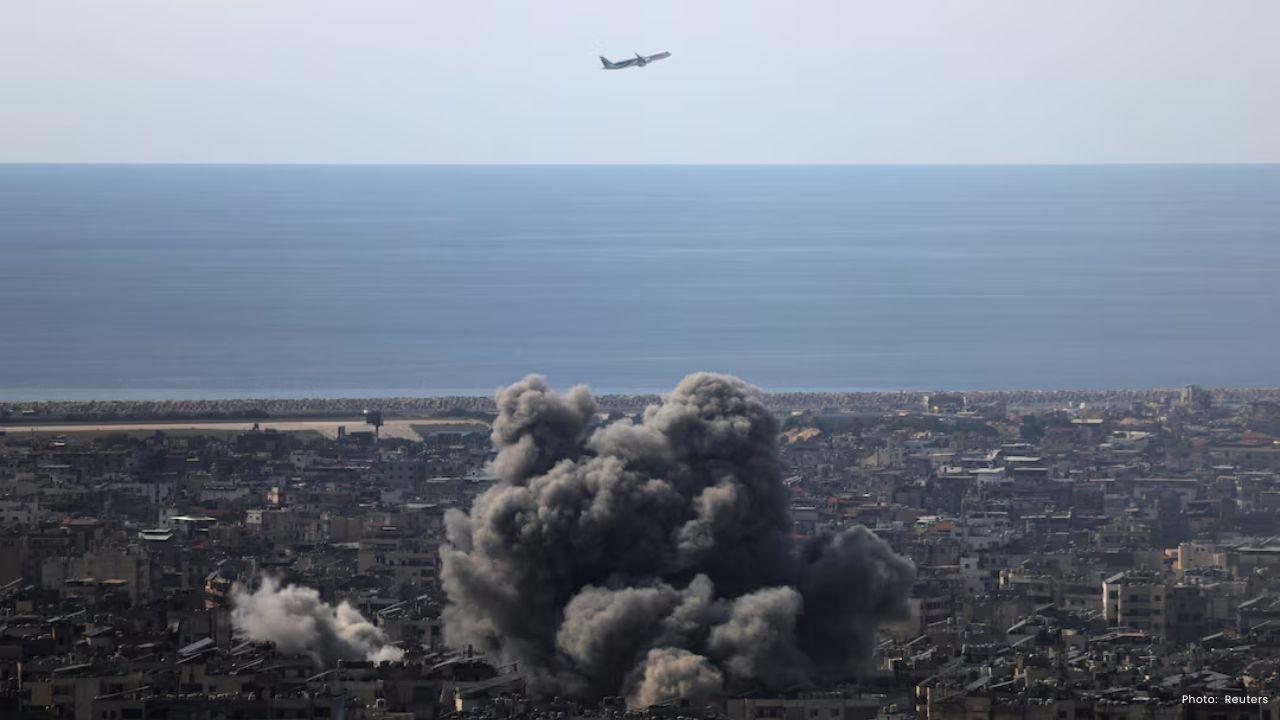
At the same time, Israel has launched airstrikes against locations in Lebanon connected to Hezbollah, a militant group that has long been supported by Iran. These attacks have expanded the conflict beyond the immediate battlefield and increased fears that the entire region could be pulled into a larger war. In parts of Lebanon, entire neighborhoods have been affected by the strikes, forcing civilians to evacuate as the fighting moves closer to populated areas.
President Trump’s demand for unconditional surrender has drawn global attention. The phrase is historically associated with total military defeat, where one side must accept all terms without negotiation. By using this language, the U.S. administration is signaling that it expects Iran to completely halt its military actions and dismantle key parts of its weapons programs before any peace agreement can be considered.
Political analysts say this strong position could make diplomatic talks more difficult. Negotiations usually require both sides to compromise, but unconditional surrender leaves little room for discussion. However, supporters of the U.S. strategy argue that strong pressure is necessary to force Iran to stop its attacks and prevent further instability in the region.
The war has already caused heavy human losses. Reports from inside Iran indicate that more than a thousand people have been killed since the fighting began. Many others have been injured by missile strikes and air raids. Hospitals in several cities are struggling to treat the growing number of wounded civilians and soldiers. Medical staff are working around the clock as emergency rooms continue to receive new patients.
The humanitarian situation is also becoming serious in Lebanon, where civilians are dealing with the impact of the airstrikes connected to the wider conflict. Families have fled their homes carrying only basic belongings, while schools and public buildings are being used as temporary shelters for displaced people.
Military experts say that both sides still have strong capabilities and large stockpiles of weapons. The United States has reported that several Iranian missile systems and defense networks have been destroyed during the strikes, but Iran continues to launch drones and missiles in response. This cycle of attack and retaliation has made it difficult to predict how long the war may continue.
Beyond the battlefield, the conflict is also affecting the global economy. Oil prices have increased as investors worry that the war could disrupt shipping routes in the Persian Gulf. One of the biggest concerns is the Strait of Hormuz, a narrow waterway through which a large portion of the world’s oil supply travels. Any disruption to this route could cause major energy shortages and drive fuel prices higher around the world.
Financial markets have already shown signs of nervousness. Stock markets in several countries have dropped as traders react to the uncertainty created by the conflict. Businesses and governments are closely watching the situation because prolonged instability in the Middle East could have serious economic consequences.
Many countries are urging calm and calling for diplomatic solutions. International organizations and foreign governments have warned that if the conflict spreads further, it could threaten global security and destabilize an already fragile region. Some diplomatic channels are reportedly exploring possible ceasefire discussions, although no major breakthrough has been announced.
Another factor adding to the uncertainty is the leadership situation in Iran following the reported death of the country’s Supreme Leader during the early stages of the strikes. Leadership transitions during wartime can create confusion and make decision-making more complicated. Analysts say this situation may influence how Iran responds to the pressure from the United States and its allies.
As the war continues into its second week, there are few clear signs that the fighting will stop soon. The United States remains committed to its demand for unconditional surrender, while Iranian leaders have indicated that they will continue resisting foreign pressure and responding to attacks.
For millions of people living in the Middle East, the conflict has brought fear and uncertainty. Civilians across the region are hoping that diplomatic efforts will eventually succeed before the war expands further. The coming days will be critical in determining whether the crisis moves toward negotiations or continues along the path of prolonged military confrontation.





DAE Achieves Remarkable Growth in Q1 2026 With Record Revenue
Dubai Aerospace Enterprise announces impressive financial results for Q1 2026, reflecting a surge in

Price Increase for Sony PS5 in Southeast Asia Effective May 1
Sony announces a price increase for the PS5 across Southeast Asia starting May 1, 2026, impacting ga

Potential ‘Super El Niño’ in 2026: Understanding the Climate Risks
Could a Super El Niño emerge in 2026? Discover its implications and potential global climate impacts

Global Energy Crisis Intensifies: Markets React to Oil Supply Challenges
Markets are on edge as oil disruptions escalate, influencing prices and economic stability. Explore

Must-See Tourist Spots in London You Can't Overlook
Explore London's essential attractions, from royal landmarks to vibrant markets, ensuring an unforge

Ultimate Guide to Snagging Cheap Flights in 2026
Unlock the secrets to booking affordable flights in 2026 with insightful tips and strategies tailore




