
Post by : Saif Nasser
A mild earthquake measuring 4.1 on the Richter scale struck near the city of Bandar Abbas in southern Iran early on Saturday. The tremor caused brief shaking in nearby areas but there were no immediate reports of casualties or serious damage. Authorities and seismic monitoring agencies are continuing to observe the situation closely.
The earthquake occurred in the early morning hours and was detected by international seismic monitoring systems. According to geological data, the tremor happened about 74 to 75 kilometres west of Bandar Abbas in Iran’s Hormozgan province. The earthquake originated at a depth of roughly 10 kilometres beneath the earth’s surface, making it a relatively shallow tremor.
Shallow earthquakes are usually felt more strongly near the epicentre compared with deeper ones, but smaller magnitudes generally cause only limited shaking. In this case, residents in Bandar Abbas and nearby towns reported feeling brief vibrations that lasted only a few seconds.
Early reports indicate that the earthquake did not cause significant destruction. Local authorities said there were no confirmed injuries or deaths linked to the tremor. Light earthquakes of around magnitude 4 are usually considered minor and rarely cause major structural damage unless they occur directly under densely populated areas.
People living close to the epicentre may have noticed windows shaking, furniture moving slightly, or a quick rumbling sensation. Such effects are common during small earthquakes and typically do not pose serious danger.
The epicentre of the quake lies in a region that is geologically active. Southern Iran sits along the Zagros fold and thrust belt, one of the most earthquake-prone zones in the Middle East. This region is formed by the slow collision between the Arabian tectonic plate and the Eurasian plate. The constant movement of these massive plates creates pressure beneath the earth’s crust, which is released through earthquakes.
Because of this tectonic activity, Iran experiences frequent seismic events each year. Many of them are small and go unnoticed by most people, while others can be stronger and cause damage. Seismologists closely monitor the region in order to track tremors and provide early information to authorities.
In the past, Iran has experienced several destructive earthquakes. Larger quakes have caused serious damage to towns and villages, especially in rural areas where buildings may not be designed to withstand strong shaking. As a result, earthquake preparedness remains an important issue for the country.
Experts say the latest tremor near Bandar Abbas should not cause major concern because of its relatively small magnitude. However, scientists still watch such events carefully because smaller earthquakes sometimes occur before or after larger seismic movements.
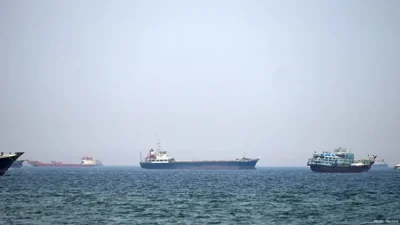
The coastal city of Bandar Abbas is an important port and economic center in southern Iran. Located near the Strait of Hormuz, the city plays a key role in shipping and trade across the Persian Gulf. Because of its location along active geological structures, the area occasionally experiences earthquakes.
Residents in the region are familiar with such tremors and often remain calm during smaller quakes. Emergency services and local authorities usually monitor these events to ensure there are no hidden damages to infrastructure such as roads, buildings, or power systems.
Seismologists say earthquakes of magnitude 4.1 are generally classified as light tremors. They are strong enough to be felt by people nearby but usually too weak to cause serious destruction. In most cases, the effects are limited to brief shaking and minor disturbances.
Authorities also confirmed that there was no tsunami warning following the earthquake. Because the magnitude was relatively low and the tremor occurred on land, the risk of ocean waves caused by seismic activity is extremely small.
Interestingly, the earthquake happened during a period when the region is already experiencing high political and military tensions. However, experts say there is no evidence linking the tremor to any human activity or military operations. Earthquakes are natural geological events caused by the movement of tectonic plates deep beneath the surface.
In addition to the recent tremor near Bandar Abbas, another earthquake measuring about 4.3 magnitude was recorded earlier this week in southern Iran near the Gerash region. Like the latest event, that quake also occurred at a depth of around 10 kilometres and did not cause major damage.
These frequent small earthquakes show how active the region’s geology remains. Scientists continue to use modern monitoring technology to study these events and improve understanding of seismic risks.
For now, life in Bandar Abbas has largely returned to normal after the brief shaking. Local authorities continue to monitor seismic activity, but there have been no warnings of further danger.
Events like this serve as a reminder of the powerful natural forces beneath the earth’s surface. While most small earthquakes cause little harm, they highlight the importance of strong buildings, effective emergency planning, and public awareness in earthquake-prone regions.








DAE Achieves Remarkable Growth in Q1 2026 With Record Revenue
Dubai Aerospace Enterprise announces impressive financial results for Q1 2026, reflecting a surge in

Price Increase for Sony PS5 in Southeast Asia Effective May 1
Sony announces a price increase for the PS5 across Southeast Asia starting May 1, 2026, impacting ga

Potential ‘Super El Niño’ in 2026: Understanding the Climate Risks
Could a Super El Niño emerge in 2026? Discover its implications and potential global climate impacts

Global Energy Crisis Intensifies: Markets React to Oil Supply Challenges
Markets are on edge as oil disruptions escalate, influencing prices and economic stability. Explore

Must-See Tourist Spots in London You Can't Overlook
Explore London's essential attractions, from royal landmarks to vibrant markets, ensuring an unforge

Ultimate Guide to Snagging Cheap Flights in 2026
Unlock the secrets to booking affordable flights in 2026 with insightful tips and strategies tailore




