Post by : Saif Nasser
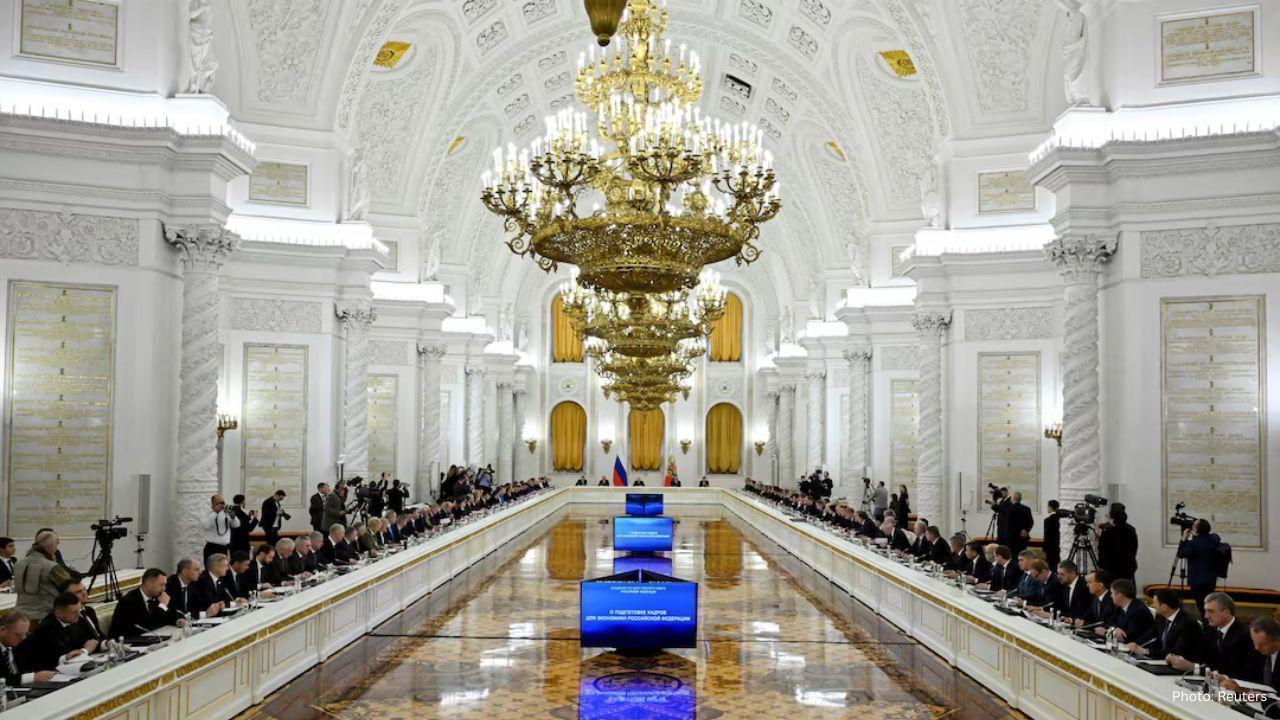
Russian President Vladimir Putin has indicated that Russia may be open to a limited exchange of territory as part of a future peace agreement with Ukraine, but only if Moscow secures full control over the Donbas region. This information was reported by the Russian newspaper Kommersant, based on a briefing Putin gave to some of Russia’s most powerful business leaders during a late-night meeting at the Kremlin on December 24.
According to the report, Putin explained his current thinking on how the war in Ukraine could eventually come to an end. While he appeared willing to discuss some compromises, he made it clear that Russia considers the Donbas region non-negotiable. Donbas, which includes the Donetsk and Luhansk regions, has been at the center of the conflict for years and holds both strategic and symbolic importance for Moscow.
Kommersant’s Kremlin correspondent Andrei Kolesnikov wrote that Putin told the businessmen Russia was still prepared to make certain concessions, similar to those discussed earlier in talks with the United States. However, these concessions would not include giving up any part of Donbas. Putin reportedly said that while territory outside Donbas could be discussed in a partial exchange, Russia’s claim to the entire Donbas region remains firm.
This position directly clashes with Ukraine’s stance. Ukrainian President Volodymyr Zelenskiy has repeatedly said that Ukraine will not agree to give up land that is internationally recognized as Ukrainian territory. In comments released by his office, Zelenskiy said that Ukrainian and U.S. officials had made some progress toward a possible 20-point peace plan during recent talks in Miami. However, he stressed that there was still no agreement on Russia’s demands for Ukraine to surrender parts of Donbas that are still under Kyiv’s control.
Zelenskiy also said that there was no shared understanding yet on the future of the Zaporizhzhia nuclear power plant, which is currently controlled by Russian forces. This power station is the largest nuclear facility in Europe and has been a major source of concern for both Ukraine and the international community because of safety risks during the war.
The role of the United States has become increasingly important in recent months. U.S. President Donald Trump has promised to end the conflict, calling it the deadliest war in Europe since World War Two. His administration has been involved in quiet diplomacy, with envoy Steve Witkoff and Trump’s son-in-law Jared Kushner holding talks with Russia, Ukraine, and European partners. While the full details of the U.S. proposals have not been made public, Russian officials have mentioned “understandings” reached between Putin and Trump during a summit in Anchorage, Alaska, in August.
Russia’s current territorial control in Ukraine is extensive. According to Russian estimates, Moscow controls all of Crimea, which it annexed in 2014, around 90% of Donbas, about 75% of the Zaporizhzhia and Kherson regions, and smaller areas in the Kharkiv, Sumy, Mykolaiv, and Dnipropetrovsk regions. Putin has said that any lasting peace deal must be based on conditions he outlined earlier, including Ukraine withdrawing from the regions Russia claims and formally giving up its goal of joining NATO.
During the meeting with business leaders, Putin also discussed the Zaporizhzhia nuclear power plant in more detail. According to Kommersant, he said that joint Russian-U.S. management of the facility was being discussed. He also reportedly mentioned U.S. interest in crypto mining projects near the plant and said that the electricity produced there should partly supply Ukraine. These comments suggest that Russia may see the nuclear plant not only as a strategic asset but also as a bargaining tool in negotiations.
Russia launched its full-scale invasion of Ukraine in February 2022, describing it as a “special military operation.” Since then, the war has caused massive destruction, displaced millions of people, and reshaped global politics. While talk of territory swaps and negotiations may signal a shift toward diplomacy, the deep disagreements over land, security, and sovereignty show how difficult a peace deal will be.
Putin’s remarks, as reported by Kommersant, highlight the narrow space for compromise. By insisting on full control of Donbas while offering flexibility elsewhere, Russia appears to be testing whether Ukraine and its allies are willing to accept painful territorial losses in exchange for an end to the fighting. For Ukraine, agreeing to such terms would be politically and emotionally devastating, while rejecting them risks prolonging a brutal war. As diplomatic efforts continue, the coming weeks may reveal whether these signals lead to real progress or simply mark another chapter in a long and painful conflict.



Mattel Revives Masters of the Universe Action Figures Ahead of Film Launch
Mattel is reintroducing Masters of the Universe figures in line with its upcoming film, tapping into

China Executes 11 Members of Criminal Clan Linked to Myanmar Scam
China has executed 11 criminals associated with the Ming family, known for major scams and human tra
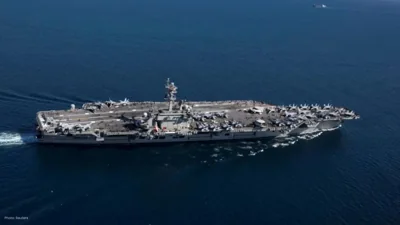
US Issues Alarm to Iran as Military Forces Deploy in Gulf Region
With a significant military presence in the Gulf, Trump urges Iran to negotiate a nuclear deal or fa

Copper Prices Reach Unprecedented Highs Amid Geopolitical Turmoil
Copper prices soar to all-time highs as geopolitical tensions and a weakening dollar boost investor

New Zealand Secures First Win Against India, Triumph by 50 Runs
New Zealand won the 4th T20I against India by 50 runs in Vizag. Despite Dube's impressive 65, India