Post by : Saif Nasser
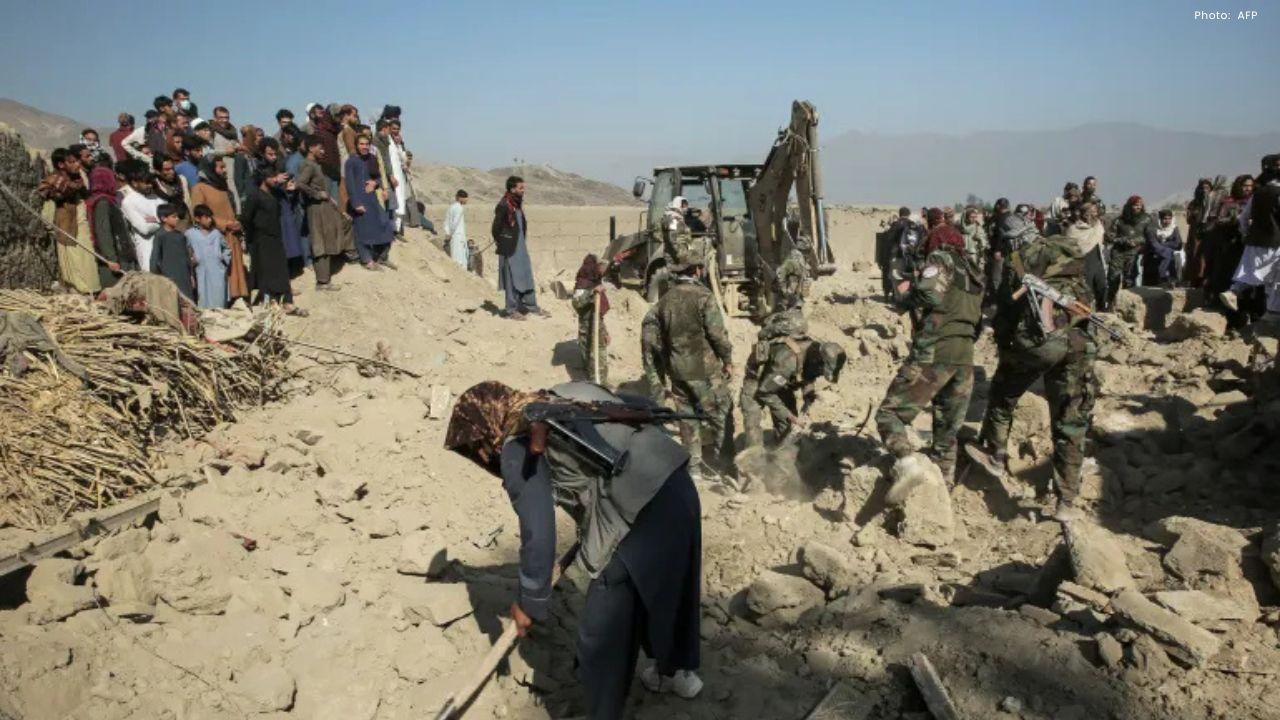
A deadly bombing in Afghanistan has once again shaken the region. The blast killed and injured many people and added to the fear that still surrounds daily life in the country. At the same time, it has brought new attention to Pakistan’s strategy, especially as India slowly builds contacts with the Taliban leadership.
Afghanistan has faced years of conflict and instability. Since the Taliban returned to power in 2021, the country has struggled with economic hardship, international isolation, and repeated attacks by armed groups. The recent bombing shows that security remains fragile. For ordinary Afghans, such violence means more fear, more uncertainty, and fewer chances for recovery.
Pakistan shares a long border with Afghanistan. The two countries are deeply connected through trade, family ties, and history. However, relations between them have often been tense. Pakistan has faced security threats from armed groups that operate near the border. Attacks inside Pakistan have sometimes been linked to militants based in Afghan territory. Because of this, any rise in violence in Afghanistan directly worries Islamabad.
The latest bombing has forced Pakistan to think carefully about its next steps. On one hand, Pakistan wants a stable Afghanistan. Stability would reduce cross-border violence and support economic cooperation. On the other hand, Pakistan must protect its own national interests and security. Balancing these goals is not simple.
At the same time, India’s growing engagement with the Taliban adds another layer to the situation. India and Pakistan have a long history of rivalry. In the past, India supported the former Afghan government and invested in development projects there. After the Taliban returned to power, India reduced its presence but did not completely cut off contact. Recently, New Delhi has reopened limited communication with Taliban officials and provided humanitarian assistance.
India says its outreach is meant to support the Afghan people and prevent the country from becoming a base for terrorism. However, Pakistan may see India’s growing role as a challenge to its own influence in Afghanistan. For decades, Pakistan has played a key role in Afghan affairs. If India strengthens ties with the Taliban, the regional balance could shift.
This changing political landscape creates uncertainty. Pakistan must decide how to manage its relationship with the Taliban government while also watching India’s moves. It must consider diplomacy, border security, and economic ties at the same time. Any misstep could increase tension in an already sensitive region.
The broader region is also watching closely. Countries such as China, Iran, and the Central Asian states have their own interests in Afghanistan. Stability affects trade routes, energy projects, and regional security. Continued violence makes it harder for Afghanistan to rebuild and for neighbouring countries to feel secure.
For the people of Afghanistan, the political competition between regional powers matters less than basic needs. They want safety, jobs, education, and health care. Bombings and political tensions delay progress and deepen hardship. Peace and cooperation among neighbouring countries could help improve daily life for millions.
Pakistan now stands at an important point. It must respond to security concerns without increasing regional rivalry. It must engage carefully with Afghanistan’s leadership while protecting its own borders. Diplomacy, dialogue, and regional cooperation may offer the best path forward.
The recent bombing is a tragic reminder that peace in Afghanistan remains fragile. As India expands its contacts and Pakistan reassesses its strategy, the choices made by leaders in the coming months will shape the region’s future. Stability will require patience, cooperation, and a focus on long-term peace rather than short-term competition.







Reopening of the Strait of Hormuz: New Regulations to Impact Global Trade
Iran reopens the strategic Strait of Hormuz with new regulations affecting oil transport and global

Top 10 Must-See Attractions in NYC for First-Time Explorers
Discover essential experiences for first-time visitors to NYC, including attractions, culture, and i

Starbucks Engages Boyu Capital for Major Chinese Expansion
Starbucks teams up with Boyu Capital, selling a majority stake to boost growth and adapt to the Chin

Three Individuals Charged in Massive Meth Trafficking Case in Malaysia
In Malaysia, a married couple and another suspect are charged with trafficking 510kg of meth, facing

Singapore Police Revisit Geylang Murder Scene with Suspect
In Geylang, police return a murder suspect to the scene of a crime involving the fatal stabbing of a