Post by : Anees Nasser
For generations, coastal communities have coexisted with the sea, drawing sustenance and cultural identity. Yet now, that very sea is morphing into a source of anxiety. Across Asia, coastal waters are increasingly unpredictable, arriving earlier, rising higher, and leaving devastation in their wake.
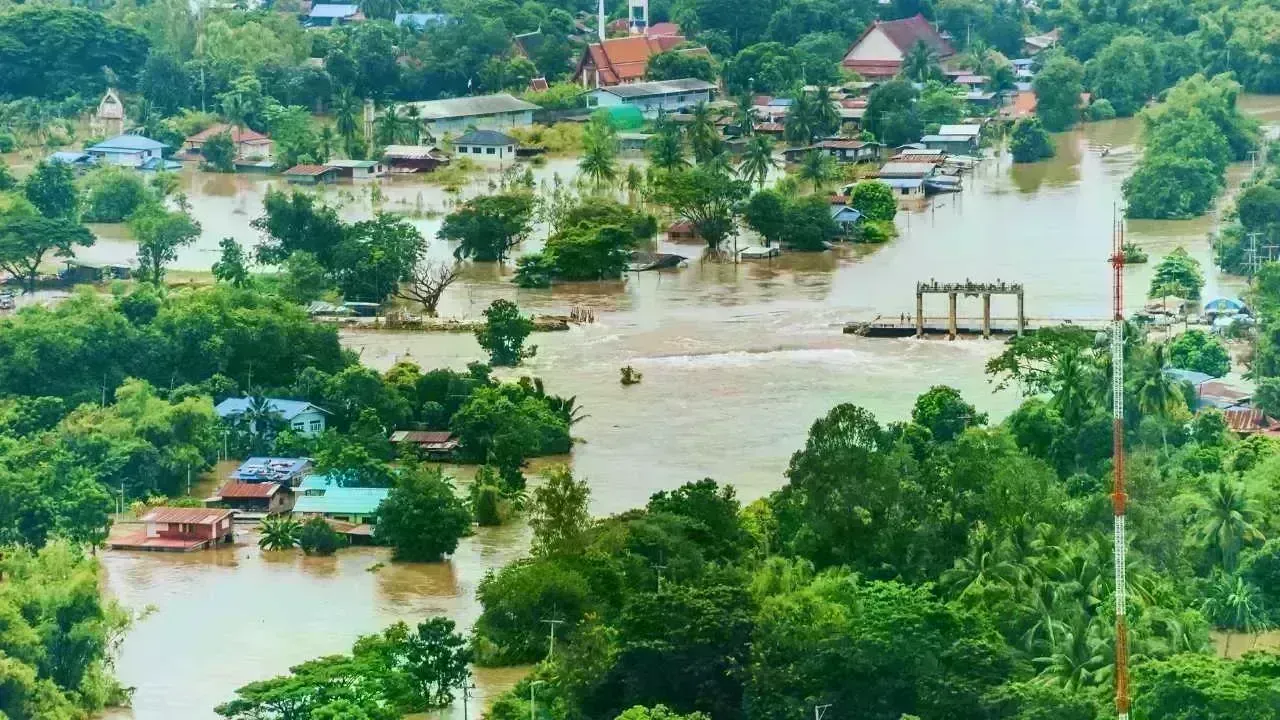
From Sri Lanka's inundated villages to Indonesia's submerged cities, the pattern is strikingly similar. Torrential rains, swollen rivers, and surging tides are overwhelming aging infrastructure and fragile housing. The scenes are all too familiar—overturned vehicles, waterlogged streets, and rescue boats in places where cars once navigated—but the implications are alarming.
What was once deemed rare is swiftly becoming the norm.
India, with its extensive coastline and substantial population living mere meters above sea level, faces a similar peril. The lessons drawn from its neighbors are not abstract; they come at the cost of lives, livelihoods, and years of hard-fought progress.
The pressing question is no longer if flooding will worsen.
It is whether we will be adequately prepared when it does.
Flooding events are no longer isolated; they contribute to a pervasive crisis affecting the entire region.
Monsoon systems and tropical storms are behaving unpredictably. Rain is increasingly concentrated and storm systems are lingering without dispersing. Rising tides are exacerbated by melting ice from thousands of kilometers away.
The old patterns no longer hold.
Coastal regions are witnessing:
Extended rain durations
Enhanced storm surges
Increased tides flooding inland
Accelerated shoreline erosion
Unexpected river overflows
The landscape remains unchanged.
The climate is radically different.
Coastal cities have rapidly expanded, with constructions undertaken without proper assessment of flooding risks.
New constructions often:
Obstruct natural drainage
Restrict river flow
Displace mangrove habitats
Replace wetlands with concrete infrastructures
Now, floodwaters have nowhere to go.
When it rains, streets are converted into rivers.
The flood crisis in Sri Lanka uncovered serious vulnerabilities lurking beneath the surface.
While weather alerts were issued, evacuation protocols faltered. Lack of shelters, collapsed transport networks, and delayed emergency supplies hindered timely responses.
Crucial information existed.
Preparedness was absent.
Sirens do not save lives if access routes fail.
Many residents lived in flood-prone zones characterized by:
Fragile walls
Tin roofs
Insufficient drainage
Ground-level floors
Floodwater wreaked havoc within hours—destroying documents, electronics, crops, and furniture.
Recovery transcended emotional loss.
It was a plunge into financial ruin.
Aid distribution was obstructed by damaged roads and displaced communities.
The harsh lesson learned?
Robust infrastructure is pivotal for effective relief.
Without resilient roads, evacuation centres, and storage facilities, any rescue operation faces overwhelming challenges.
Indonesia's situation represents another alarming reality.
Urban regions on low-lying land experience:
Land subsidence
Increasing sea levels
Groundwater depletion
Coastal erosion
Buildings are tilted. Roads display visible cracks. Ports flood during ordinary tides.
In some instances, the ocean is reclaiming built infrastructures.
Decades-old drainage designs cannot accommodate current rainfall volumes.
Water faces:
Few drainage outlets available
Multiple blockages in drainage systems
No natural floodplains to absorb overflow
Urban flooding occurs almost instantaneously following rains.
By the time umbrellas are raised, basements are inundated.
Complete communities are being relocated from inundated areas.
Once deemed theoretical, resettlement is now a reality.
Authorities are realizing that rebuilding in at-risk areas signifies not recovery but a cycle of repetition.
India shares geographic, climatic, and economic vulnerabilities with its Asian counterparts.
The same flood risks pervade our coastal areas.
The identical errors are being replicated.
While meteorology may successfully predict rainfall, preparedness determines survival rates.
India must evolve beyond simple forecasting. It requires comprehensive:
Local evacuation strategies
Flood-resilient shelters
Emergency medical support teams
Resource mapping initiatives
Community-level contact systems
Numbers displayed on screens won’t compel action.
Planning will.
Low-cost housing in slum regions and coastal areas suffers the most damage. Homes are often situated in flood-prone regions, adjacent to rivers, or on reclaimed land.
A floodproof approach necessitates:
Regulatory oversight for construction zones
Elevated building foundations
Use of flood-resistant materials
Encouraging safe construction designs
Preventative measures are significantly more cost-effective than rehabilitation.
Sri Lanka and Indonesia both learned this through hardship:
Locations that preserved mangroves were less impacted by floods.
Where mangroves vanished, devastation was dire.
India must prioritize:
Replanting mangrove ecosystems
Protecting coastal wetland areas
Regulating beachfront development
Nature mitigates disaster risks more effectively than man-made structures.
Cities are called to:
Reconceptualize stormwater systems
Clear drainage channels
Incorporate permeable road systems
Safeguard riverbanks from encroachment
Water cannot vanish at will.
It must be managed effectively.
People will not evacuate without:
Transparent evacuation directions
Safe escape routes
Trust in authorities’ guidance
Supplies readily available upon arrival
The Sri Lankan experience showed an essential lesson:
Individuals evacuate only when security feels assured.
India must construct not just infrastructure—
But also confidence.
Coastal families are adapting their behaviors:
Stockpiling emergency provisions
Raising furniture above flood levels
Avoiding travel during nighttime
Regularly monitoring alerts
Investing in insurance policies
Flood seasons have prompted behavioral changes.
Neglecting plans is no longer a viable option.
Flooding brings destruction beyond structural damage.
The aftermath devastates:
Local businesses
Fishing industries
Agricultural outputs
Tourism sectors
Job opportunities
Recovery is sluggish when entire industries are stalled.
Monetary compensation cannot replace livelihoods.
Floods leave behind:
Contaminated water sources
Mosquito-borne illnesses
Physical injuries
Infectious diseases
Emotional trauma
The ramifications of disasters persist long after the skies clear.
Clean-up is merely one half of the solution.
Healing demands far more time.
The instinct following disaster entails swift reconstruction.
However, replicating what was destroyed reinstates the threat.
Effective recovery:
Relocates at-risk zones
Redesigns urban spaces
Elevates crucial infrastructures
Revamps construction regulations
Rebuild smartly, not hastily.
Localized networks can be lifesaving.
Community volunteers have rescued more individuals than distant agencies could ever manage.
India must empower:
Neighborhood rescue initiatives
Local emergency training
Volunteer leadership roles
Incorporating disaster management education in schools
Prepared communities outmatch sluggish systems.
While apps, sensors, and satellites play supportive roles, they cannot replace the human element in rescue efforts.
True safety relies on:
Reliable roads
Emergency shelters
Watercraft for evacuation
Healthcare teams
Effective logistics
Technology provides support.
Infrastructure is what truly saves lives.
India is advancing at a pace that far surpasses its capabilities for disaster resilience.
Ports are expanding.
Cities are proliferating.
Housing is extending.
Yet safety measures are lagging behind.
Every new building today may become:
Either a sanctuary.
Or a future victim.
Citizens ought to advocate for:
Transparent risk assessments
Incentives for safer housing
Access to insurance policies
Regular emergency simulations
Sustainable management of shorelines
Inaction gives rise to silent disasters.
From Sri Lanka to Indonesia, the pattern is unmistakable:
Flooding disregards all barriers of geography, economy, and planning.
It puts leadership to the test.
It challenges collaboration.
It scrutinizes preparedness.
Coastal India is not immune.
It’s next in line if immediate action isn’t initiated.
Floods across Asia narrate a singular story written in water and destruction:
Adapt—or be swept away in denial.
Governments must evolve.
Developers must pivot.
Communities must build resilience.
The sea is not forgiving.
Nor is the climate.
Disclaimer:
This article is for informational purposes only and does not constitute legal, medical, or disaster-management advice. Readers should follow official government advisories and local emergency authority guidance during natural disasters.










Anticipated Dates for UAE Eid Al Adha 2026 Unveiled by Astronomical Experts
Experts predict Eid Al Adha 2026 in the UAE to start on May 27, prompting early holiday planning amo

DAE Achieves Remarkable Growth in Q1 2026 With Record Revenue
Dubai Aerospace Enterprise announces impressive financial results for Q1 2026, reflecting a surge in

Price Increase for Sony PS5 in Southeast Asia Effective May 1
Sony announces a price increase for the PS5 across Southeast Asia starting May 1, 2026, impacting ga

Potential ‘Super El Niño’ in 2026: Understanding the Climate Risks
Could a Super El Niño emerge in 2026? Discover its implications and potential global climate impacts

Global Energy Crisis Intensifies: Markets React to Oil Supply Challenges
Markets are on edge as oil disruptions escalate, influencing prices and economic stability. Explore

Must-See Tourist Spots in London You Can't Overlook
Explore London's essential attractions, from royal landmarks to vibrant markets, ensuring an unforge




