Post by : Anees Nasser
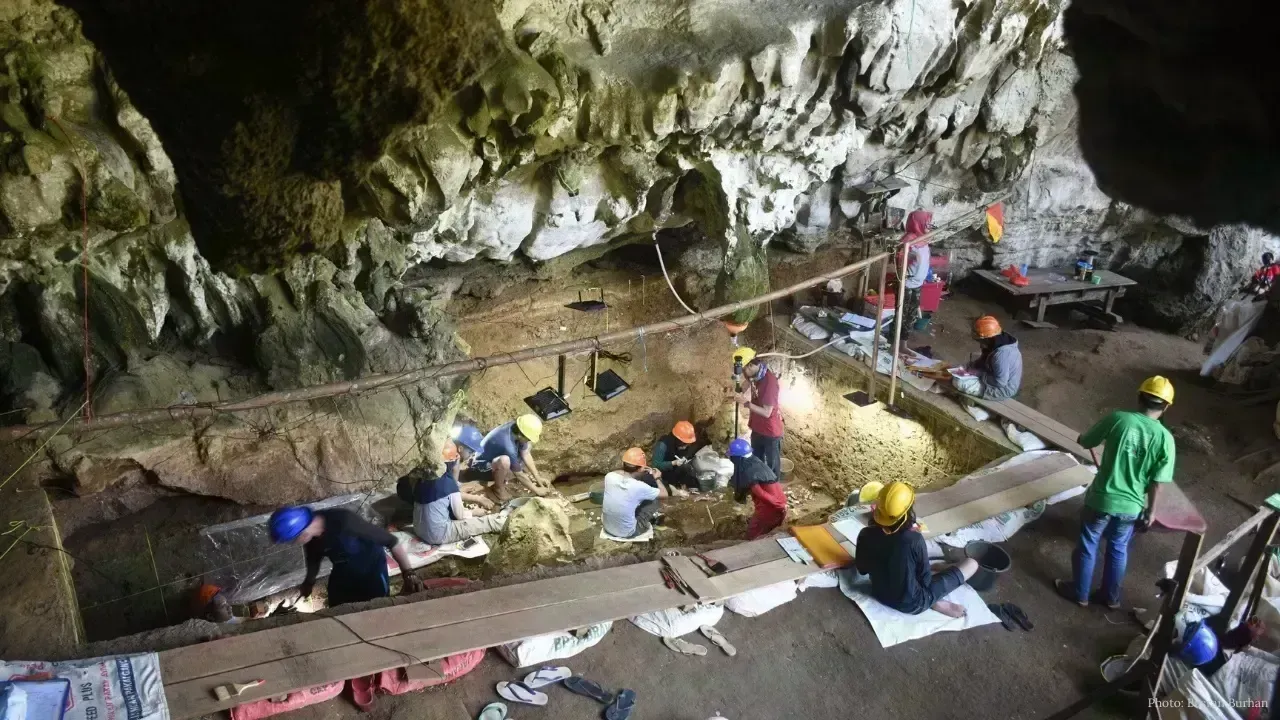
The Leang Bulu Bettue site in Sulawesi, Indonesia, has emerged as a key archaeological location where the history of human evolution is being revised. Over a decade of excavations in this limestone cave in the Maros-Pangkep karst area has uncovered a continuous history of hominin activity, some of which may date back approximately 208,000 years. The remarkable array of layered deposits showcases various phases of tool-making, animal remains, and cultural artifacts.
Previously, the narrative surrounding human occupation in Island Southeast Asia was limited due to sparse discoveries. However, Leang Bulu Bettue is reshaping that perspective, enabling scientists to explore how diverse human lineages lived, adapted, and interacted throughout Sulawesi across extensive timeframes.
In contrast to other regional sites, Leang Bulu Bettue provides a deep stratigraphic profile that adds significant depth to archaeological findings. Systematic excavations have uncovered layers extending at least eight meters deep beneath the surface, containing tools and faunal remains from approximately 208,000 years ago, highlighting one of the oldest records of human activity in Sulawesi.
The considerable depth is immensely valuable for tracing the evolution of hominin behavior and technology over vast timescales, illustrating transitions in tool-making, animal consumption, and even early symbolic activities.
Among the oldest artifacts identified in the cave's lower levels are heavy-duty stone tools and animal bones marked by butchery, indicating a sustained hominin presence long before modern humans appeared. The distinct technologies found suggest cultural practices among archaic hominins, whose species remains uncertain but clearly included adept tool users skilled in hunting large game.
While the exact identity of these early humans has yet to be confirmed through fossil remains, the deeper layers reveal a unique cultural and technological heritage that flourished on Sulawesi.
An intriguing facet of Leang Bulu Bettue's findings is the notable behavioral shift evident over time. Approximately 40,000 years ago, a marked change in technology and cultural practices occurs, as tools grow more sophisticated and new symbolic behaviors, such as pigment use, emerge—characteristics typically associated with Homo sapiens.
This transformative phase coincides with evidence that modern humans entered Island Southeast Asia possibly as early as 65,000 years ago, during migrations also leading to the colonization of Australia. The emergence of refined tools and behaviors raises the possibility that modern humans assimilated or displaced simpler hominin predecessors, leaving a traceable cultural lineage.
The findings at Leang Bulu Bettue brim with the potential for discoveries about coexistence of archaic hominins and early modern humans in Sulawesi. The unique stratification of the site navigates this exploration.
If verified, such coexistence would integrate Southeast Asia into the narrative of interactions observed in Eurasia among species like Neanderthals and Denisovans. This adds noteworthy dimensions to our understanding of human evolutionary interactions beyond familiar regions.
Researchers emphasize that the cultural phases revealed in the site suggest not just varied technologies but possibly distinct populations. While modern humans are characterized by advanced tools and symbolic expressions, earlier phases reflect a rich archaic heritage that endured for eons.
The insights from Leang Bulu Bettue challenge prevailing assumptions regarding the timing, migration routes, and interactions of early human populations across Australasia and Southeast Asia. The breadth of its findings predates earlier theories about hominin presence in this region, redefining perspectives on how early relatives navigated island environments separated by vast oceans.
Offering one of the most comprehensive sequences of early human habitation in Wallacea, the site contributes substantially to ongoing discussions about adaptability, migration patterns, and cultural development among early humans and their ancestors.
Despite the meaningful progress at Leang Bulu Bettue, experts speculate that even deeper layers may house older deposits that provide further insights into Sulawesi's first inhabitants and their environments, tools, and lifestyles.
Ongoing excavations are expected to unveil deeper understandings of how early hominins adapted to island ecosystems, responded to climate changes, and interacted with competing hominin groups.
The archaeological revelations at Leang Bulu Bettue have forged new understandings in the narrative of human evolution. The site's layered history, spanning over 200,000 years, showcases an archaic tradition that predates modern humans on Sulawesi, highlighting profound technological and cultural shifts, alongside the possibility of diverse human interactions.
With ongoing excavations, Leang Bulu Bettue stands as a pivotal site for elucidating the intricate story of human history in Southeast Asia—where ancient tools, faunal evidences, and signs of symbolic life contribute to the broader understanding of our common ancestry.
Disclaimer:
This article is based on the most recent archaeological research and interpretations at the time of writing. The scientific comprehension of human evolution and prehistoric contexts adapts with new findings; readers should consult subsequent research for an in-depth exploration.










Anticipated Dates for UAE Eid Al Adha 2026 Unveiled by Astronomical Experts
Experts predict Eid Al Adha 2026 in the UAE to start on May 27, prompting early holiday planning amo

DAE Achieves Remarkable Growth in Q1 2026 With Record Revenue
Dubai Aerospace Enterprise announces impressive financial results for Q1 2026, reflecting a surge in

Price Increase for Sony PS5 in Southeast Asia Effective May 1
Sony announces a price increase for the PS5 across Southeast Asia starting May 1, 2026, impacting ga

Potential ‘Super El Niño’ in 2026: Understanding the Climate Risks
Could a Super El Niño emerge in 2026? Discover its implications and potential global climate impacts

Global Energy Crisis Intensifies: Markets React to Oil Supply Challenges
Markets are on edge as oil disruptions escalate, influencing prices and economic stability. Explore

Must-See Tourist Spots in London You Can't Overlook
Explore London's essential attractions, from royal landmarks to vibrant markets, ensuring an unforge




