Post by : Saif Nasser
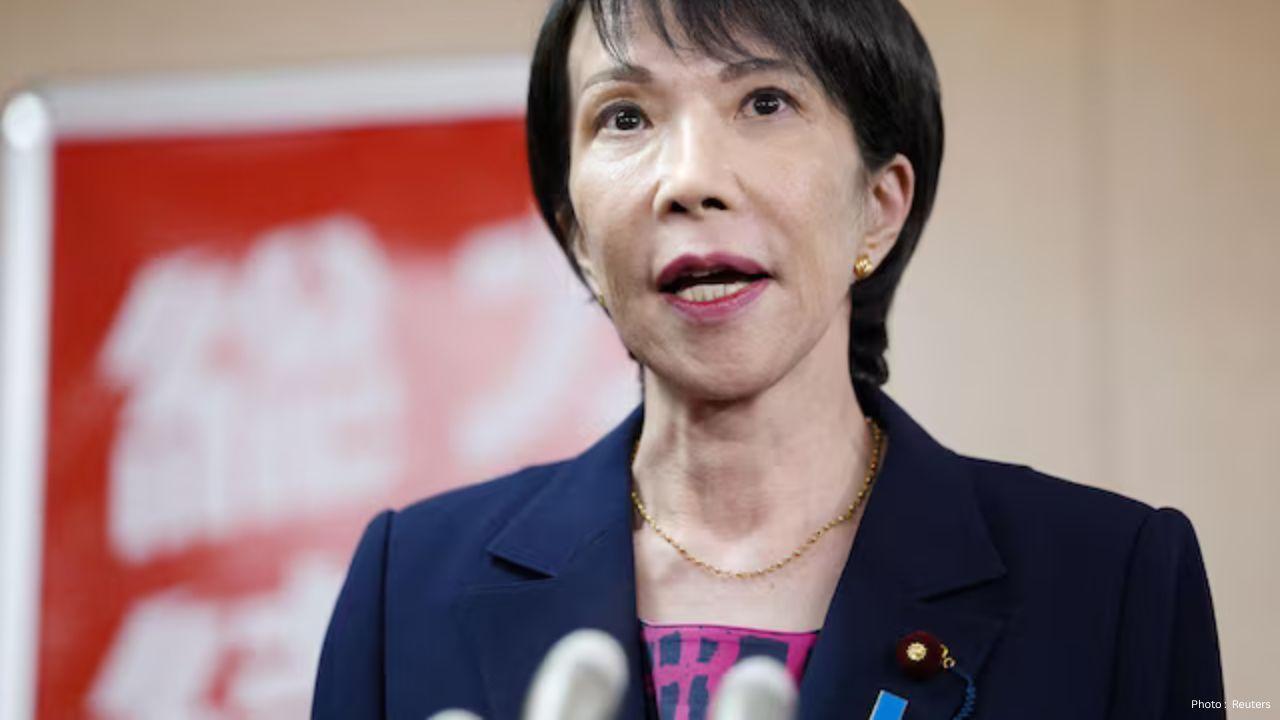
Japan’s ruling Liberal Democratic Party (LDP) is moving fast to form a new alliance as its newly elected leader, Sanae Takaichi, works to secure enough support to become the country’s next prime minister. Talks began on Thursday between the LDP and the Japan Innovation Party (JIP), a right-leaning political group, as Takaichi looks for partners to help her win next week’s key parliamentary vote.
If she succeeds, Takaichi will make history as Japan’s first female prime minister.
A Leadership Change and a Political Challenge
Sanae Takaichi recently became the leader of the LDP after Prime Minister Shigeru Ishiba stepped down. Normally, the LDP’s leader automatically becomes the country’s leader, as the party has ruled Japan for most of the past 70 years. But this time, the situation is more complicated.
The LDP’s long-time coalition partner, the Komeito party, left the alliance last week after 26 years of cooperation. The split left Takaichi’s party without a majority in parliament, forcing her to seek new allies to form a government.
Without a new coalition, Takaichi cannot secure enough votes to become prime minister.
Talks Begin with Japan Innovation Party
On Thursday, the LDP began policy discussions with the Japan Innovation Party (JIP). The JIP is a right-leaning party that shares some of the LDP’s conservative ideas, especially on defense and constitutional reform.
Fumitake Fujita, co-head of the JIP, said his party members had agreed to let top party leaders decide whether to support Takaichi’s bid for prime minister. He said, “There were strong opinions in our party that we should push for the policies we believe in, then form a coalition that can really change Japan’s politics.”
If the LDP and JIP join hands, they would be just two seats short of a majority in Japan’s lower house of parliament. That chamber holds the power to choose the next prime minister. The government has not yet announced the exact date of the vote, but it is expected soon.
Positive Market Reaction
The Japanese stock market reacted positively to the news. The Nikkei share index rose on Thursday as investors became more confident that Takaichi could win the vote and take charge of the government.
Many market analysts believe a Takaichi-led government would bring back big spending programs and maintain Japan’s loose monetary policy, which encourages investment and supports economic growth.
JIP’s Conditions for Support
The JIP has said it would support Takaichi as prime minister only if the two parties can agree on certain key policies. JIP leader Hirofumi Yoshimura said on Wednesday that his party was ready to back Takaichi if she accepted a list of policy proposals that the JIP planned to submit to the LDP.
These proposals include ideas such as creating a “second capital” city to reduce Tokyo’s dominance, reforming the country’s social security system, and reviewing government spending.
Takaichi is scheduled to meet Fujita and other JIP leaders, along with the policy heads of both parties, to discuss these issues in detail.
Shared Goals and Possible Differences
The two parties already agree on several major points. Both the LDP and JIP support increasing Japan’s defense budget and revising the country’s post-war constitution, which currently limits the military’s role.
They believe Japan needs stronger defense capabilities to protect itself amid growing regional tensions involving China and North Korea.
However, some policy differences could still make a deal difficult. The JIP has also been in talks with opposition parties like the Constitutional Democratic Party (CDP) and the Democratic Party For the People (DPFP). These groups are exploring the possibility of joining forces to challenge the LDP in parliament.
If such an opposition coalition forms, it could nominate Yuichiro Tamaki, the leader of the DPFP, as an alternative candidate for prime minister.
A Historic Moment for Japan
If Sanae Takaichi succeeds in becoming prime minister, it will mark a historic moment for Japan. Despite being one of the world’s most developed countries, Japan has never had a female leader.
Takaichi, 63, is known for her strong conservative views. She has been a close ally of former Prime Minister Shinzo Abe and has promised to continue many of his economic and security policies. Her rise could represent both change and continuity—a new face for leadership but with familiar policies.
Supporters say she could inspire more women to take leadership roles in Japan’s traditionally male-dominated politics. Critics, however, argue that her policies might not bring the social reforms Japan needs, such as more support for working women and young families.










Mattel Revives Masters of the Universe Action Figures Ahead of Film Launch
Mattel is reintroducing Masters of the Universe figures in line with its upcoming film, tapping into

China Executes 11 Members of Criminal Clan Linked to Myanmar Scam
China has executed 11 criminals associated with the Ming family, known for major scams and human tra

US Issues Alarm to Iran as Military Forces Deploy in Gulf Region
With a significant military presence in the Gulf, Trump urges Iran to negotiate a nuclear deal or fa

Copper Prices Reach Unprecedented Highs Amid Geopolitical Turmoil
Copper prices soar to all-time highs as geopolitical tensions and a weakening dollar boost investor

New Zealand Secures First Win Against India, Triumph by 50 Runs
New Zealand won the 4th T20I against India by 50 runs in Vizag. Despite Dube's impressive 65, India