Post by : Sami Jeet
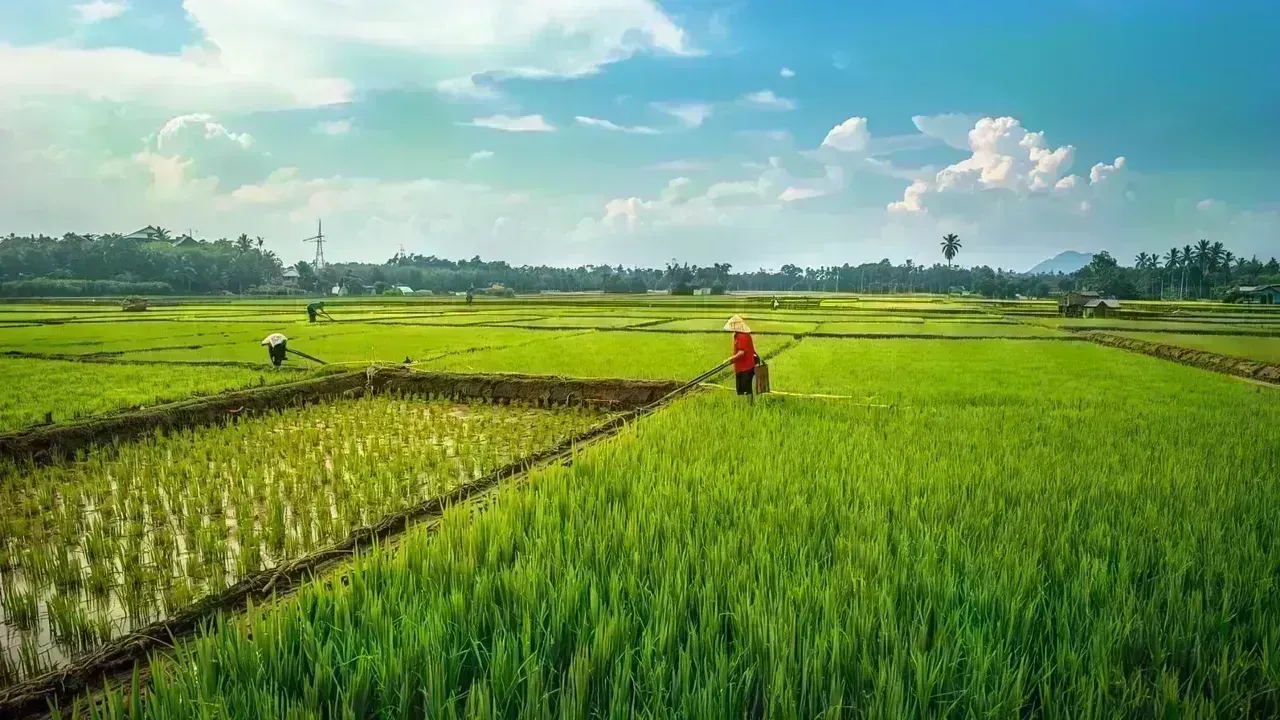
India's ascendance as the largest rice producer in the world, overtaking China in total output, marks a significant transformation in the global agricultural arena. Rice holds immense importance in India, serving as a vital staple, a means of livelihood for millions, and a crucial commodity that affects food security, rural income, and global trade. This achievement is the result of several years of strategic agricultural adaptation, policy reinforcement, advancement in technology, and farmer perseverance rather than a mere coincidence.
In this article, we delve into the steps India took to reach this historic milestone, the reasons behind China's changing status, the factors fueling India's growth, and the implications for the global food landscape, presented in a straightforward and comprehensive manner.
Rice is a primary source of sustenance for over half of the world's populace. In many regions of Asia and Africa, rice is a daily food staple and a cornerstone of food security. Changes in the global hierarchy of rice production carry far-reaching implications for:
Global food pricing
Trade dependencies
Climate-smart agricultural planning
Geopolitical strategies surrounding food production
Together, India and China account for over 50% of worldwide rice output, making any shifts in their production figures particularly impactful.
India’s ability to outstrip China in rice production is attributed to systematic differences in their agricultural practices and shifting national goals.
India has rice fields spanning a broader geographic area compared to China. The crop is extensively cultivated in states like West Bengal, Uttar Pradesh, Punjab, Andhra Pradesh, Telangana, Odisha, Chhattisgarh, Tamil Nadu, Bihar, and Assam. Even slight increases in yield in such a diverse area result in substantial production gains.
Conversely, China has progressively reduced its rice-growing land due to:
Rural depopulation
Urban growth
Diversification of crops
Labor shortages in agricultural settings
This discrepancy in land utilization is crucial in determining overall output.
India has consistently improved its per-hectare rice yields through superior seed varieties, enhanced irrigation methods, and mechanization. While China traditionally had higher yields, the difference has progressively diminished.
Indian farmers have adopted:
High-yield varieties (HYV)
Hybrid rice seeds
Shorter crop cycles
Effective pest and disease management
These advancements have enabled India to enhance output even without extensive land expansion.
The position of India as the top rice producer closely relates to long-standing policy incentives.
The Minimum Support Price (MSP) for rice has granted income security to farmers. This guaranteed procurement diminishes risks and motivates farmers to persist with rice cultivation, even amid unpredictable weather patterns.
India's extensive public food initiatives necessitate considerable rice reserves, which creates consistent domestic demand, ensuring production remains profitable.
Extensive irrigation projects, including canals and tube wells, combined with subsidized electricity, have lessened the reliance on monsoon rains in pivotal rice-growing areas.
Subsidies for fertilizers, seeds, and agricultural equipment mitigate production costs and enhance profitability for farmers, promoting prolonged output growth.
The role of technology has been essential in India's rice production success.
New rice varieties offer:
Enhanced yield capacity
Resistance against pests and diseases
Tolerance to floods and drought conditions
Shortened growing periods
This enables some regions to implement multiple cropping cycles.
The use of transplanters, harvesters, and threshers reduces labor dependency and post-harvest losses while aiding farmers in managing extensive fields during brief harvesting windows.
Weather updates, soil analysis, crop advisory tools, and satellite observations have refined decision-making on farms, leading to reduced losses and more consistent production.
China is still a significant rice producer, yet various factors have constrained its growth.
Chinese consumers are increasingly gravitating towards:
Wheat-centric foods
Meat and dairy products
Processed food items
This shift alleviates the pressure to increase rice production domestically.
With rising wages and an aging farming population, production costs have surged. Many younger individuals are migrating to urban jobs, resulting in fewer agricultural workers.
China faces stringent environmental regulations concerning water usage, soil health, and pollution. As rice is a water-intensive crop, increased restrictions on groundwater access limit potential production expansion.
China has shifted towards more profitable, higher-value crops, optimizing land for these purposes over volume-centric production.
Climate variability profoundly impacts agricultural output.
Despite increasing unpredictability, India has enjoyed adequate monsoon coverage in major rice regions in recent seasons, which has bolstered both acreage and yields.
Regions in eastern India prone to flooding are now utilizing submergence-tolerant rice varieties, mitigating crop damage during heavy rains.
India's capacity to cultivate rice during kharif, rabi, and summer seasons imparts an advantage over nations restricted to fewer cycles.
India stands as not only the largest producer but also one of the major rice exporters worldwide.
India exports:
Basmati rice
Non-basmati white rice
Parboiled rice
Broken rice
This diversity enables India to cater to multiple international markets in Asia, Africa, the Middle East, and Europe.
Lower production costs and extensive farming operations render Indian rice competitively priced in global markets, boosting export demand.
Robust domestic production allows India to maintain reserve stocks while exporting excess, enhancing global supply stability.
Firm procurement and strong export demand lessen income volatility for rice cultivators.
Rice farming underpins millions of jobs across sectors like farming, transportation, milling, packaging, and trade.
Agricultural inputs, tools, seed companies, and agri-tech innovations are all beneficiaries of sustained growth in rice production.
While increased production is advantageous, it also brings forth sustainability challenges.
Rice cultivation requires substantial water, particularly in northern states reliant on groundwater.
Continuous use of fertilizers can potentially degrade soil quality over time.
Flooded rice fields contribute to greenhouse gas emissions, raising ecological concerns.
India is proactively investigating:
Direct-seeded rice methods
Alternative wetting and drying practices
Micro-irrigation techniques
Climate-smart agricultural strategies
These initiatives aim to strike a balance between production and environmental stewardship.
India's leadership in rice production carries significant global ramifications.
Increased output mitigates the risk of shortages amid climatic shocks or geopolitical tensions.
A number of developing countries count on affordable rice imports; India's output capabilities bolster food accessibility in vulnerable regions.
As a major producer and exporter, India plays a pivotal role in determining international rice prices.
Despite its dominant position, India confronts persistent challenges.
Climate variability
Water scarcity issues
Rising input costs
Requirement for sustainable practices
Addressing these issues is essential for maintaining India's leadership in this sector.
India's dominance in rice production likely to continue if:
Yield increases are consistent
Sustainability efforts expand
Farmer income retains stability
Adaptation technologies proliferate
The emphasis is shifting from sheer volume growth to efficient and sustainable production.
India's achievement in surpassing China in rice production transcends mere statistics. It signifies structural strengths, farmer adaptability, and a commitment to policy continuity. Furthermore, it underscores the responsibility that India now holds in fostering global food stability while safeguarding its environmental and agricultural integrity.
Rice remains intricately woven into India's economic framework, cultural identity, and food security agenda. Holding the title of the world's leading producer situates India at the forefront of global agricultural discourse for the foreseeable future.
This article is for informative and educational purposes only. Agricultural data and trends are derived from publicly available estimates and may be altered due to changing climate conditions, policy changes, or updates in reporting. Readers are encouraged to refer to official agricultural agencies for the most accurate statistics and analyses.









Achieve Radiant Skin with This Simple Rice Flour Treatment
Transform your skincare routine! Discover how a rice flour mix can restore your skin's glow without

Meta Unveils Subscription Plans for Instagram, Facebook, and WhatsApp
Meta introduces new subscription plans for users of Instagram, Facebook, and WhatsApp, featuring enh

Suvarna Joy on Education Leadership, Resilience, and Building Purpose Through Adversity in the UAE
Suvarna Joy shares her journey of education leadership, motherhood, faith, and resilience within the

Anticipated Dates for UAE Eid Al Adha 2026 Unveiled by Astronomical Experts
Experts predict Eid Al Adha 2026 in the UAE to start on May 27, prompting early holiday planning amo

DAE Achieves Remarkable Growth in Q1 2026 With Record Revenue
Dubai Aerospace Enterprise announces impressive financial results for Q1 2026, reflecting a surge in

Price Increase for Sony PS5 in Southeast Asia Effective May 1
Sony announces a price increase for the PS5 across Southeast Asia starting May 1, 2026, impacting ga




