Post by : Monika
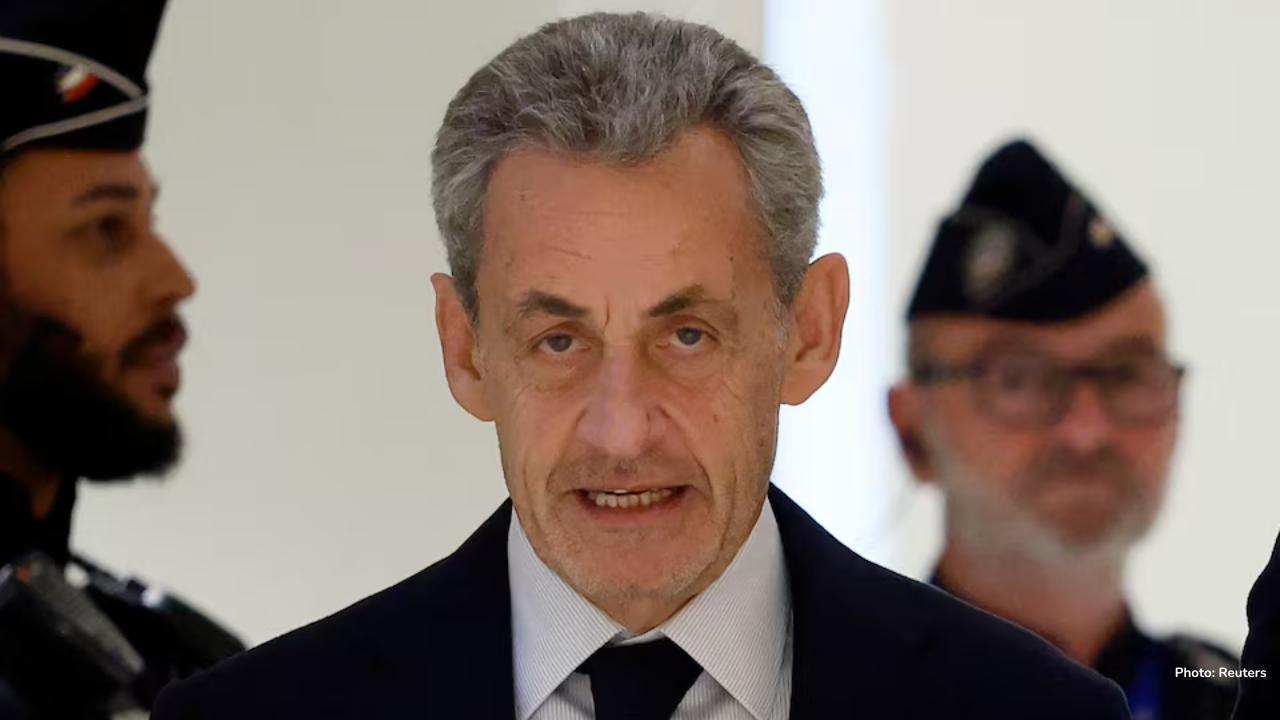
On September 25, 2025, a French court made a historic decision by sentencing former President Nicolas Sarkozy to five years in prison. Sarkozy, who served as France’s president from 2007 to 2012, was found guilty of criminal conspiracy linked to his 2007 presidential campaign.
The case has attracted worldwide attention because it involves allegations that Sarkozy illegally received millions of euros from the late Libyan leader Muammar Gaddafi to fund his election bid.
Background of the Case
The case against Sarkozy revolves around accusations that, while he was France’s Interior Minister in 2005, he made a secret agreement with Gaddafi. Prosecutors claim that in exchange for political support from France, Gaddafi provided funds to help Sarkozy win the presidency. According to the charges, the money was delivered in suitcases full of cash, making it extremely difficult to track.
Sarkozy’s aides were accused of coordinating with Libyan officials to receive these funds discreetly. This coordination was seen as a clear violation of France’s laws on campaign financing and political transparency.
Prosecutors argue that the conspiracy was planned well in advance and executed systematically, making Sarkozy criminally responsible for the acts of his associates.
Despite these allegations, Sarkozy has consistently denied all charges. He claims that the accusations are politically motivated and that no Libyan money was used in his campaign. He insists that his campaign financing followed French laws, and he has accused prosecutors of exaggerating or misinterpreting evidence.
The Court’s Verdict
The court, however, concluded that there was sufficient evidence to convict Sarkozy of criminal conspiracy. This decision means that he will serve a prison sentence unless his legal team successfully appeals the ruling. The sentence of five years is a combination of prison and the possibility of serving part of it under house arrest or electronic monitoring, according to French legal practices for high-profile cases.
While Sarkozy was convicted of criminal conspiracy, the court acquitted him of several other serious charges, including:
The court’s nuanced ruling shows that while the judges found enough evidence to hold Sarkozy responsible for planning and coordinating the conspiracy, they did not find sufficient proof for some of the additional accusations.
Sarkozy’s Response
Following the verdict, Sarkozy expressed his disappointment and called the case politically motivated. His lawyers confirmed that they would appeal the decision to higher courts. An appeal could take several months or even years, prolonging the legal proceedings and keeping Sarkozy in the public spotlight.
Sarkozy has been a prominent figure in French politics even after leaving the presidency. He has influence within his political party, Les Républicains, and is considered a potential candidate for future elections. The conviction, therefore, has implications not only for his personal life but also for French politics more broadly.
Previous Legal Troubles
This is not the first time Sarkozy has faced legal problems. He has had several high-profile trials related to corruption, campaign financing, and abuse of power. In 2024, France’s highest court upheld a previous corruption conviction, requiring Sarkozy to wear an electronic tag for a year. He was also convicted for illegal campaign financing connected to his 2012 re-election bid. Despite these legal challenges, Sarkozy has maintained a strong public presence and continued to participate in political discussions.
These multiple cases show that French authorities are taking campaign finance and political corruption seriously. Sarkozy’s convictions are significant because they send a message that even former presidents are not above the law.
International Attention
Sarkozy’s trial and conviction have attracted global media coverage. International observers have been watching the case as an example of accountability in democratic systems. Supporters of Sarkozy argue that the trials are unfair and politically motivated, claiming that the former president is being targeted for his prominence and influence. Critics, on the other hand, say that the conviction demonstrates that even the most powerful politicians can face consequences for illegal actions.
The case has sparked debates about political financing, transparency, and the influence of foreign powers on democratic elections. In particular, the allegation that Gaddafi, a foreign leader, funded Sarkozy’s campaign raises concerns about the integrity of elections and the potential impact of external money on national politics.
Details of the Libyan Funding Allegations
According to the court and prosecutors, the alleged funding from Gaddafi was part of a secret deal made years before the 2007 election. The deal reportedly involved payments being transferred to Sarkozy’s campaign through intermediaries and associates. These actions were considered illegal because French law strictly regulates campaign financing and prohibits receiving funds from foreign governments or leaders.
The trial included testimony from former aides, financial experts, and investigators who described how the money was allegedly delivered, managed, and concealed. Documents and bank records played a key role in establishing the timeline and connections between Sarkozy’s campaign and Libyan officials.
Legal and Political Implications
The conviction has significant legal and political implications for France. Legally, it reinforces the principle that no one, not even a former president, is above the law. It also highlights the importance of transparency in political financing and the need for strict enforcement of campaign finance laws.
Politically, the verdict could influence Sarkozy’s party and its prospects in upcoming elections. Les Républicains may face internal debates about leadership and strategy, and the case could affect public perceptions of the party’s credibility and integrity. Sarkozy’s ability to remain politically active may be constrained depending on how the appeals process unfolds.
Public Reaction in France
The news of Sarkozy’s conviction sparked mixed reactions among the French public. Some citizens expressed approval and relief, seeing the verdict as a necessary step toward justice and accountability. Others viewed it as a controversial political move, questioning whether the legal system was influenced by political motives.
In general, French citizens are closely watching the appeals process and discussions about campaign finance reforms. Many believe that the case underscores the need for stronger regulations to prevent illegal funding and corruption in politics.
Impact on Future Elections
Sarkozy’s conviction may have long-term effects on future presidential campaigns in France. Political parties are likely to be more careful about campaign financing and more transparent in their fundraising activities. Election authorities may introduce stricter rules to ensure that foreign money cannot influence national elections.
The case also serves as a warning to other politicians that illegal financial activities can have severe consequences, even years after an election. It may encourage greater accountability and ethical behavior among political leaders in France and beyond.
International Perspective on Political Corruption
Sarkozy’s case has been cited internationally as an example of how democratic countries address political corruption. Observers in Europe and other parts of the world have noted that holding a former president accountable demonstrates the strength of legal institutions and the importance of upholding the rule of law.
It also raises questions about foreign influence in politics. Allegations of receiving money from a foreign leader highlight the risks associated with foreign intervention in national elections. Countries around the world may use this case as a lesson to strengthen laws and regulations to protect their political systems.
The French court’s sentencing of Nicolas Sarkozy to five years in prison for criminal conspiracy marks a significant moment in French political history. The case underscores the importance of accountability, transparency, and adherence to the law, even for high-ranking political figures.
While Sarkozy has been acquitted of some charges, the conviction on conspiracy highlights the seriousness of political funding violations. The verdict also emphasizes the need for vigilance against corruption and foreign interference in elections.
As Sarkozy prepares to appeal the verdict, the legal and political discussions surrounding the case are likely to continue for months or even years. The outcome of the appeals process will be closely watched in France and internationally, as it may influence public confidence in democratic institutions and the conduct of future elections.









DAE Achieves Remarkable Growth in Q1 2026 With Record Revenue
Dubai Aerospace Enterprise announces impressive financial results for Q1 2026, reflecting a surge in

Price Increase for Sony PS5 in Southeast Asia Effective May 1
Sony announces a price increase for the PS5 across Southeast Asia starting May 1, 2026, impacting ga

Potential ‘Super El Niño’ in 2026: Understanding the Climate Risks
Could a Super El Niño emerge in 2026? Discover its implications and potential global climate impacts

Global Energy Crisis Intensifies: Markets React to Oil Supply Challenges
Markets are on edge as oil disruptions escalate, influencing prices and economic stability. Explore

Must-See Tourist Spots in London You Can't Overlook
Explore London's essential attractions, from royal landmarks to vibrant markets, ensuring an unforge

Ultimate Guide to Snagging Cheap Flights in 2026
Unlock the secrets to booking affordable flights in 2026 with insightful tips and strategies tailore




