Post by : Saif Nasser
A Ukrainian drone strike has set off fires at a Russian Black Sea port just days before new peace talks are scheduled to begin. The timing shows how fragile the situation remains, even as diplomats prepare to sit down and discuss ways to stop the long-running war.
Russian regional officials said the attack hit the port of Taman in the Krasnodar region. According to local authorities, the strike damaged an oil storage tank, a warehouse, and parts of the port terminals. Two people were reported injured. Emergency teams were sent to control the fires and secure the area.
On the other side of the border, Ukrainian officials reported damage from falling debris after Russian drone activity. In the Odesa region, some civilian and transport infrastructure was affected. Local leaders said power and water services were disrupted in certain areas. This pattern — attacks followed by counterattacks — has become common as the war stretches into another year.
The latest strike happened shortly before a new round of U.S.-brokered talks between Russian and Ukrainian envoys is set to take place in Geneva. These meetings are meant to explore steps toward ending the conflict, which is nearing its fourth anniversary. Yet the continued attacks show that fighting pressure remains high on both sides.
Ukraine has focused many of its long-range drone strikes on Russian energy and fuel sites. The strategy is clear: reduce oil revenue and make it harder for Moscow to fund military operations. Energy exports are a major source of income for Russia, so these sites are seen as important targets.
Russia, in turn, has kept up pressure on Ukraine’s energy grid. Repeated strikes on power systems have reduced electricity and heat supplies in several regions during cold months. Ukrainian officials say this is an attempt to make winter conditions harder for civilians and weaken public morale.
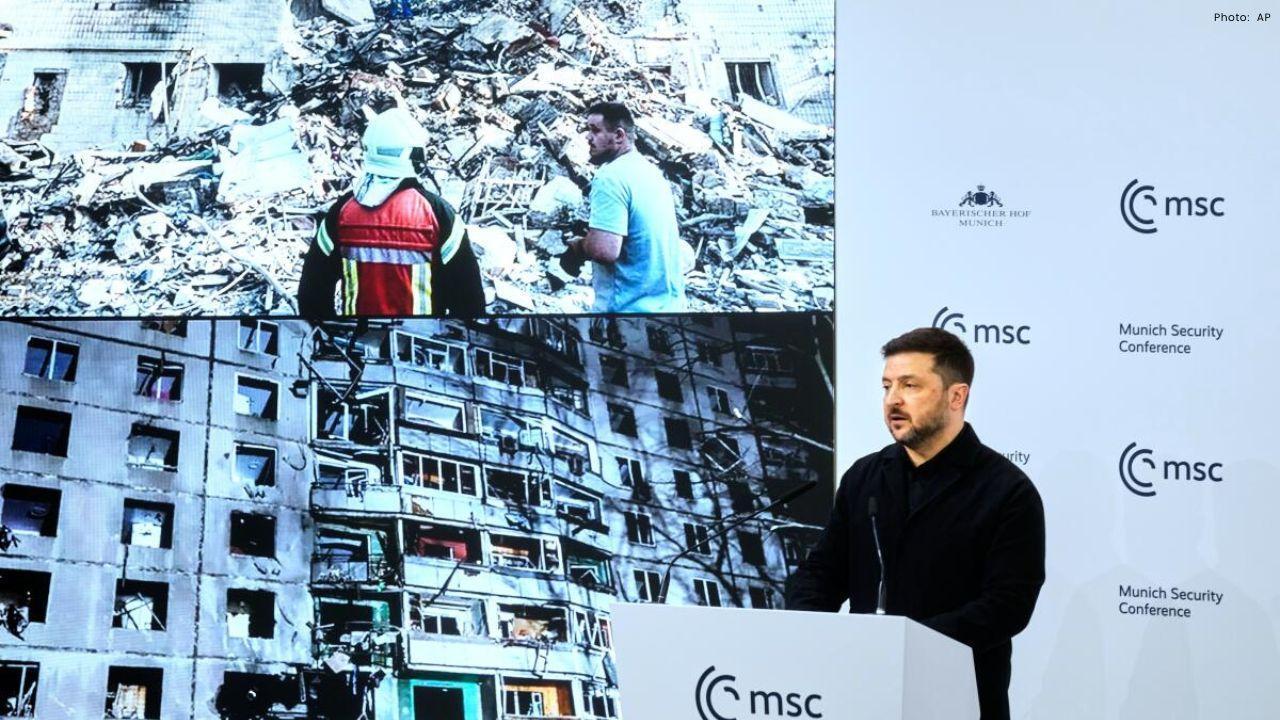
Speaking recently at the Munich Security Conference, Ukrainian President Volodymyr Zelenskyy said that key questions are still unanswered about Ukraine’s future security. He stressed that any peace deal must include strong guarantees to protect his country from future attacks. Without such guarantees, he warned, any agreement could fail later.
Zelenskyy also raised doubts about proposals for special trade arrangements in the Donbas region, much of which is under Russian control. Control of this industrial area remains one of the hardest issues in negotiations. Russia has pushed for terms that would require Ukraine to give up claims there, while Kyiv rejects that idea.
Support for Ukraine’s demand for firm security promises has also come from U.S. lawmakers. Senator Jeanne Shaheen said any final deal must include real protection measures. She warned that without them, the conflict could restart in the future, possibly on a larger scale.
European voices are also urging caution. Kaja Kallas said Russia appears to be trying to gain at the negotiating table what it could not win on the battlefield. She noted that some Russian requests — such as lifting sanctions and releasing frozen assets — are decisions that European countries must make together, not items to be traded away quickly.
Past rounds of talks, including meetings in Abu Dhabi, have not produced a breakthrough. The same hard questions keep returning: borders, territory, sanctions, security guarantees, and future alliances. Each side fears giving up too much and risking long-term weakness.
The drone strike on the Black Sea port sends a strong message just before negotiators meet again. It shows that military pressure is still being used alongside diplomacy. Each side wants leverage before talks begin. Each wants to show strength, not desperation.
But this approach also carries danger. Strikes on fuel and port facilities can expand economic damage and raise global market fears. They can also increase mistrust between negotiators. When fires are still burning, it becomes harder to build confidence across the table.
If peace talks are to succeed, both sides — and the outside powers helping them — will need to move beyond short-term advantage and think about long-term stability. That means reducing attacks on civilian-linked infrastructure, setting clear security rules, and accepting that compromise will be necessary.
Right now, the guns and drones are still speaking louder than the diplomats. The coming talks will show whether that balance can finally begin to change.









Reopening of the Strait of Hormuz: New Regulations to Impact Global Trade
Iran reopens the strategic Strait of Hormuz with new regulations affecting oil transport and global

Top 10 Must-See Attractions in NYC for First-Time Explorers
Discover essential experiences for first-time visitors to NYC, including attractions, culture, and i

Starbucks Engages Boyu Capital for Major Chinese Expansion
Starbucks teams up with Boyu Capital, selling a majority stake to boost growth and adapt to the Chin

Three Individuals Charged in Massive Meth Trafficking Case in Malaysia
In Malaysia, a married couple and another suspect are charged with trafficking 510kg of meth, facing

Singapore Police Revisit Geylang Murder Scene with Suspect
In Geylang, police return a murder suspect to the scene of a crime involving the fatal stabbing of a