Post by : Saif Nasser
Chile is facing one of its darkest moments in recent years as fast-moving wildfires tear through central and southern parts of the country. At least 18 people have lost their lives, thousands of homes have been damaged or destroyed, and tens of thousands of residents have been forced to flee for safety. What began as scattered fires has quickly turned into a national emergency, bringing pain, fear, and deep uncertainty to many families.
The fires broke out during an intense heat wave, with temperatures rising above 38 degrees Celsius (100 degrees Fahrenheit). Strong winds made the flames spread faster, leaving firefighters overwhelmed and residents with little time to escape. Entire hillsides have been reduced to ash, and once-quiet towns now stand blackened and broken.
President Gabriel Boric declared a state of catastrophe in the Biobío and Ñuble regions, located about 500 kilometers south of Santiago. This emergency step allows the government to use the military to help control the disaster and support firefighters on the ground. According to Chile’s national forestry agency, more than two dozen wildfires are still active, having already burned around 8,500 hectares of land.
In the city of Concepción, one of the hardest-hit areas, President Boric expressed sorrow and solidarity with the victims. He warned that the numbers released so far may rise as rescue teams reach areas that are still cut off. Early reports say at least 300 houses have been destroyed, but officials believe the true number could exceed 1,000 homes in the Biobío region alone.
More than 50,000 people have been forced to evacuate. Many escaped in the middle of the night, grabbing children, pets, and whatever belongings they could carry. For some, the flames moved so fast that they barely made it out alive.
“The first priority is always to put out the fire,” President Boric said. “But we must never forget the human suffering. Families are losing everything. These are very difficult times.”
Yet, anger and frustration are growing alongside grief. Some local leaders and residents complained that help arrived too late. The mayor of the coastal town of Penco publicly criticized the slow response, saying his community burned for hours with no visible government presence.
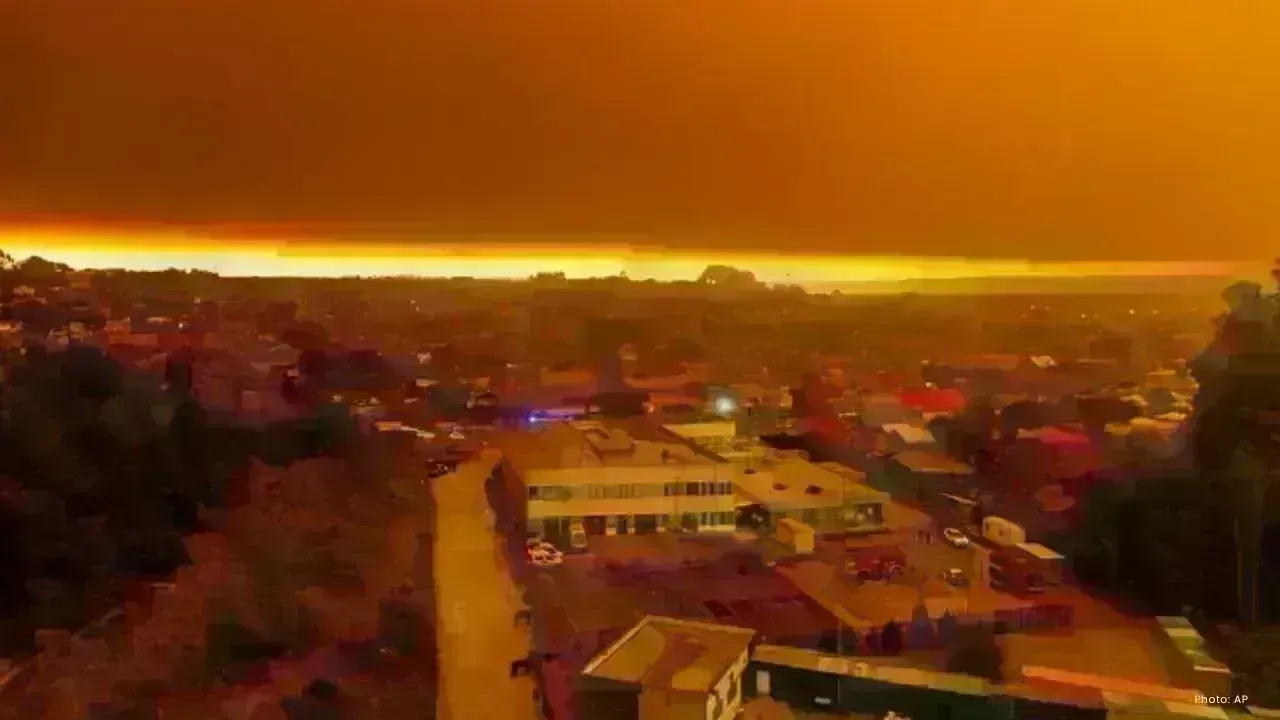
Firefighters worked nonstop, battling flames that destroyed homes, cars, schools, and even churches. Smoke filled the sky, turning daylight into an orange haze. Emergency shelters were set up as thousands searched for a safe place to sleep.
Residents described terrifying scenes. Many believed the fire would stop at the forest edge and chose not to evacuate. That decision proved deadly.
“It was completely out of control,” said one resident. “No one expected this.”
Charred bodies were found in homes, fields, on roads, and inside burned vehicles. In small towns, nearly everyone knew someone who had died. The loss feels deeply personal, cutting through entire communities.
Interior Minister Álvaro Elizalde warned that the weather conditions remain dangerous. Extreme heat and dry winds are expected to continue, making firefighting efforts even harder. Authorities have imposed nighttime curfews in some areas to protect residents and allow emergency teams to work more effectively.
Wildfires are not new to Chile. Every summer, fires break out across the country, especially in the central and southern regions. However, experts say climate change and long-term drought are making these fires more frequent and far more deadly. In 2024, wildfires killed at least 130 people, marking the deadliest natural disaster since Chile’s massive 2010 earthquake.
What is happening now is a harsh reminder that these disasters are no longer rare events. They are becoming part of a troubling pattern.
Neighboring Argentina is facing similar problems. In recent weeks, wildfires have burned thousands of acres in Patagonia, driven by the same hot and dry conditions. Across South America, climate extremes are testing governments, emergency services, and communities.
Beyond the immediate emergency, the fires raise serious questions. Are countries doing enough to prepare for extreme weather? Are early warning systems strong enough? Are forests and towns being managed in ways that reduce fire risks?
For families who lost loved ones, these questions come too late. Right now, survival and recovery matter most. Homes must be rebuilt, communities restored, and emotional wounds healed.
Chile now stands at a crossroads. The bravery of firefighters, volunteers, and ordinary citizens has been clear. But courage alone is not enough. Long-term planning, stronger disaster response systems, and serious climate action are needed to prevent such tragedy from repeating.
As the fires continue to burn, the nation mourns the dead and prays for the safety of those still in danger. The hope is that from this disaster, Chile will find the strength and resolve to protect its people better in the years ahead.








7.5 Magnitude Earthquake Strikes Japan, Tsunami Alerts Issued
Japan experiences a hefty 7.5 quake, prompting tsunami alerts and safety measures. Stay updated on a

Reopening of the Strait of Hormuz: New Regulations to Impact Global Trade
Iran reopens the strategic Strait of Hormuz with new regulations affecting oil transport and global

Top 10 Must-See Attractions in NYC for First-Time Explorers
Discover essential experiences for first-time visitors to NYC, including attractions, culture, and i

Starbucks Engages Boyu Capital for Major Chinese Expansion
Starbucks teams up with Boyu Capital, selling a majority stake to boost growth and adapt to the Chin

Three Individuals Charged in Massive Meth Trafficking Case in Malaysia
In Malaysia, a married couple and another suspect are charged with trafficking 510kg of meth, facing