Post by : Saif Nasser
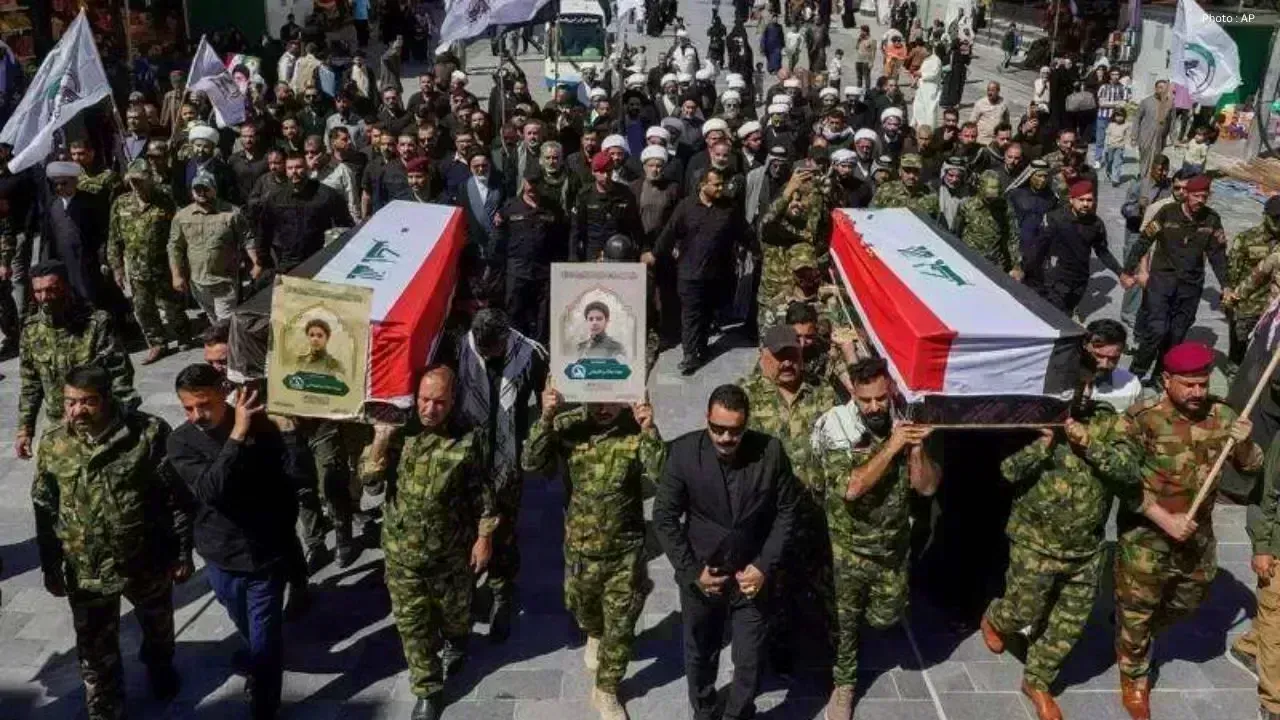
The ongoing conflict involving Iran is creating serious challenges for Iraq, where armed groups linked to Iran are becoming more powerful. As tensions rise, these militias are playing a bigger role, raising concerns about stability and security across the region.
Reports suggest that Iran has given more operational freedom to its commanders in Iraq. This means that many militia groups can now act more independently without waiting for direct orders. Experts believe this shift is happening because of the pressure created by the wider conflict and the need for quicker responses on the ground.
These militias are part of a network that has grown over the years. Some are linked to the Popular Mobilization Forces, a group formed to fight extremist threats in the past. Over time, certain factions within these forces have developed close ties with Iran and have become active in regional conflicts.
As the situation becomes more tense, attacks by these groups have increased. They have targeted foreign military bases and strategic locations, leading to repeated clashes. This has turned Iraq into a key area where larger geopolitical tensions are being played out.
The government in Iraq faces a difficult challenge. It must maintain balance between different powers while also ensuring internal stability. Some of these militias have political influence inside the country, which makes it harder for authorities to take strict action against them.
The growing strength of these groups has also raised questions about national control. When armed factions operate with outside support, it can weaken the country’s independence. Analysts warn that Iraq could become a central ground for proxy conflicts, where major powers compete indirectly through local groups.
The impact of this situation is not limited to politics and security. Ordinary people are also affected by rising tensions. Frequent attacks and uncertainty disrupt daily life, affect businesses, and slow down development. Many communities are left dealing with fear and instability.
The United States has responded by increasing pressure on these militias through military actions and sanctions. It has also called on Iraq to take stronger control of armed groups operating within its borders. However, this approach carries its own risks, as it can lead to further escalation.
At the same time, countries in the Middle East are watching the situation closely. Any increase in violence in Iraq can quickly affect the wider region. There are concerns that continued tensions could lead to a larger conflict involving multiple countries.
The rise of militias in Iraq reflects the complex nature of modern conflicts, where local and global issues are closely connected. The balance between security, political influence, and regional power continues to shape events on the ground, making the situation difficult to resolve in the short term.



Achieve Radiant Skin with This Simple Rice Flour Treatment
Transform your skincare routine! Discover how a rice flour mix can restore your skin's glow without

Meta Unveils Subscription Plans for Instagram, Facebook, and WhatsApp
Meta introduces new subscription plans for users of Instagram, Facebook, and WhatsApp, featuring enh

Suvarna Joy on Education Leadership, Resilience, and Building Purpose Through Adversity in the UAE
Suvarna Joy shares her journey of education leadership, motherhood, faith, and resilience within the

Anticipated Dates for UAE Eid Al Adha 2026 Unveiled by Astronomical Experts
Experts predict Eid Al Adha 2026 in the UAE to start on May 27, prompting early holiday planning amo

DAE Achieves Remarkable Growth in Q1 2026 With Record Revenue
Dubai Aerospace Enterprise announces impressive financial results for Q1 2026, reflecting a surge in

Price Increase for Sony PS5 in Southeast Asia Effective May 1
Sony announces a price increase for the PS5 across Southeast Asia starting May 1, 2026, impacting ga




