Post by : Saif Nasser
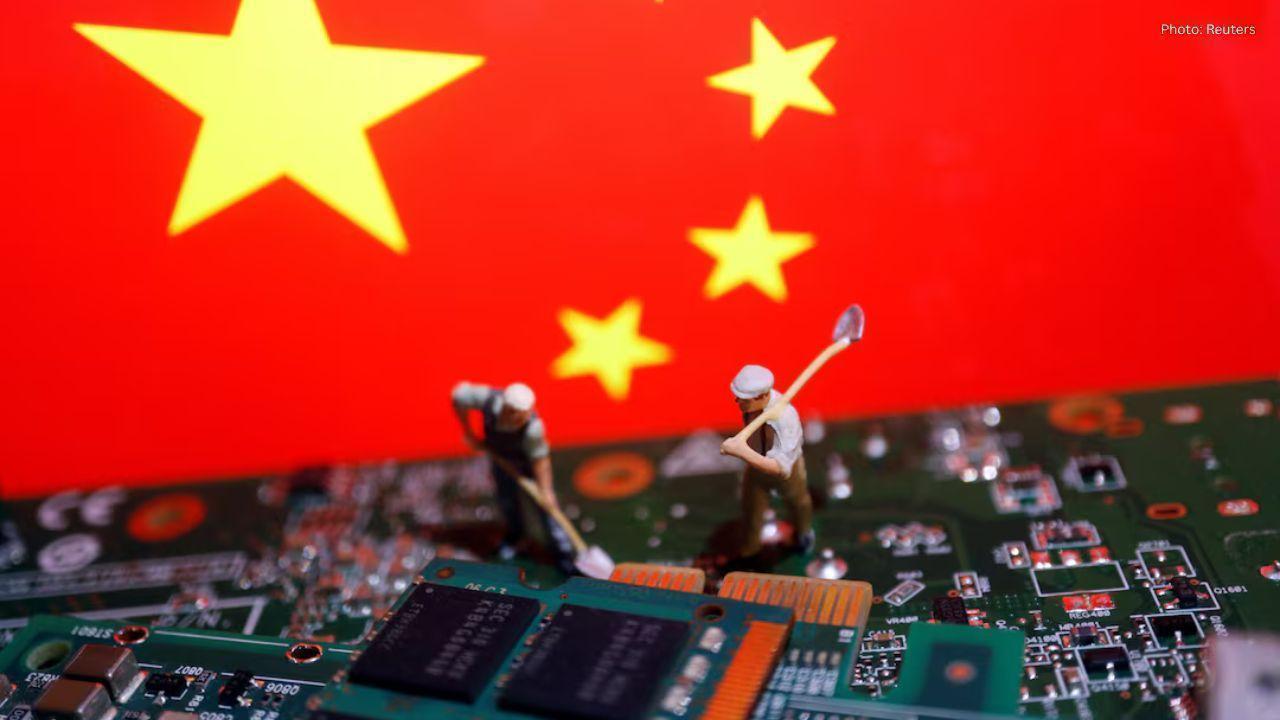
China has taken another major step to strengthen its semiconductor industry by asking chipmakers to use at least 50% domestically made equipment when they add new production capacity. The move is part of Beijing’s long-term plan to reduce dependence on foreign technology and build a fully self-sufficient chip supply chain.
According to people familiar with the matter, the rule is not publicly announced but is being enforced during the approval process for new or expanded chip factories. Companies seeking government permission must show through purchase documents that at least half of their equipment will come from Chinese suppliers. If they fail to meet this requirement, their applications are often rejected, although some flexibility is allowed when local equipment is not yet available.
China has relied heavily on chipmaking tools from the United States, Japan, South Korea, and Europe for many years. This dependence became a serious concern after the United States tightened export restrictions in 2023, blocking sales of advanced chips and key manufacturing equipment to China. Since then, Chinese chipmakers have been under pressure to turn to local suppliers, even in areas where foreign tools are still available.
Officials close to the policy said authorities prefer the domestic share to be even higher than 50%. In the long run, the goal is for factories to use nearly 100% Chinese-made equipment. However, for advanced chip production lines, the rules are more relaxed because some high-end domestic tools are still under development.
President Xi Jinping has repeatedly called for a “whole nation” effort to build a strong domestic semiconductor industry. This approach involves thousands of engineers, scientists, companies, and research centers working together. The government has also supported this effort with large financial backing through the state-backed “Big Fund,” which launched a new phase in 2024 with hundreds of billions of yuan in capital.
The policy is already showing results. Chinese equipment makers are gaining more orders and improving their technology faster. Companies like Naura and Advanced Micro-Fabrication Equipment are now supplying tools for key manufacturing steps such as etching, which shapes tiny circuits on silicon wafers. Some of these tools are being tested on advanced production lines, showing how quickly local firms are closing the gap with global leaders.
State-linked buyers have placed a record number of orders for domestic lithography machines and parts this year, signaling strong demand for homegrown technology. At the same time, Chinese firms are filing more patents and reporting strong revenue growth, reflecting the impact of government support and guaranteed demand.
While the policy helps Chinese suppliers, it has raised concerns among foreign companies that are losing access to one of the world’s largest chip markets. Analysts say China has already reached around 50% self-sufficiency in some equipment segments that were once dominated by overseas firms.
Overall, the 50% domestic equipment rule marks a clear shift in China’s chip strategy. By pushing local tools into factories today, Beijing hopes to build the skills, scale, and confidence needed to compete globally in the future, even under continued foreign pressure.










Mattel Revives Masters of the Universe Action Figures Ahead of Film Launch
Mattel is reintroducing Masters of the Universe figures in line with its upcoming film, tapping into

China Executes 11 Members of Criminal Clan Linked to Myanmar Scam
China has executed 11 criminals associated with the Ming family, known for major scams and human tra

US Issues Alarm to Iran as Military Forces Deploy in Gulf Region
With a significant military presence in the Gulf, Trump urges Iran to negotiate a nuclear deal or fa

Copper Prices Reach Unprecedented Highs Amid Geopolitical Turmoil
Copper prices soar to all-time highs as geopolitical tensions and a weakening dollar boost investor

New Zealand Secures First Win Against India, Triumph by 50 Runs
New Zealand won the 4th T20I against India by 50 runs in Vizag. Despite Dube's impressive 65, India