Post by : Saif Nasser
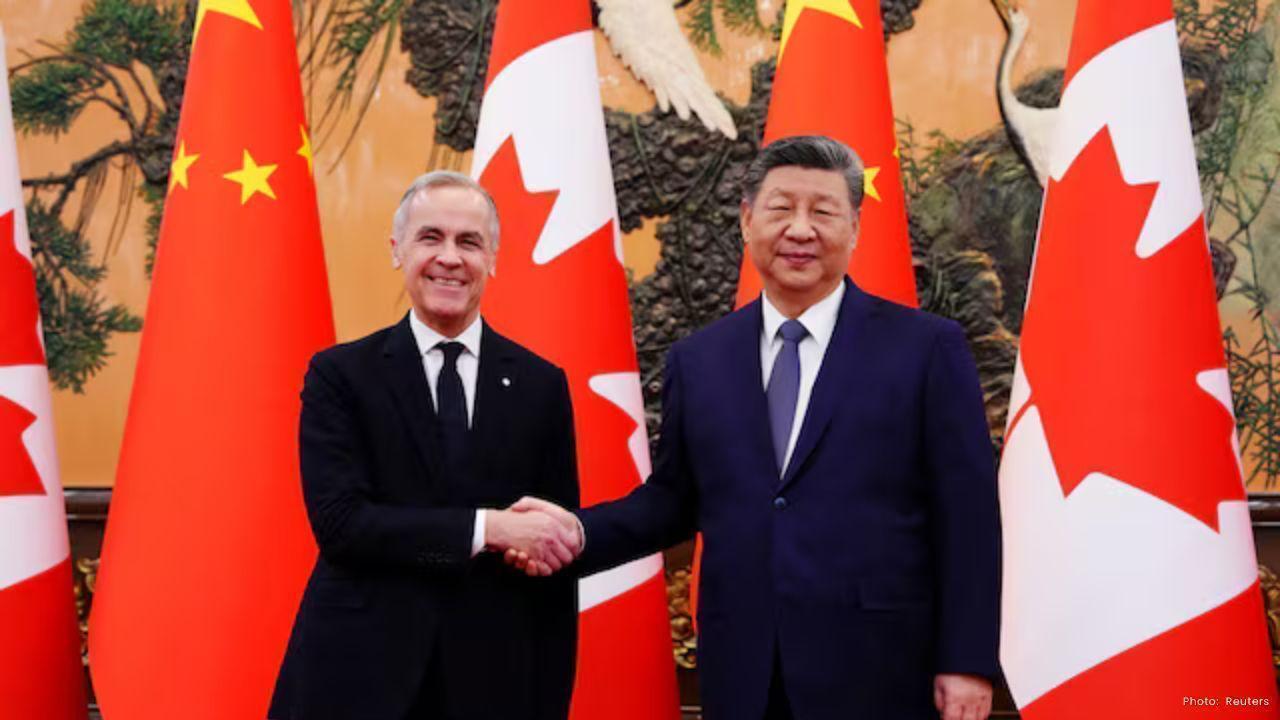
China’s top court has overturned the death sentence of Canadian citizen Robert Schellenberg, in a major legal and diplomatic development that may signal warmer ties between Beijing and Ottawa. The decision comes shortly after Canadian Prime Minister Mark Carney made a high-level visit to China, where both sides spoke about improving relations after several difficult years.
The case has been one of the most sensitive issues between the two countries. It has involved questions of justice, diplomacy, trade, and political trust. The latest court move does not end the case, but it changes its direction and lowers the immediate risk of execution.
Robert Schellenberg was first arrested in China in 2014 on suspicion of drug smuggling. In 2018, he received a 15-year prison sentence. But in early 2019, after a retrial, a court changed the punishment to a death sentence. That sudden increase shocked Canadian officials and led to strong criticism from Ottawa.
The timing back then was also politically tense. The retrial and death sentence came about one month after a senior Chinese technology executive, Meng Wanzhou of Huawei, was arrested in Canada on a U.S. warrant. Soon after, China detained two Canadian citizens on spying charges. Many Western observers accused Beijing of using detainees as diplomatic pressure, a charge China denied.
Now, China’s Supreme People’s Court has ruled against the death sentence and sent the case back to a provincial high court for retrial. According to Schellenberg’s lawyer, this is a major shift. However, he also cautioned that a full acquittal is unlikely because the original charges are considered serious under Chinese law.
Canada’s foreign ministry confirmed it is aware of the decision and says it will continue to provide consular support to Schellenberg and his family. Officials did not give further details but welcomed the legal change.
The court decision came less than a month after Prime Minister Carney’s four-day visit to China. During that trip, both governments spoke positively about resetting relations. They also agreed to reduce certain tariffs, including trade barriers on electric vehicles and Canadian canola products. These steps were seen as signs of a diplomatic thaw after years of tension.
Schellenberg’s lawyer said that, based on his experience, the improved political climate likely played a role in the court’s decision. While courts are meant to act independently, major international cases often sit within a wider diplomatic context. When relations improve, space sometimes opens for softer outcomes.
In recent years, Canada–China relations have been strained by multiple disputes. These included the Meng Wanzhou arrest case, the detention of the two Canadians later released in 2021, trade tariffs on farm goods, and restrictions linked to electric vehicles. Trust fell on both sides, and high-level meetings became less frequent.
The new developments suggest both countries may be trying to stabilize ties. Trade is one strong reason. China is a major market for Canadian agricultural goods, and Canada is an important supplier of food and natural resources. Long trade fights hurt businesses and farmers in both countries.
At the same time, the situation remains delicate. China takes drug crimes very seriously and often imposes harsh penalties, including the death sentence. Last year, Canada said that four of its citizens were executed in China on drug-related charges. That history shows that Schellenberg’s case is not just symbolic — it sits within a strict legal system with tough enforcement.
From a broader view, the case shows how closely law and diplomacy can sometimes connect. When relations between countries are poor, legal cases involving foreign citizens can become flashpoints. When relations improve, those same cases may move in a different direction.
Still, it is important to be careful. An overturned sentence is not the same as freedom. Schellenberg will face a new trial process in a provincial high court. The final outcome is not yet known. Legal experts say the charges remain serious, and the court could still impose a long prison term.
For Canada, the next step is continued quiet diplomacy — offering legal support to its citizen while keeping talks open with Beijing. For China, the retrial will be watched closely by foreign governments and rights groups as a signal of how it handles sensitive international cases.
This moment may mark a turning point, but not a final resolution. It shows that dialogue between nations can matter, even in difficult legal cases. Whether this leads to deeper trust between Canada and China will depend on what both sides do next.










Elevate Your Mornings: 7 Protein-Packed Breakfast Ideas
Discover 7 quick and nutritious high-protein breakfasts to keep you energized and focused throughout

Unlocking Wellness in the UAE: 7 Transformative Habits
Explore 7 effective wellness practices inspired by the UAE lifestyle for a healthier, happier life.

Starbucks Engages Boyu Capital for Major Chinese Expansion
Starbucks teams up with Boyu Capital, selling a majority stake to boost growth and adapt to the Chin

Three Individuals Charged in Massive Meth Trafficking Case in Malaysia
In Malaysia, a married couple and another suspect are charged with trafficking 510kg of meth, facing

Singapore Police Revisit Geylang Murder Scene with Suspect
In Geylang, police return a murder suspect to the scene of a crime involving the fatal stabbing of a