Post by : Saif Nasser
Thailand’s latest general election has produced a strong but incomplete victory for the Bhumjaithai Party, creating a new political balance and starting an important period of coalition talks. While the party finished far ahead of its rivals, it still does not have enough seats to govern alone. The next government will be decided not just by votes, but by negotiations between parties in the days ahead.
With most ballots counted, Bhumjaithai won 192 out of 500 seats in parliament. This result was higher than many polls predicted. The People’s Party came second with 117 seats, and Pheu Thai placed third with 74. Smaller parties together captured the remaining seats. Because Thailand uses a proportional system, the final party-list numbers may change slightly, but the main ranking is already clear.
The result marks a major shift in voter behavior. Before the election, many surveys showed the People’s Party in the lead. Instead, Bhumjaithai gained wide support and pulled ahead comfortably. Political observers say the party succeeded in gathering conservative and nationalist voters under one platform. Recent border tensions with Cambodia also raised patriotic feelings, which may have influenced some voters’ choices.
Even with this strong showing, Bhumjaithai is short of a full majority. To control parliament, at least 251 seats are needed. That means coalition partners are required. Without them, no government can be formed. This turns smaller and mid-sized parties into key players, since their support can decide who becomes prime minister and which policies move forward.
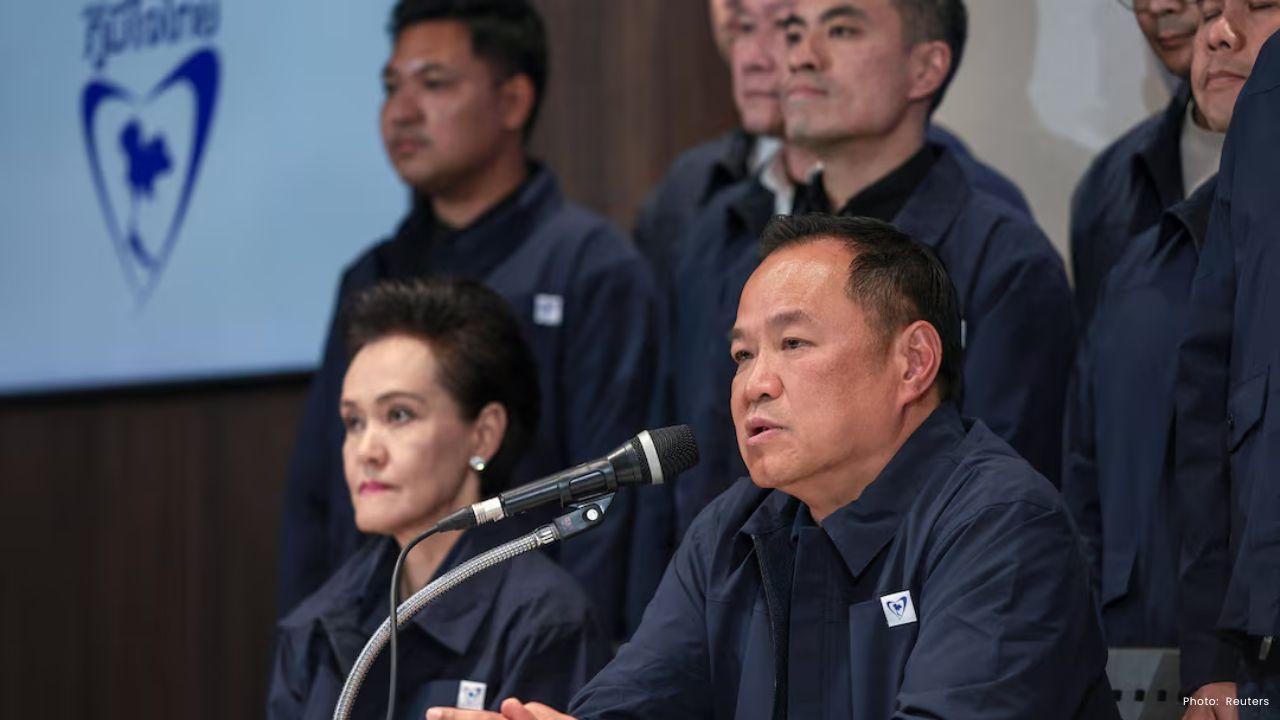
Caretaker Prime Minister Anutin Charnvirakul, who leads Bhumjaithai, has said he will wait for the final certified results before making firm coalition offers. Each party is expected to hold internal meetings first. Only after that will formal alliance talks begin. Anutin has suggested that if he forms the next government, he would likely keep several top ministers — including finance, foreign affairs, and commerce — in their current roles to maintain continuity.
One major obstacle is already clear. The People’s Party has publicly ruled out joining a coalition led by Anutin. Its leadership confirmed this position soon after the early results were known. At the same time, it also said it would not try to build a competing coalition itself. This removes the chance of a direct rival government, but it also narrows Bhumjaithai’s partnership options.
Attention will now turn to smaller parties that may agree to join a ruling alliance. In coalition systems, these parties often negotiate for cabinet seats or policy promises in exchange for their support. Such deals are common, but they can also lead to weak governments if partners disagree too often. Stability will depend on how well the coalition members work together after the agreements are signed.
Another important outcome from the election is the public vote on constitutional change. Alongside choosing lawmakers, voters also supported a plan to replace the current constitution, which was written after the 2014 military coup. About two-thirds voted in favor of rewriting it. Critics have long argued that the existing charter gives too much authority to unelected institutions and limits the power of elected leaders.
However, rewriting the constitution will not happen quickly. The process is expected to take at least two years and will require two more national referendums — one to approve the drafting path and another to approve the final version. This means constitutional reform will likely remain a major political issue throughout the next government’s term.
For Pheu Thai, the election result is a warning sign. Once the dominant party in Thai politics, it has now lost significant ground. Many of its former supporters appear to have shifted elsewhere. To recover, it may need new leadership ideas and a refreshed message that connects with younger and undecided voters.
The broader picture shows mixed signals from the public. On one side, voters supported a leading conservative party. On the other, they strongly backed structural political reform. This suggests that many citizens want both stability and change — steady leadership along with fairer political rules. Managing these two demands at the same time will be a difficult task for any new government.
Business groups and foreign partners will be watching coalition talks closely. A clear and stable government would likely support investor confidence and smooth international relations. But long negotiations or a fragile alliance could create uncertainty and slow decision-making.
For everyday people, the real test will be performance. Voters care most about living costs, jobs, healthcare, education, and infrastructure. Election victories matter only if they lead to real improvements in daily life. The next coalition will be judged not by how it is formed, but by what it delivers.
Thailand now moves from election mode into negotiation mode. The ballots have set the direction, but the final shape of power will come from political bargaining. The coming weeks will decide whether the country gets a stable partnership government — or another period of uncertainty.










Elevate Your Mornings: 7 Protein-Packed Breakfast Ideas
Discover 7 quick and nutritious high-protein breakfasts to keep you energized and focused throughout

Unlocking Wellness in the UAE: 7 Transformative Habits
Explore 7 effective wellness practices inspired by the UAE lifestyle for a healthier, happier life.

Starbucks Engages Boyu Capital for Major Chinese Expansion
Starbucks teams up with Boyu Capital, selling a majority stake to boost growth and adapt to the Chin

Three Individuals Charged in Massive Meth Trafficking Case in Malaysia
In Malaysia, a married couple and another suspect are charged with trafficking 510kg of meth, facing

Singapore Police Revisit Geylang Murder Scene with Suspect
In Geylang, police return a murder suspect to the scene of a crime involving the fatal stabbing of a