Post by : Saif Nasser
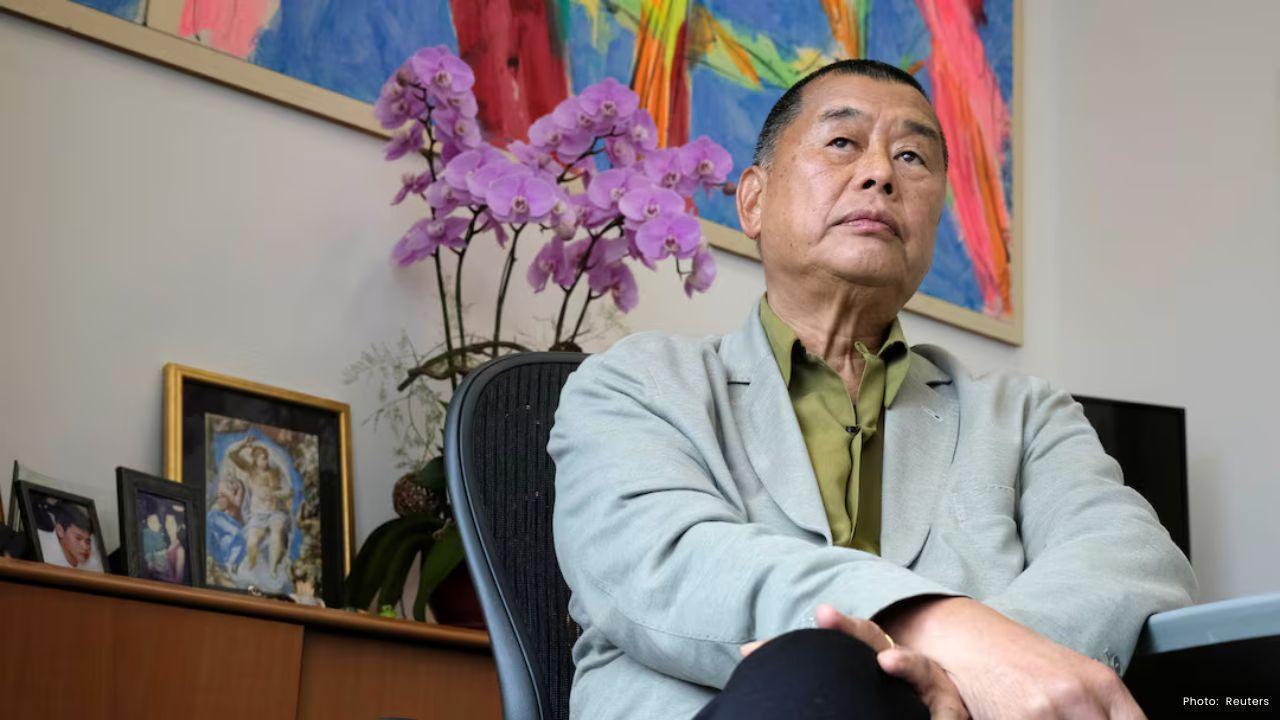
Hong Kong media tycoon Jimmy Lai has been sentenced to 20 years in prison under the city’s national security law, ending a long and closely followed court case. The decision has led to strong reactions around the world and reopened debate about press freedom, civil rights, and the rule of law in Hong Kong.
Lai, 78, is the founder of the former newspaper Apple Daily, once one of Hong Kong’s most widely read and most outspoken publications. The paper was known for its criticism of the Beijing government and its support for democratic reform. It shut down after authorities froze its assets and arrested senior staff.
The court found Lai guilty on charges that included conspiracy to collude with foreign forces and publishing seditious material. Judges said he played a leading role in organizing and promoting activities that they ruled were against national security. Because of this, they placed his punishment in the most serious sentencing range. Under the law, major offenses can bring long prison terms, including life imprisonment.
Lai has denied the charges from the beginning. He told the court that he is being punished for his political views and journalism. He described himself as a political prisoner and said his actions were part of normal media work and free expression. The court did not accept this argument.
Security around the courthouse was very heavy on sentencing day. Police officers, special vehicles, and search teams were deployed across the area. Many of Lai’s supporters waited in line for hours, and some stayed overnight, hoping to enter the courtroom. Their presence showed that even after years in detention, Lai still has loyal public backing.
Supporters say Lai stood up for free speech and democratic values. Some described him as a moral voice in the city’s political life. They believe his punishment is too harsh and meant to scare other journalists and activists. Several human rights groups said the long sentence sends a warning signal to the media industry.
His health is also a major concern. Family members say Lai suffers from heart palpitations and high blood pressure and has grown weaker during his years behind bars. Because of his age and medical condition, some rights groups say a 20-year sentence could amount to spending the rest of his life in prison.
Foreign governments have also spoken out. Leaders in the United States and the United Kingdom have called for Lai to be released. British officials have raised his case directly with Chinese leaders because Lai holds British citizenship. Western diplomats say the case affects Hong Kong’s global image as a place with fair courts and open media.
Press freedom organizations strongly criticized the verdict. Several groups said the trial shows shrinking space for independent journalism in Hong Kong. They argue that tough reporting and contact with foreign groups should not be treated as security crimes.
Chinese and Hong Kong authorities reject these claims. Officials say Lai received a fair trial and proper legal process. They argue that the national security law is necessary and that no one is above it. According to officials, the law helped restore order after the large protests and unrest seen in 2019. They say media freedom does not include actions that threaten national security.
This sharp difference in views shows how divided opinion is over the case. For some, it is proof of a crackdown on dissent. For others, it is lawful enforcement after years of political tension.
The case also marks a turning point for Hong Kong’s media landscape. The closure of Apple Daily and the prosecution of its founder changed the tone of public debate. Many newsrooms have become more careful about what they publish. Some international media outlets have reduced their presence in the city. Journalists say the legal risks are now much higher than before.
Hong Kong was once widely seen as a place with strong protections for free speech and a trusted legal system. In recent years, that reputation has come under pressure. Business leaders, foreign governments, and civil groups are watching closely to see how the legal system handles sensitive political cases going forward.
Lai still has legal options, including a possible appeal. Diplomats say international discussions about his fate may continue. But for now, the 20-year sentence stands and will likely remain a major reference point in debates about Hong Kong’s freedoms.
The larger question remains: how should a society protect national security while also protecting open speech and a free press? Different governments answer that question in different ways. Hong Kong’s answer is now being tested in full public view.




Starbucks Engages Boyu Capital for Major Chinese Expansion
Starbucks teams up with Boyu Capital, selling a majority stake to boost growth and adapt to the Chin

Three Individuals Charged in Massive Meth Trafficking Case in Malaysia
In Malaysia, a married couple and another suspect are charged with trafficking 510kg of meth, facing
Singapore Police Revisit Geylang Murder Scene with Suspect
In Geylang, police return a murder suspect to the scene of a crime involving the fatal stabbing of a

Mattel Revives Masters of the Universe Action Figures Ahead of Film Launch
Mattel is reintroducing Masters of the Universe figures in line with its upcoming film, tapping into
China Executes 11 Members of Criminal Clan Linked to Myanmar Scam
China has executed 11 criminals associated with the Ming family, known for major scams and human tra