Post by : Saif Nasser
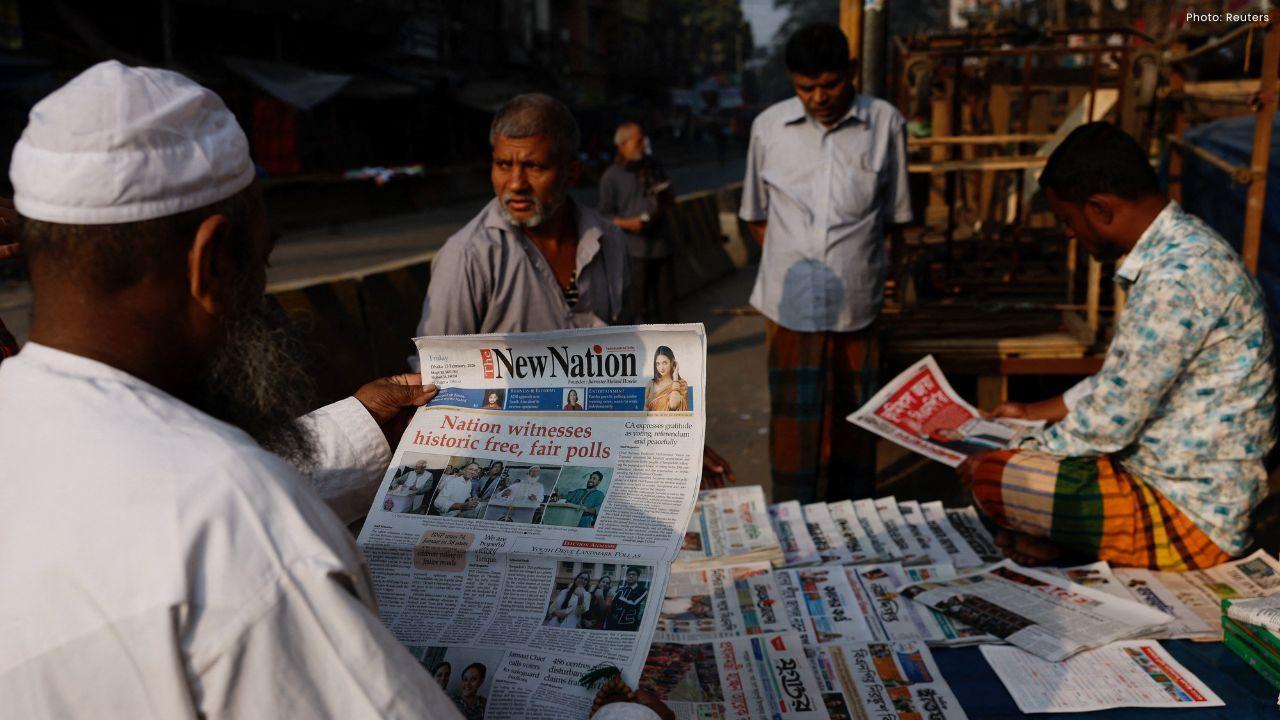
The Bangladesh National Party (BNP) won a decisive two-thirds majority in the country’s general elections on February 13, 2026. This victory is expected to bring political stability after months of unrest following the removal of former Prime Minister Sheikh Hasina.
According to early results, the BNP and its allies secured at least 212 of the 299 parliamentary seats. The opposition, Jamaat-e-Islami and its allies, won 70 seats, while the National Citizen Party (NCP), led by youth activists who helped oust Hasina, managed five of the 30 seats it contested.
The BNP’s win marks its return to power after 20 years. Party officials thanked voters and called for special prayers for the nation, emphasizing that there would be no celebratory rallies despite the overwhelming victory. The party aims to focus on governance and stability rather than public celebrations.
Tarique Rahman, the son of BNP founder Ziaur Rahman, is widely expected to become prime minister. He returned to Dhaka in December after 18 years abroad. During Hasina’s absence, Nobel Peace laureate Muhammad Yunus served as interim head of the government. Hasina is now in exile in New Delhi.
This election was considered crucial for the South Asian nation of 175 million people, especially after months of anti-Hasina protests disrupted everyday life and key industries such as garments, in which Bangladesh ranks as the world’s second-largest exporter. A clear election outcome was seen as necessary to restore confidence and stability.
Voter turnout was strong, with media reporting participation likely above 60%, significantly higher than the 42% turnout in the 2024 election. More than 2,000 candidates, including many independents and at least 50 parties, contested the elections. Voting in one constituency was postponed due to the death of a candidate.
Alongside the general election, voters also participated in a constitutional referendum. The proposed reforms include introducing a two-term limit for prime ministers, strengthening judicial independence, increasing women’s representation, establishing neutral interim governments during elections, and creating a second house in the 300-seat parliament. Early media reports indicated strong support, but official results have yet to be released.
Supporters of the BNP celebrated the victory at party headquarters in Dhaka, while Jamaat-e-Islami pledged to engage in “positive politics” rather than oppose for opposition’s sake. The peaceful transition of power and commitment to constructive governance could signal a new chapter for Bangladesh.
The BNP’s win, one of its largest in history, surpasses its 2001 victory when it secured 193 seats. Observers note that unlike some past elections, which were seen as one-sided or boycotted, this election was widely considered competitive and credible.
This historic vote gives Bangladesh an opportunity to stabilize after years of political turbulence and sets the stage for potential reforms that could strengthen democracy and governance in the nation.









Reopening of the Strait of Hormuz: New Regulations to Impact Global Trade
Iran reopens the strategic Strait of Hormuz with new regulations affecting oil transport and global

Top 10 Must-See Attractions in NYC for First-Time Explorers
Discover essential experiences for first-time visitors to NYC, including attractions, culture, and i

Starbucks Engages Boyu Capital for Major Chinese Expansion
Starbucks teams up with Boyu Capital, selling a majority stake to boost growth and adapt to the Chin

Three Individuals Charged in Massive Meth Trafficking Case in Malaysia
In Malaysia, a married couple and another suspect are charged with trafficking 510kg of meth, facing

Singapore Police Revisit Geylang Murder Scene with Suspect
In Geylang, police return a murder suspect to the scene of a crime involving the fatal stabbing of a