Post by : Saif Nasser
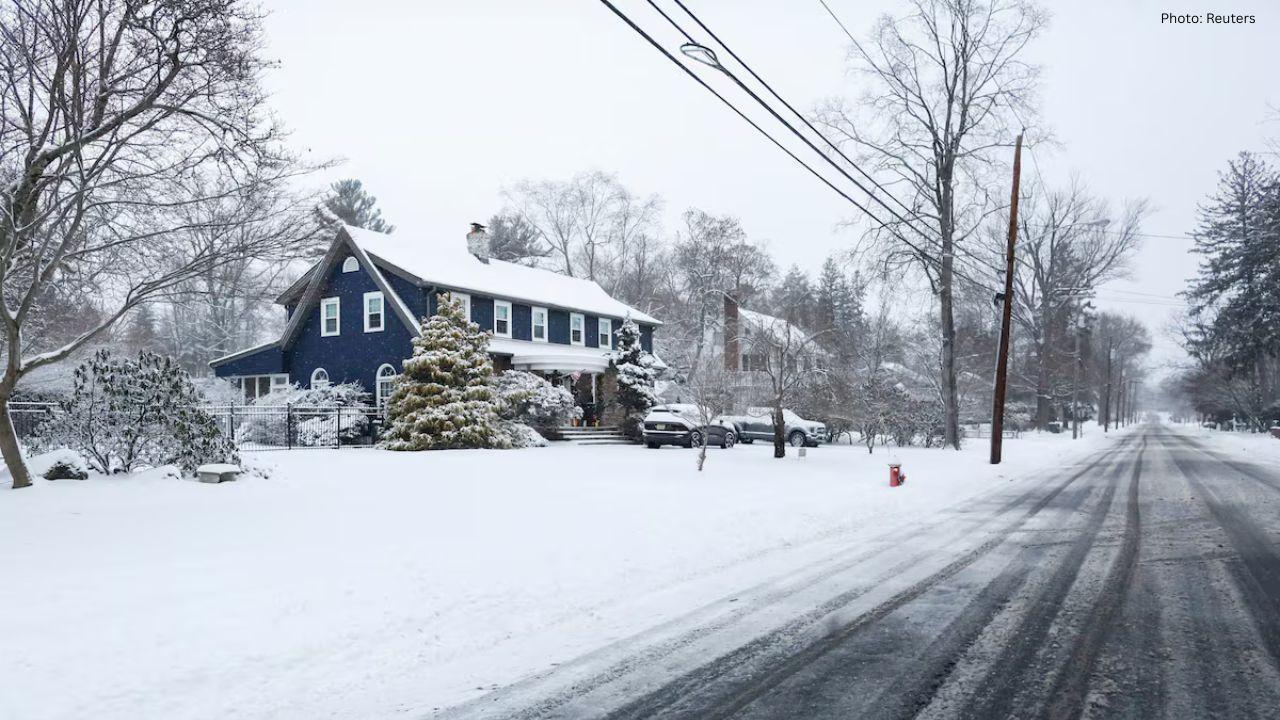
Winter Storm Ezra has caused major travel problems across large parts of the United States, hitting the Northeast, Midwest, and Great Lakes regions during one of the busiest travel periods of the year. For the third day in a row, airlines, road users, and emergency agencies struggled as heavy snow, strong winds, ice, and sudden temperature changes disrupted daily life.
By Monday afternoon, nearly 6,000 flights were delayed and more than 750 were canceled, according to flight tracking data. Since Friday, weather-related disruptions have affected over 30,000 flights nationwide. Many travelers found themselves stuck at airports, facing long waits, limited rebooking options, and trouble finding hotels during the holiday rush.
Meteorologists warned that conditions could get worse as the storm strengthens into what is known as a “bomb cyclone.” This happens when air pressure drops very quickly, creating powerful winds, heavy snowfall, and intense rain. Forecasts showed blizzard-like conditions and dangerous ice spreading from Wisconsin to Maine, with strong winds capable of knocking out power and making travel unsafe.
The storm also brought sharp temperature swings. In cities like Philadelphia, warm temperatures close to 60 degrees Fahrenheit were expected to plunge into the 20s overnight as Arctic air moved in. Such sudden changes increase the risk of icy roads and frozen infrastructure, adding to the danger for travelers.
Airports across the region were forced to slow or stop operations. The Federal Aviation Administration issued ground stops at major hubs, including Washington Dulles, Detroit, Boston, and Newark, due to high winds and poor visibility. Snow and ice buildup meant ground crews needed extra time to clear aircraft, leading to further delays.
Delta Air Lines was hit hardest, facing the largest number of cancellations and delays. The airline’s share price fell nearly 3% as investors reacted to the disruption. Other major airlines, including United, American, and Alaska Airlines, also saw their stock prices drop as the storm strained operations.
Road travel was equally dangerous. Authorities reported poor visibility, icy highways, and blowing snow, which led to several multi-vehicle accidents. Emergency officials urged people to avoid unnecessary travel and warned that conditions could remain hazardous into early Tuesday.
To help stranded passengers, airlines waived change fees and allowed flexible rebooking for travelers affected by the storm. Even so, airline officials noted that cancellations can leave aircraft and crews in the wrong locations, making it harder to return to normal schedules quickly.
As New Year celebrations approach, Winter Storm Ezra serves as a reminder of how severe weather can quickly disrupt modern travel. With the threat of a bomb cyclone still looming, travelers across the United States are being advised to check flight updates, allow extra time, and stay safe as the storm continues to unfold.








DAE Achieves Remarkable Growth in Q1 2026 With Record Revenue
Dubai Aerospace Enterprise announces impressive financial results for Q1 2026, reflecting a surge in

Price Increase for Sony PS5 in Southeast Asia Effective May 1
Sony announces a price increase for the PS5 across Southeast Asia starting May 1, 2026, impacting ga

Potential ‘Super El Niño’ in 2026: Understanding the Climate Risks
Could a Super El Niño emerge in 2026? Discover its implications and potential global climate impacts

Global Energy Crisis Intensifies: Markets React to Oil Supply Challenges
Markets are on edge as oil disruptions escalate, influencing prices and economic stability. Explore

Must-See Tourist Spots in London You Can't Overlook
Explore London's essential attractions, from royal landmarks to vibrant markets, ensuring an unforge

Ultimate Guide to Snagging Cheap Flights in 2026
Unlock the secrets to booking affordable flights in 2026 with insightful tips and strategies tailore




