Post by : Anees Nasser
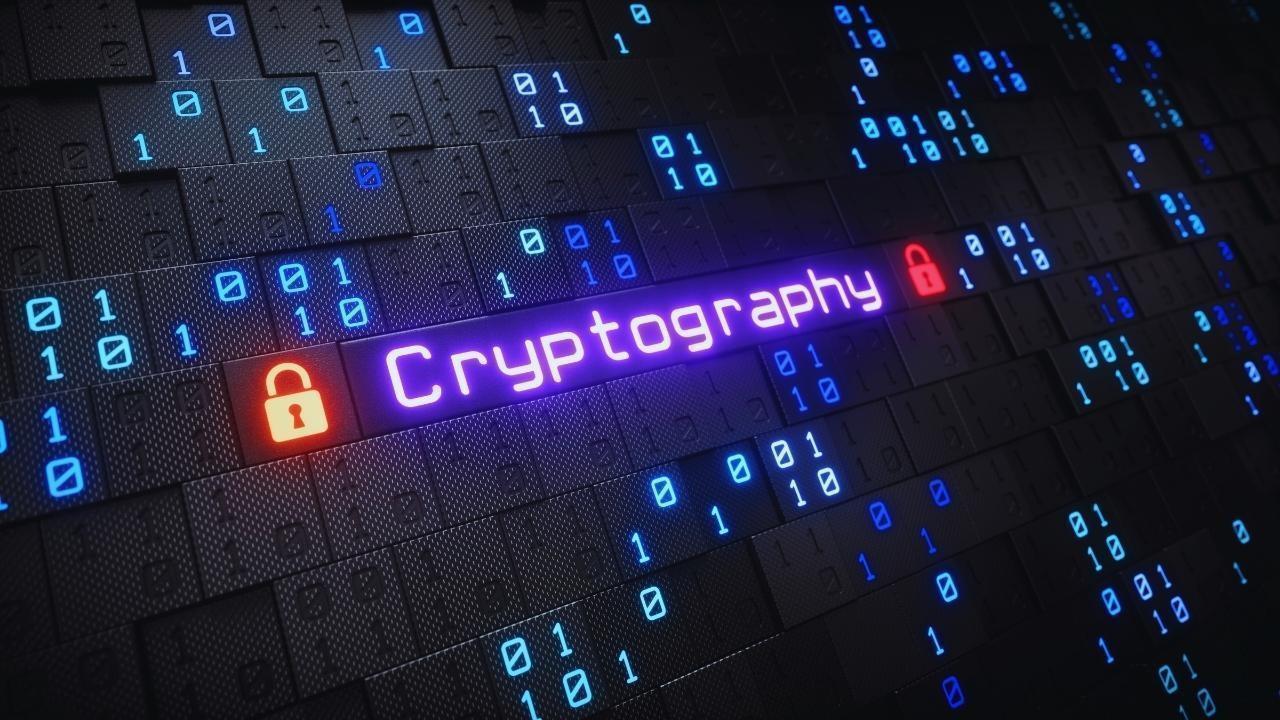
Quantum cryptography promises to anchor data protection in the laws of quantum mechanics instead of relying solely on hard mathematical problems. As governments, industry and researchers pour resources into quantum computing and network technologies, the pressing question shifts from if to when quantum-based security will have practical impact.
Encryption is woven into daily life — from mobile banking and private messaging to medical files and national services. Today’s protections depend largely on problems assumed intractable for classical machines. Quantum computation threatens many of those assumptions, prompting development of quantum cryptographic techniques alongside new mathematical algorithms designed to resist quantum attacks.
This analysis outlines the fundamentals of quantum cryptography, contrasts it with contemporary encryption, surveys current progress, highlights practical obstacles, estimates deployment timelines, and sets out what citizens, organisations and policymakers should consider now.
Quantum cryptography encompasses methods that exploit quantum phenomena to accomplish security tasks. The best-known example is quantum key distribution (QKD), where communicating parties exchange quantum states (often individual photons) to establish a shared secret key. A core advantage is detectability: any interception alters quantum states, revealing eavesdropping to the legitimate users.
Unlike conventional cryptography — whose defenses rest on assumptions about computational difficulty — quantum approaches can provide information-theoretic guarantees in specific models. In principle, this makes some quantum-protected channels immune to both classical and quantum computational attacks.
Beyond QKD there are other quantum primitives, such as quantum coin-flipping and quantum digital signatures. Parallel to these physics-based methods, post-quantum cryptography (PQC) focuses on designing new mathematical schemes intended to remain secure against quantum adversaries.
Information encrypted today may be harvested and stored for later decryption once sufficiently powerful quantum computers exist. This “store now, decrypt later” threat particularly endangers data that must remain confidential for many years — medical histories, classified documents and archived personal records.
Power grids, financial systems and transport networks depend on cryptographic mechanisms for identity, authentication and signatures. If public-key systems used across critical infrastructure are broken, the consequences could be far-reaching, elevating quantum cryptography from a specialist interest to a core security priority.
As homes, vehicles and wearable devices become more connected, the volume of endpoints needing protection grows. Adopting quantum-resistant techniques before vulnerabilities are exploited will strengthen privacy, financial integrity and identity protection across everyday consumer technology.
Quantum cryptography remains concentrated in research and niche deployments, yet demonstrable progress is underway.
Several metropolitan-scale QKD networks exist, and both fibre-based and satellite experiments have shown quantum key exchange over long distances. These field trials confirm the underlying physics can operate outside laboratory conditions.
Standards organisations are actively evaluating and selecting algorithms designed to resist quantum-capable adversaries. Some of these post-quantum schemes are already entering software and hardware stacks, supporting a combined strategy of quantum-techniques plus PQC.
Major enterprises, cloud providers and public agencies have begun inventorying cryptographic assets, planning migrations and testing hybrid approaches that layer classical and quantum-safe methods. Observers stress that readiness efforts must start now, even if full public deployment remains years away.
Quantum cryptographic links face limits: photon loss, noise, finite transmission ranges and the need for specialised components such as quantum repeaters or satellites. Building ubiquitous coverage for all devices is a significant engineering and economic challenge.
Quantum hardware still grapples with error rates and coherence. The large-scale, fault-tolerant quantum computers capable of undermining today’s public-key systems may require millions of logical qubits — a capability that remains some years away. Likewise, scaling quantum networks to support high traffic and integrate with classical infrastructure is non-trivial.
Emergent standards for quantum-safe algorithms and network protocols need global convergence. Ensuring backward compatibility, clear upgrade paths and smooth interoperability between classical and quantum-safe systems will slow but is necessary for broad adoption.
At present, embedding quantum cryptography into consumer hardware, small enterprises or low-income regions is expensive and complex. Widespread adoption will depend on cost reductions and a more mature supply chain.
Forecasting when quantum cryptography becomes commonplace involves uncertainty, but consensus roadmaps and expert surveys provide plausible windows.
Analysts use the term “Q-Day” to denote when a quantum machine can reliably compromise current public-key cryptography. Many projections place this event in the early-to-mid 2030s, with non-negligible probability of occurrence before 2035. That timeline implies quantum-safe measures should be widely in place prior to that point.
Expanded pilot and regional QKD deployments, especially in urban and national networks.
Broader roll-out of post-quantum algorithms across enterprise, government and cloud platforms.
Initial consumer-facing quantum-safe updates and secure hardware options for high-value applications.
Wider commercial availability of QKD-based services, targeted at enterprise and high-security sectors.
Integration of quantum-safe methods into mainstream telecom, banking and IoT infrastructures.
Substantial migration away from legacy encryption standards; most new systems built quantum-resistant by default.
Operational, large-scale quantum networks enabling end-to-end quantum key exchanges across regions.
Consumer-grade devices with built-in quantum-safe protections become commonplace.
Data secured only by classical algorithms will be routinely re-evaluated and, where necessary, re-encrypted or treated as compromised.
Overall, while universal quantum encryption on everyday gadgets may still be more than a decade away, critical systems are likely to adopt quantum-safe measures by the early 2030s.
Expect software and device updates labelled as “quantum-safe” or “post-quantum” as vendors respond to the threat landscape.
Prefer service providers that disclose plans for quantum readiness when storing sensitive personal data.
Recognise that data encrypted today could be exposed in the future unless quantum-resistant protections are used for long-lived secrets.
Conduct inventories of cryptographic assets to identify vulnerable keys, algorithms and long-retention data.
Design systems for crypto-agility so algorithms and key material can be updated without major redesign.
Adopt hybrid approaches combining classical and post-quantum methods now, and plan for quantum cryptography where justified.
Prioritise protection of long-lived secrets — if data must stay confidential for a decade or more, accelerate migration efforts.
Create and mandate standards for quantum-safe algorithms and certification frameworks for quantum systems.
Offer incentives and support to help smaller organisations overcome cost and expertise barriers.
Invest in national quantum-safe infrastructure for critical services to preserve sovereignty and resilience.
Promote public awareness — quantum readiness spans technical, legal and societal dimensions.
Messaging platforms moving to quantum-resistant protocols to protect conversation histories.
Financial services upgrading key-exchange and transaction security to quantum-safe mechanisms.
Telecom operators trialling QKD to bolster 5G/6G backbones and undersea links.
IoT manufacturers incorporating post-quantum cryptography into controllers, vehicles and home hubs.
Cloud providers offering quantum-safe encryption options for enterprise data and archival services.
Hardware limitations: technologies such as quantum repeaters and fault-tolerant qubits remain under development.
Economic barriers: until costs decline, mass-market access to quantum protections will be constrained.
Fragmented standards: inconsistent international rules could impede interoperability and slow deployment.
Legacy inertia: replacing entrenched cryptographic systems is costly, risky and slow.
Awareness gaps: assuming quantum threats are distant may lead organisations to delay necessary preparations and increase future exposure.
Quantum cryptography represents a shift from security grounded in computational hardness to protections rooted in physical law. Transitioning that promise from experimental networks to everyday devices will be gradual and technically demanding. Critical infrastructure and high-value sectors are likely to move first, with broader consumer access following as costs fall and standards solidify.
Practically speaking, many critical systems should be quantum-safe by the early 2030s, with widespread consumer adoption expected later in the 2030s and beyond. The central message for decision-makers and technologists is immediate: begin assessing and preparing now, because once robust quantum computers arrive, systems that are not quantum-resistant will face significant risk.
This piece is intended for informational and analytical purposes and does not constitute technical, legal, or investment advice. Organisations should consult qualified cybersecurity specialists, cryptographic authorities and regulatory guidance when evaluating quantum-security requirements for specific environments.








Anticipated Dates for UAE Eid Al Adha 2026 Unveiled by Astronomical Experts
Experts predict Eid Al Adha 2026 in the UAE to start on May 27, prompting early holiday planning amo

DAE Achieves Remarkable Growth in Q1 2026 With Record Revenue
Dubai Aerospace Enterprise announces impressive financial results for Q1 2026, reflecting a surge in

Price Increase for Sony PS5 in Southeast Asia Effective May 1
Sony announces a price increase for the PS5 across Southeast Asia starting May 1, 2026, impacting ga

Potential ‘Super El Niño’ in 2026: Understanding the Climate Risks
Could a Super El Niño emerge in 2026? Discover its implications and potential global climate impacts

Global Energy Crisis Intensifies: Markets React to Oil Supply Challenges
Markets are on edge as oil disruptions escalate, influencing prices and economic stability. Explore

Must-See Tourist Spots in London You Can't Overlook
Explore London's essential attractions, from royal landmarks to vibrant markets, ensuring an unforge




