Post by : Saif Nasser
China has released a new policy paper explaining its national security approach in Hong Kong, just one day after a Hong Kong court sentenced media founder and government critic Jimmy Lai to 20 years in prison under the national security law. The timing of the document has drawn global attention and renewed debate about security, civil freedoms, and Hong Kong’s future direction.
The policy paper, issued by China’s State Council, says Beijing holds the main responsibility for protecting national security in Hong Kong. It describes security as the base for stability and economic growth. Chinese authorities say the law and related measures have restored order in the city after years of unrest and political tension.
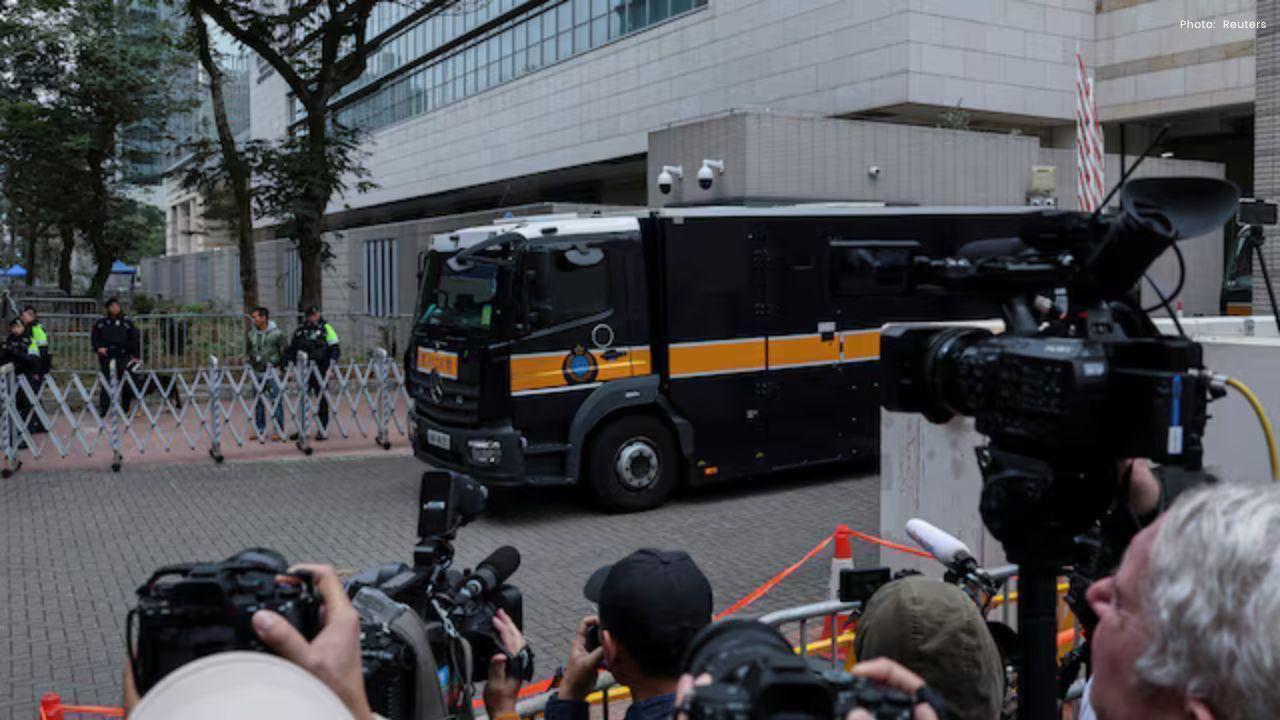
Jimmy Lai, the founder of the now-closed pro-democracy newspaper Apple Daily, received the heaviest sentence so far under the national security law. He was found guilty in a foreign collusion case. His sentencing has been strongly criticized by several Western governments, international groups, and human rights organizations. Some global leaders said the punishment goes against basic freedoms and legal standards. The United Nations human rights chief also expressed serious concern and called the sentence incompatible with international law principles.
Chinese and Hong Kong officials strongly disagree with that criticism. Hong Kong’s leader said the sentence shows that the law is being enforced and serves as a warning against actions seen as threatening national security. Officials argue that every country has the right to protect itself from foreign interference and political destabilization. They say Hong Kong is not an exception.
The new policy paper presents the national security law as a protective tool. It describes the law as a legal shield that stopped chaos and violence after the large protests that took place in 2019. According to the paper, the security framework has strengthened the “one country, two systems” model, which is meant to give Hong Kong a high level of autonomy while keeping it under Chinese sovereignty.
Critics see the situation very differently. They argue that the national security law has been used not only to stop violence but also to silence opposition voices, independent media, and political activists. Many former protest leaders and democracy advocates have been arrested, charged, or have left the city. Independent newspapers and civic groups have shut down. Critics fear this has reduced political diversity and press freedom.
From an editorial point of view, this moment shows a deep divide in how security and freedom are being defined. Beijing’s message is clear: stability and state security come first. Officials believe that without strong control, Hong Kong could again face unrest and outside influence. They see strict laws as necessary guardrails.
On the other side, many legal experts and rights groups warn that broad security powers can weaken open debate and fair political competition. They argue that long-term stability is strongest when people trust institutions and feel free to express peaceful disagreement. When laws are seen as too wide or too harsh, public trust can suffer.
Hong Kong remains an important global financial center. Businesses value predictability, rule of law, and stable systems. Chinese officials say the security framework makes the city safer for investors and companies. Some foreign firms agree that order has returned to the streets. Others worry about legal risk and freedom of information.
White papers like this are used by Beijing to explain its official policy direction. The last major Hong Kong policy paper came after changes to the city’s election system that allowed only approved candidates to run for office. That move also brought criticism from several countries, which said it reduced democratic choice. China responded that the change ensured only loyal administrators govern the city.
The latest paper continues that same line of thinking. It places national security at the center of governance and future planning for Hong Kong. It promises continued legal development and tighter systems to manage risk.
The bigger question is what this means for Hong Kong’s global role and internal society over the next decade. Supporters believe stronger security will bring long-term calm and growth. Critics fear it will narrow freedoms and reduce the city’s unique character.
What is certain is that Hong Kong’s political and legal environment is changing in a lasting way. The release of the policy paper and the sentencing of a high-profile figure on the same week underline how central the security law has become to the city’s present and future path.









Reopening of the Strait of Hormuz: New Regulations to Impact Global Trade
Iran reopens the strategic Strait of Hormuz with new regulations affecting oil transport and global

Top 10 Must-See Attractions in NYC for First-Time Explorers
Discover essential experiences for first-time visitors to NYC, including attractions, culture, and i

Starbucks Engages Boyu Capital for Major Chinese Expansion
Starbucks teams up with Boyu Capital, selling a majority stake to boost growth and adapt to the Chin

Three Individuals Charged in Massive Meth Trafficking Case in Malaysia
In Malaysia, a married couple and another suspect are charged with trafficking 510kg of meth, facing
Singapore Police Revisit Geylang Murder Scene with Suspect
In Geylang, police return a murder suspect to the scene of a crime involving the fatal stabbing of a