Post by : Saif Nasser
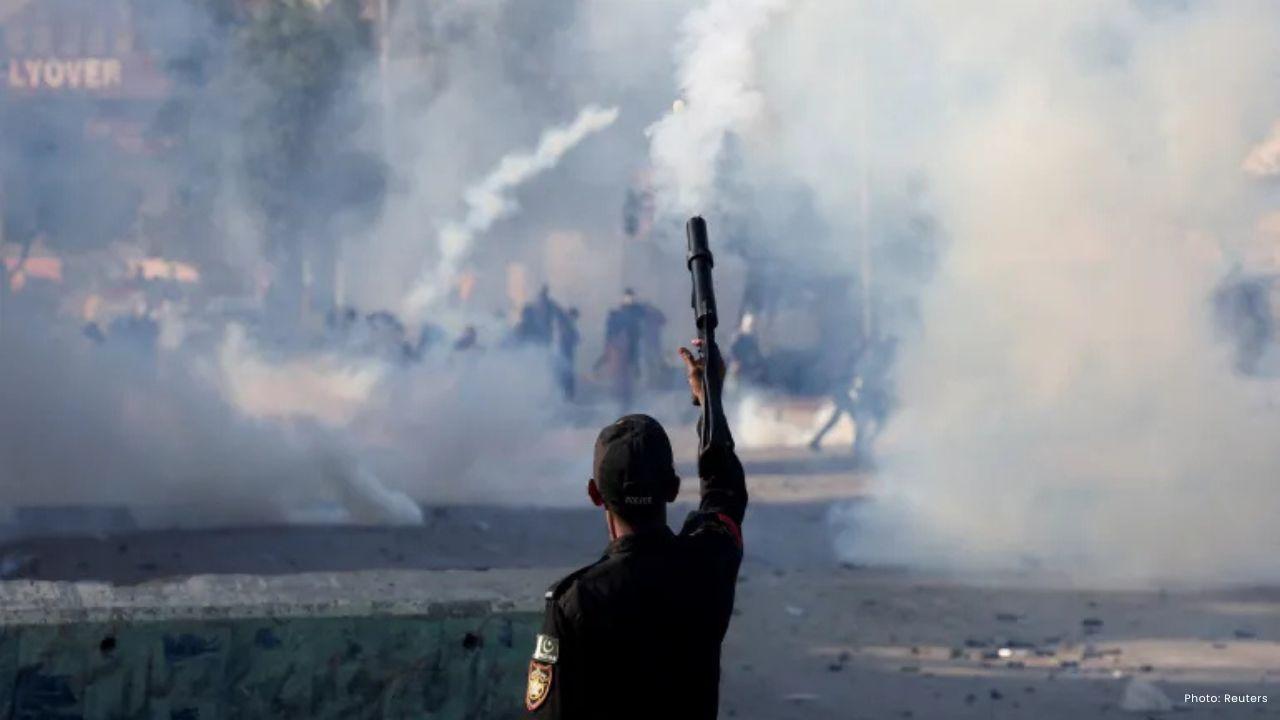
Pakistan has been rocked by violent protests after reports claimed that Iran’s Supreme Leader Ayatollah Ali Khamenei was killed in a joint military strike by the United States and Israel. The news spread quickly and led to anger and unrest in several Pakistani cities. More than 20 people have died, and many others have been injured in clashes between protesters and security forces.
The protests began soon after the reports of the strike became public. Many people in Pakistan felt shocked and upset. Iran and Pakistan share religious and cultural ties, and many Pakistanis saw the killing as a serious and painful event. Large crowds gathered in cities such as Karachi, Islamabad, and other areas to express their anger.
In Karachi, hundreds of protesters marched toward the US Consulate. The situation quickly became tense. Protesters shouted slogans and tried to push through security barriers. Police and security forces responded by using tear gas and, in some cases, live fire. At least 10 people were reported killed in Karachi alone. Several others were wounded.
Violence was also reported in other parts of the country. In some places, protesters set vehicles and buildings on fire. Government property and foreign offices were targeted. Security forces worked to control the crowds, but clashes continued for hours in certain areas.
Hospitals in major cities reported receiving many injured people. Doctors and nurses worked under pressure to treat those hurt in the violence. Families gathered outside hospitals, waiting for news about their loved ones. The atmosphere was tense and emotional.
Pakistan’s government expressed concern over the growing unrest. The Prime Minister offered condolences to the people of Iran and called for calm across the country. Officials urged citizens to protest peacefully and not damage public or private property. The Interior Ministry warned that strict action would be taken against those who break the law.
Many political and religious leaders also appealed for peace. They said that while people have the right to express their feelings, violence only makes the situation worse. Community leaders asked citizens to remain united and avoid actions that could harm Pakistan’s stability.
The reported killing of Iran’s top leader has increased tensions across the Middle East and beyond. It has raised fears of a wider conflict involving several countries. Experts say that such events can quickly lead to instability in the region.
In Pakistan, the coming days will be very important. The government faces the challenge of maintaining order while respecting public emotions. Security remains tight in major cities, especially near foreign missions and sensitive locations.
This tragic situation shows how global events can deeply affect people in other countries. Emotions are running high, but many hope that peace and stability will return soon. Leaders at home and abroad will need to act carefully to prevent further loss of life and to reduce tensions.






Reopening of the Strait of Hormuz: New Regulations to Impact Global Trade
Iran reopens the strategic Strait of Hormuz with new regulations affecting oil transport and global

Top 10 Must-See Attractions in NYC for First-Time Explorers
Discover essential experiences for first-time visitors to NYC, including attractions, culture, and i

Starbucks Engages Boyu Capital for Major Chinese Expansion
Starbucks teams up with Boyu Capital, selling a majority stake to boost growth and adapt to the Chin

Three Individuals Charged in Massive Meth Trafficking Case in Malaysia
In Malaysia, a married couple and another suspect are charged with trafficking 510kg of meth, facing
Singapore Police Revisit Geylang Murder Scene with Suspect
In Geylang, police return a murder suspect to the scene of a crime involving the fatal stabbing of a