Post by : Saif Nasser
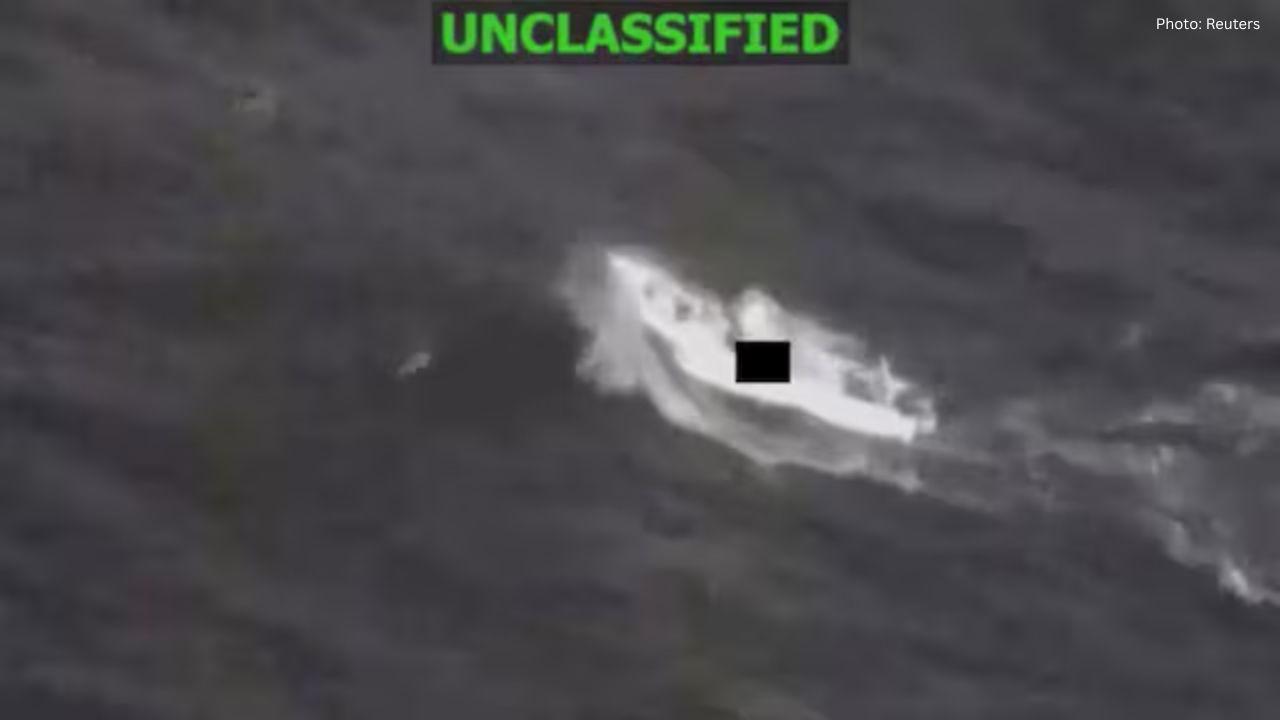
The United States Coast Guard has suspended its search for survivors following a U.S. military strike on a group of vessels suspected of drug trafficking in the Pacific Ocean. The decision was announced after days of intensive search operations failed to find any survivors or debris in the water.
According to the Coast Guard, the search lasted more than 65 hours and covered over 1,090 nautical miles. The operation was carried out under favorable weather and visibility conditions, giving search teams a strong chance to locate people or wreckage if any had been present. Despite these efforts, no signs of life were found, leading authorities to conclude the search.
The incident follows a U.S. military strike earlier in the week that targeted a convoy of vessels believed to be involved in narco-trafficking. Images released by U.S. Southern Command showed boats accused of transporting illegal drugs. Officials have not released details about the number of people who may have been on board the vessels at the time of the strike.
Drug trafficking by sea remains a major challenge for U.S. authorities. Smugglers often use fast boats and remote ocean routes to move illegal drugs toward North America. These operations are dangerous, not only for law enforcement but also for those involved in trafficking, who often take great risks to avoid capture.
The Coast Guard’s statement reflects a difficult reality faced during search and rescue missions at sea. While every effort is made to save lives, there comes a point when continued searching is unlikely to change the outcome. Ending a search is never an easy decision, especially when lives may be lost, but it is based on professional judgment and available evidence.
This incident also raises broader questions about the ongoing fight against drug trafficking. Military strikes and law enforcement actions are meant to disrupt criminal networks, but they can also lead to loss of life. Balancing security goals with humanitarian concerns remains a complex issue for governments.
For the families of those who may have been aboard the vessels, the suspension of the search brings painful uncertainty. Without confirmation of survivors or remains, closure becomes difficult. It highlights the hidden human cost behind illegal drug trade operations that stretch across oceans and borders.
As the United States continues its efforts to stop drug trafficking at sea, this event serves as a reminder of the risks involved and the serious consequences that follow. Strong enforcement may slow criminal networks, but it also underscores the need for long-term solutions that address the root causes of the drug trade.






Mattel Revives Masters of the Universe Action Figures Ahead of Film Launch
Mattel is reintroducing Masters of the Universe figures in line with its upcoming film, tapping into

China Executes 11 Members of Criminal Clan Linked to Myanmar Scam
China has executed 11 criminals associated with the Ming family, known for major scams and human tra
US Issues Alarm to Iran as Military Forces Deploy in Gulf Region
With a significant military presence in the Gulf, Trump urges Iran to negotiate a nuclear deal or fa

Copper Prices Reach Unprecedented Highs Amid Geopolitical Turmoil
Copper prices soar to all-time highs as geopolitical tensions and a weakening dollar boost investor

New Zealand Secures First Win Against India, Triumph by 50 Runs
New Zealand won the 4th T20I against India by 50 runs in Vizag. Despite Dube's impressive 65, India