Post by : Bianca Suleiman
The U.S. government has sanctioned a substantial arms package for Taiwan, exceeding $10 billion. This agreement encompasses advanced missiles, howitzers, drones, and various military assets, anticipated to aggravate China, which vehemently opposes any armament provisions to Taiwan.
Details of the Agreement
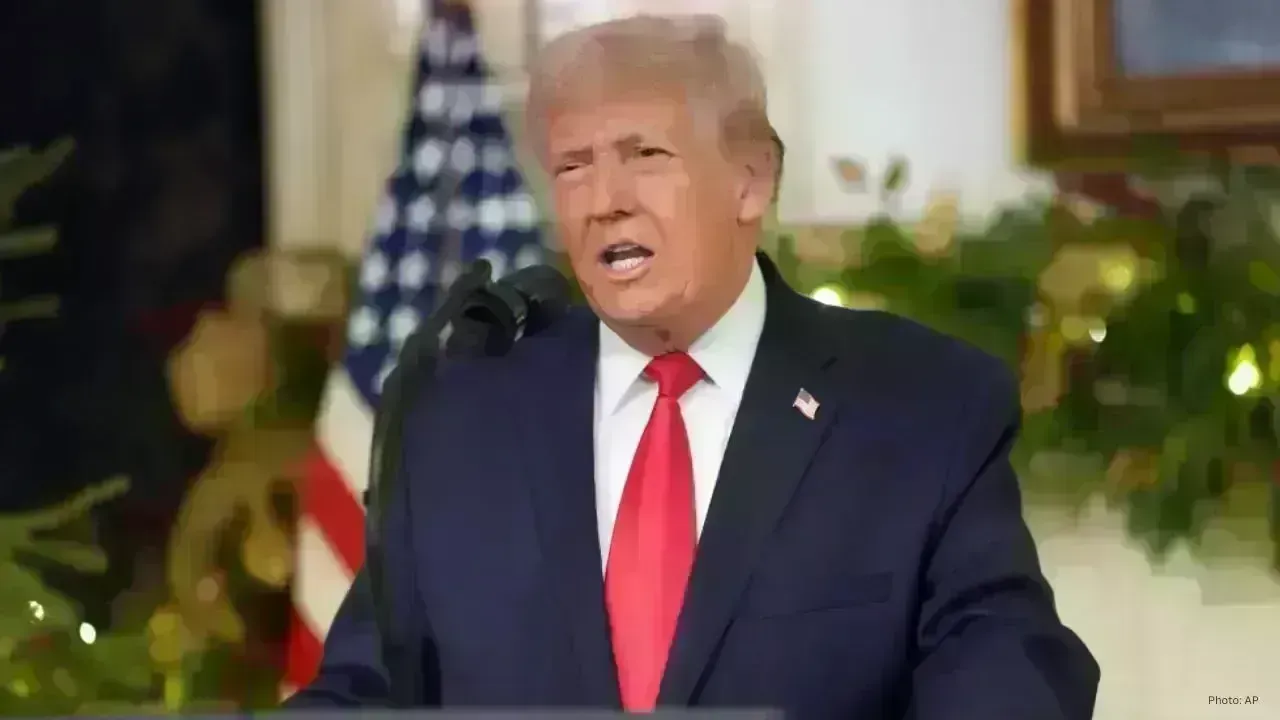
The announcement was made by the U.S. State Department during a broadcast by President Donald Trump on Wednesday evening. The package includes eight significant contracts:
82 HIMARS rocket systems
420 Army Tactical Missile Systems (ATACMS), similar to those provided to Ukraine previously
60 self-propelled howitzers
Drones valued at over $1 billion
Military software exceeding $1 billion
Javelin and TOW missiles, approximating $700 million
Helicopter spare parts at $96 million
Harpoon missile refurbishment kits worth $91 million
The costs of HIMARS and ATACMS alone surpass $4 billion, while self-propelled howitzers account for another $4 billion.
Rationale for U.S. Approval
The State Department stated this agreement aligns with U.S. national security priorities. The objective is to assist Taiwan in modernizing its military forces and reinforcing robust defense systems. The sale also aims to:
enhance Taiwan's self-defense capabilities
promote political stability
sustain military equilibrium in the region
foster economic development
According to U.S. law, the nation is obligated to aid Taiwan in its defense, a commitment that has become increasingly contentious as China escalates military pressure on the island.
China's Response
China views Taiwan as part of its territory and has indicated it may resort to force for reunification. The Chinese embassy in Washington sharply condemned the recent legislation related to the arms package.
China asserts that the U.S. is:
inflating the purported “China threat”
provocatively backing Taiwan’s military
interfering in China's growth
harming U.S.-China relations
Taiwan's Reaction
Taiwan's Defense Ministry expressed gratitude towards the U.S., stating the deal aids in maintaining a formidable defense and deterring war. Taiwan’s Foreign Minister also acknowledged the enduring support.
Taiwan insists that enhancing its military expenditure:
is essential for peace
protects the Taiwan Strait
deters potential aggressions
In support of this position, Taiwan aims to boost defense spending to 3.3% of GDP next year and to reach 5% by 2030. Recently, President Lai Ching-te announced a $40 billion special defense budget, which includes a new air defense initiative termed Taiwan Dome.
Political Context
This arms transaction coincides with recent U.S. legislation poised for approval. The National Defense Authorization Act encompasses further restrictions on China and additional military support for Taiwan, which China has vocally opposed.
The U.S. Senate passed this legislation on Wednesday, with President Trump anticipated to ratify it.
This $10 billion arms deal fortifies U.S.-Taiwan relations and enhances Taiwan’s defensive capabilities. However, it introduces new strains to the already tense U.S.-China dynamics and could have ramifications for future diplomacy, regional security, and the military balance in Asia.









Anticipated Dates for UAE Eid Al Adha 2026 Unveiled by Astronomical Experts
Experts predict Eid Al Adha 2026 in the UAE to start on May 27, prompting early holiday planning amo

DAE Achieves Remarkable Growth in Q1 2026 With Record Revenue
Dubai Aerospace Enterprise announces impressive financial results for Q1 2026, reflecting a surge in

Price Increase for Sony PS5 in Southeast Asia Effective May 1
Sony announces a price increase for the PS5 across Southeast Asia starting May 1, 2026, impacting ga

Potential ‘Super El Niño’ in 2026: Understanding the Climate Risks
Could a Super El Niño emerge in 2026? Discover its implications and potential global climate impacts

Global Energy Crisis Intensifies: Markets React to Oil Supply Challenges
Markets are on edge as oil disruptions escalate, influencing prices and economic stability. Explore

Must-See Tourist Spots in London You Can't Overlook
Explore London's essential attractions, from royal landmarks to vibrant markets, ensuring an unforge




