Post by : Saif Nasser
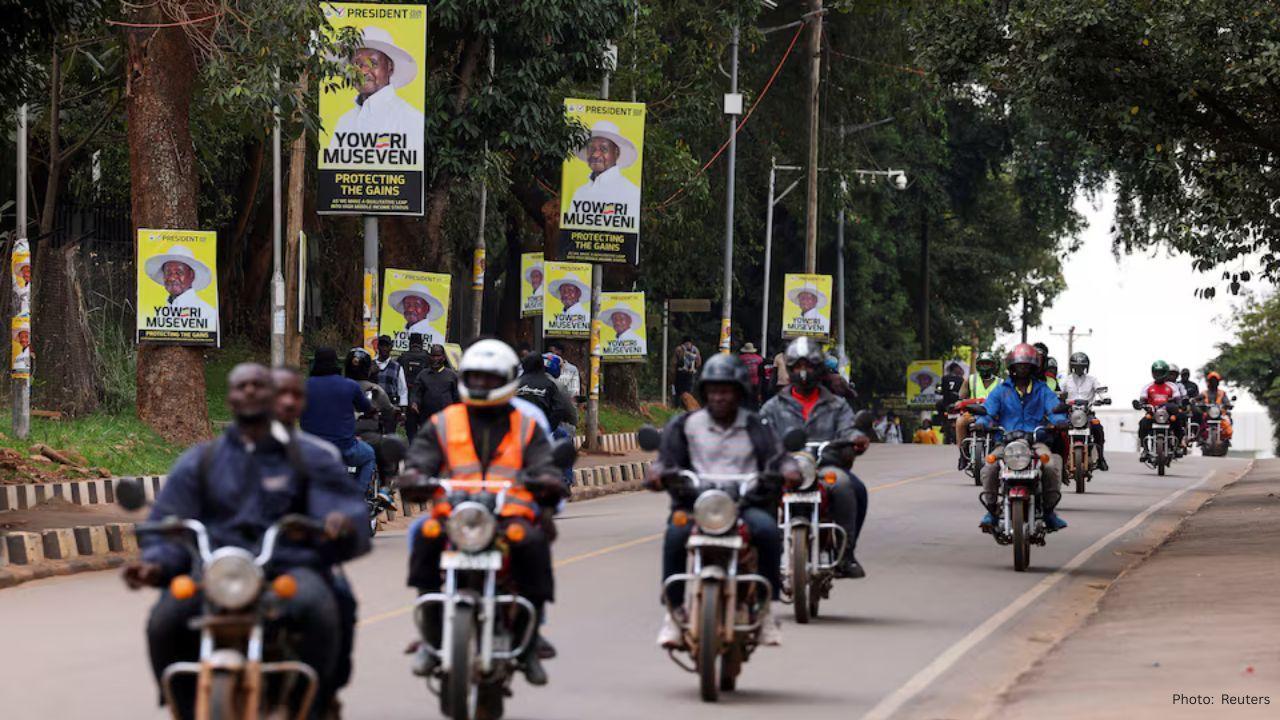
Uganda’s government has moved to restrict the import of Starlink satellite internet equipment just weeks before a closely watched national election, raising fresh concerns among opposition groups and civil society about access to information during the voting period.
The decision comes as President Yoweri Museveni prepares to contest the January 15 election, aiming to extend his rule to nearly 50 years. The 81-year-old leader will again face opposition figure Bobi Wine, a popular musician turned politician, who has become a strong voice against Museveni’s long-standing government.
Details of the restrictions first emerged through a leaked memo from the Uganda Revenue Authority dated December 19. The document, which later circulated widely on social media, stated that any imports of Starlink communication devices and related equipment must now be approved by the head of the military, General Muhoozi Kainerugaba. He is also President Museveni’s son, a fact that has added to public debate and criticism.
The revenue authority later confirmed that the memo was genuine but attempted to ease concerns by saying many countries regulate the import of communication technology. However, the timing of the move has caused alarm, especially because of Uganda’s past actions during elections.
In the 2021 general election, the government shut down the internet for several days. At that time, Bobi Wine rejected the election results, claiming they were rigged, a charge Museveni denied. Many observers said the internet blackout limited communication, reporting, and public scrutiny during the vote.
Starlink, owned by billionaire Elon Musk, does not yet have an official licence to operate in Uganda. Despite this, many Ugandans have imported and used the equipment to access faster and more reliable internet, especially in areas with poor connectivity. The new restrictions could sharply reduce this access ahead of the election.
Bobi Wine, whose real name is Robert Kyagulanyi, strongly criticised the decision. In a post on social media, he questioned why the government would fear people having internet access during an election if it had nothing to hide. His remarks echoed wider opposition concerns that the move could be aimed at controlling information and limiting independent reporting.
President Museveni, a former rebel leader, has long been praised for bringing stability to Uganda after years of conflict and for supporting economic growth and health programs, including efforts to fight HIV/AIDS. However, critics say his government has increasingly silenced opponents, restricted freedoms, and changed laws to stay in power. Over the years, constitutional changes have removed both age limits and term limits for the presidency.
As election day approaches, the restriction on Starlink equipment has become a symbol of broader worries about fairness, transparency, and free access to information. For many Ugandans, the ability to stay connected during the vote is seen as essential to ensuring their voices are heard.






Mattel Revives Masters of the Universe Action Figures Ahead of Film Launch
Mattel is reintroducing Masters of the Universe figures in line with its upcoming film, tapping into

China Executes 11 Members of Criminal Clan Linked to Myanmar Scam
China has executed 11 criminals associated with the Ming family, known for major scams and human tra

US Issues Alarm to Iran as Military Forces Deploy in Gulf Region
With a significant military presence in the Gulf, Trump urges Iran to negotiate a nuclear deal or fa

Copper Prices Reach Unprecedented Highs Amid Geopolitical Turmoil
Copper prices soar to all-time highs as geopolitical tensions and a weakening dollar boost investor

New Zealand Secures First Win Against India, Triumph by 50 Runs
New Zealand won the 4th T20I against India by 50 runs in Vizag. Despite Dube's impressive 65, India