Post by : Saif Nasser
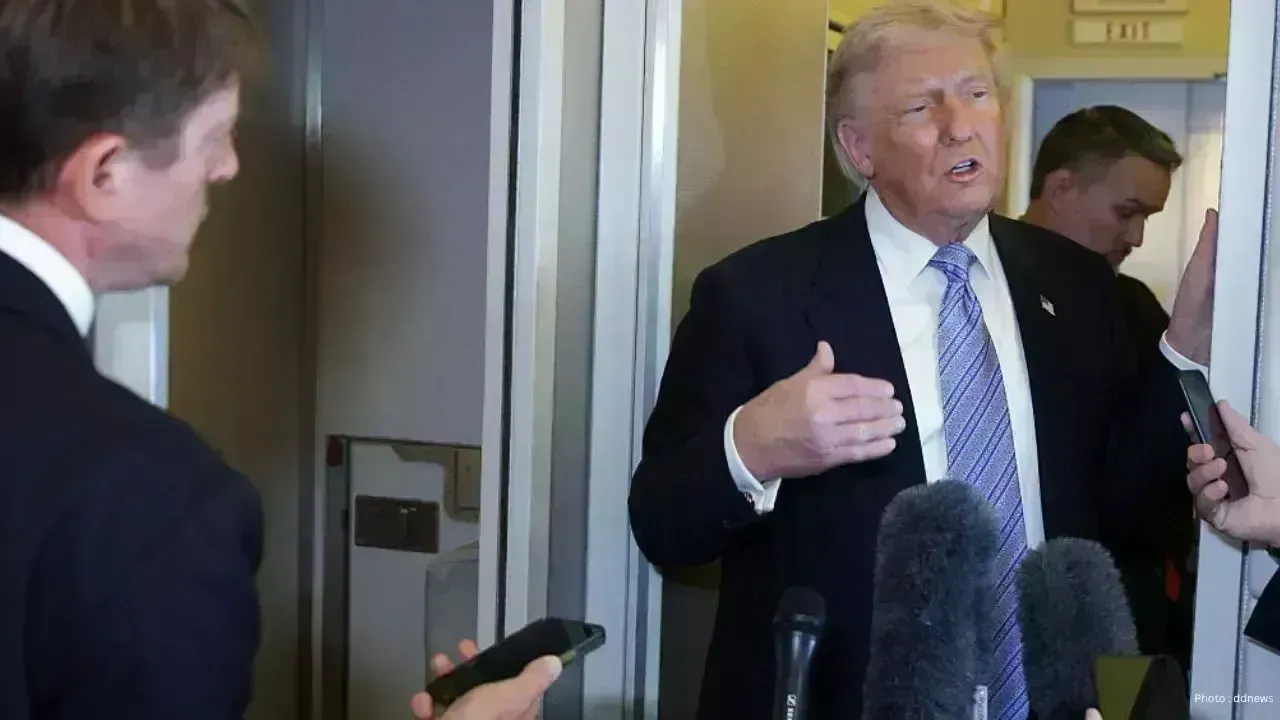
United States President Donald Trump has delivered a strong warning to Iran, saying his patience is “running out” as tensions between Washington and Tehran continue to grow. His comments come at a time when talks over Iran’s nuclear program have become more difficult and concerns about stability in the Middle East are increasing.
Trump said the United States is closely watching Iran’s actions and expects quicker progress in negotiations. He also stated that he did not ask China for help or special favors regarding Iran, making it clear that America plans to handle the situation on its own. His remarks followed discussions with Chinese President Xi Jinping about security and rising tensions in the Gulf region.
The relationship between the United States and Iran has remained troubled for many years. Disagreements over Iran’s nuclear activities, military influence, and regional alliances have often pushed both countries close to direct conflict. While several rounds of talks have taken place in recent months, major differences still remain.
The United States wants Iran to reduce its nuclear program and provide stronger guarantees that it will not develop nuclear weapons. Iran, however, insists that its nuclear activities are peaceful and says it will not accept pressure or threats from foreign powers. Iranian leaders also continue to demand relief from economic sanctions that have damaged the country’s economy for years.
One of the biggest concerns is the growing tension around the Strait of Hormuz, one of the world’s most important oil shipping routes. Any military conflict in the area could affect global oil supplies and increase fuel prices around the world. Because of this, many countries are watching the situation very carefully.
Trump’s latest warning has increased fears that the United States may take a tougher stand if negotiations fail. Political experts believe strong language from both sides could make diplomacy even more difficult. At the same time, there are concerns that any major mistake or military action could quickly increase tensions across the Middle East.
The crisis is already affecting global markets and regional stability. Rising oil prices, security fears, and political uncertainty are creating pressure on governments and businesses worldwide. Many ordinary people in the Middle East also fear that another conflict could lead to more destruction, economic hardship, and displacement.
Even with strong statements from both sides, diplomatic talks have not completely stopped. Many world leaders still hope negotiations can continue and prevent a larger crisis. However, trust between Washington and Tehran remains very weak, making any agreement difficult to achieve.
The coming weeks may prove critical for the future of the region. If talks improve, tensions may slowly decrease. But if diplomacy fails, the Middle East could once again face a dangerous period of instability and conflict.


Anticipated Dates for UAE Eid Al Adha 2026 Unveiled by Astronomical Experts
Experts predict Eid Al Adha 2026 in the UAE to start on May 27, prompting early holiday planning amo

DAE Achieves Remarkable Growth in Q1 2026 With Record Revenue
Dubai Aerospace Enterprise announces impressive financial results for Q1 2026, reflecting a surge in

Price Increase for Sony PS5 in Southeast Asia Effective May 1
Sony announces a price increase for the PS5 across Southeast Asia starting May 1, 2026, impacting ga

Potential ‘Super El Niño’ in 2026: Understanding the Climate Risks
Could a Super El Niño emerge in 2026? Discover its implications and potential global climate impacts

Global Energy Crisis Intensifies: Markets React to Oil Supply Challenges
Markets are on edge as oil disruptions escalate, influencing prices and economic stability. Explore

Must-See Tourist Spots in London You Can't Overlook
Explore London's essential attractions, from royal landmarks to vibrant markets, ensuring an unforge




