Post by : Saif Nasser
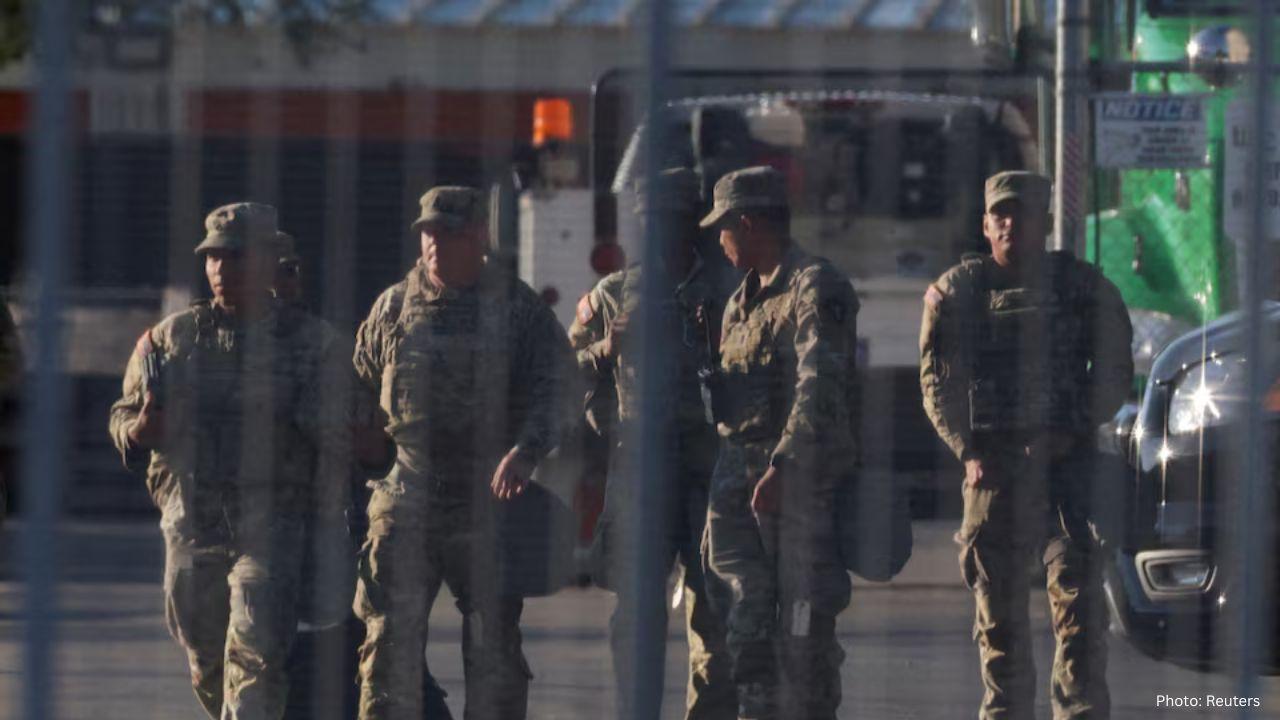
U.S. President Donald Trump has announced the removal of National Guard troops from three major American cities—Chicago, Los Angeles, and Portland. However, he also issued a strong warning that federal forces could return if crime levels increase again.
Trump shared the announcement through a social media post, claiming that crime had gone down in these cities because of the presence of National Guard troops. At the same time, he said that if crime rises in the future, federal forces would return “in a much different and stronger form.”
The National Guard deployments have been controversial since they began. Local leaders in Chicago, Los Angeles, and Portland, along with Democratic lawmakers, strongly opposed the move. They argued that the troops were not needed and accused the Trump administration of exaggerating crime and protest-related violence to justify sending in soldiers. Many local officials also said the move was an example of federal overreach.
The policy also faced serious legal challenges. Courts repeatedly ruled against the Trump administration, saying there was no clear evidence that National Guard troops were required to protect federal buildings or staff. Judges overseeing lawsuits filed by cities stated that the federal government had exceeded its authority.
Trump’s announcement came shortly before a major legal setback. A federal appeals court ordered the return of hundreds of California National Guard troops to the control of Governor Gavin Newsom. Earlier, on December 23, the U.S. Supreme Court blocked Trump’s attempt to deploy National Guard forces in Illinois. The court said the president’s authority to take control of state National Guard units applies only in rare and exceptional situations.
The Supreme Court also noted that the federal government had failed to show legal authority for using the military to enforce laws in Illinois. This ruling weakened the legal basis for similar troop deployments in other states.
Local leaders quickly responded to Trump’s statement. Governor Gavin Newsom’s office said the withdrawal was forced by legal defeats, not by Trump’s decision alone. Chicago Mayor Brandon Johnson’s office shared crime data showing that the city recorded its lowest level of violent crime in more than ten years during 2025, with incidents falling by over 21% compared to 2024.
Trump first deployed National Guard troops in June, during protests against his strict immigration policies and increased deportation efforts. He also sent troops to Washington, D.C., and took control of local police forces, claiming crime was out of control. However, official crime data from many cities did not support those claims.
While Trump insists the deployments helped reduce crime, critics argue that local governments and courts have clearly rejected his approach. The withdrawal marks another chapter in the ongoing debate over the limits of presidential power, public safety, and the role of the military in civilian life.




Mattel Revives Masters of the Universe Action Figures Ahead of Film Launch
Mattel is reintroducing Masters of the Universe figures in line with its upcoming film, tapping into

China Executes 11 Members of Criminal Clan Linked to Myanmar Scam
China has executed 11 criminals associated with the Ming family, known for major scams and human tra

US Issues Alarm to Iran as Military Forces Deploy in Gulf Region
With a significant military presence in the Gulf, Trump urges Iran to negotiate a nuclear deal or fa

Copper Prices Reach Unprecedented Highs Amid Geopolitical Turmoil
Copper prices soar to all-time highs as geopolitical tensions and a weakening dollar boost investor

New Zealand Secures First Win Against India, Triumph by 50 Runs
New Zealand won the 4th T20I against India by 50 runs in Vizag. Despite Dube's impressive 65, India