Post by : Saif Nasser
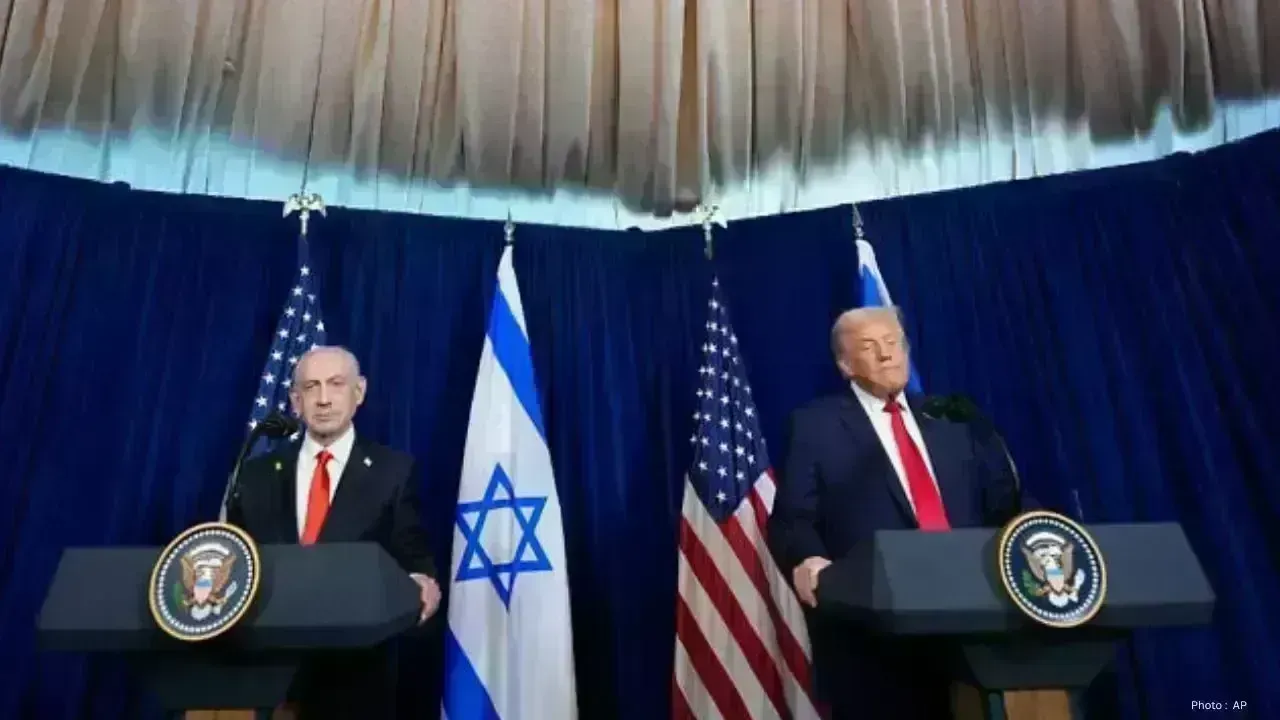
Donald Trump and Benjamin Netanyahu have found themselves at the center of renewed international attention following claims of a tense phone conversation over Israel’s military operations in Lebanon. The reported disagreement has raised questions about regional diplomacy, security priorities, and the future direction of cooperation between the United States and Israel during a period of heightened tensions across the Middle East.
The discussion reportedly took place as concerns continued to grow over military activity in Lebanon and its possible impact on wider diplomatic efforts. According to media accounts, strong differences emerged regarding the handling of security issues and the potential consequences of expanding military operations. The conversation attracted significant attention because both leaders have often been viewed as close political allies on many regional matters.
At the heart of the issue is the challenge of balancing military objectives with diplomatic goals. Israel has maintained that its actions are necessary to address security threats and protect its citizens. Israeli officials have repeatedly argued that armed groups operating near its borders pose serious risks that require firm responses. At the same time, international observers have warned that continued military activity could increase instability and make diplomatic progress more difficult.
The reported exchange highlights how even strong political partnerships can face moments of disagreement. Strategic allies frequently share common interests, but they may differ on the methods used to achieve their goals. Differences in timing, military strategy, and diplomatic priorities can sometimes create friction, particularly during periods of regional uncertainty.
Developments in Lebanon have become a major concern for governments across the Middle East and beyond. Any escalation has the potential to affect neighboring countries, influence security calculations, and complicate ongoing efforts aimed at reducing tensions. As a result, actions taken by key regional players are being closely monitored by global leaders and international organizations.
The broader impact of such disagreements extends beyond politics. Financial markets often react to uncertainty in the Middle East, especially when military activity raises concerns about regional stability. Investors, businesses, and governments closely watch developments that could influence trade, energy markets, and international relations.
For people living in areas affected by conflict, the consequences are far more immediate. Families face uncertainty, communities deal with security concerns, and local economies can suffer from prolonged instability. This reality continues to underline the importance of dialogue and efforts aimed at preventing further escalation.
Diplomatic engagement remains a critical tool for managing regional challenges. Many international leaders believe that communication between allies is essential, particularly during difficult moments when military and political interests must be carefully balanced. Open discussions, even when disagreements occur, can help prevent misunderstandings and reduce the risk of broader conflict.
The reported dispute between Donald Trump and Benjamin Netanyahu serves as a reminder that Middle East diplomacy remains complex and often unpredictable. While both leaders have supported strong security measures in the past, differences over strategy can still emerge when regional circumstances change. Such developments highlight the difficult choices facing policymakers as they attempt to protect national interests while maintaining stability.
As tensions continue to shape events across the region, the focus will remain on whether diplomacy can help reduce risks and support long-term security. The reported conversation has brought renewed attention to the challenges of leadership, alliance management, and conflict prevention in one of the world's most closely watched regions. A lasting path toward stability will depend not only on military decisions but also on continued dialogue and careful diplomatic engagement.





Achieve Radiant Skin with This Simple Rice Flour Treatment
Transform your skincare routine! Discover how a rice flour mix can restore your skin's glow without

Meta Unveils Subscription Plans for Instagram, Facebook, and WhatsApp
Meta introduces new subscription plans for users of Instagram, Facebook, and WhatsApp, featuring enh

Suvarna Joy on Education Leadership, Resilience, and Building Purpose Through Adversity in the UAE
Suvarna Joy shares her journey of education leadership, motherhood, faith, and resilience within the

Anticipated Dates for UAE Eid Al Adha 2026 Unveiled by Astronomical Experts
Experts predict Eid Al Adha 2026 in the UAE to start on May 27, prompting early holiday planning amo

DAE Achieves Remarkable Growth in Q1 2026 With Record Revenue
Dubai Aerospace Enterprise announces impressive financial results for Q1 2026, reflecting a surge in

Price Increase for Sony PS5 in Southeast Asia Effective May 1
Sony announces a price increase for the PS5 across Southeast Asia starting May 1, 2026, impacting ga




